Josiah
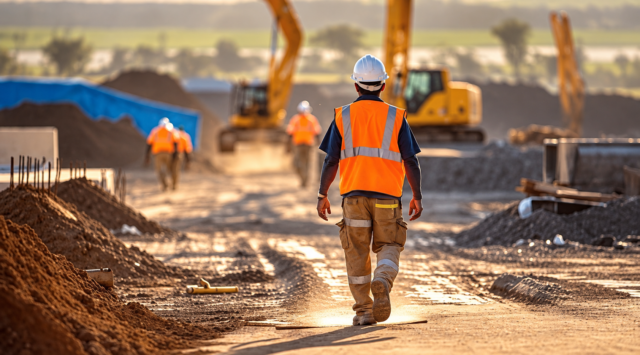
I have been thinking about how we talk about artificial intelligence, especially here in Ghana, and I think we may be looking at it from the wrong end. Mention AI and we immediately start talking about software, algorithms, coding, automation and all the things happening on our screens. That is understandable because that is the part we can see. But as a businessperson, I am forced to forget the screen for a moment. So I think about land. I think about electricity. I think about fibre, cooling systems, transformers, construction, security, engineering, financing, insurance, maintenance and logistics. Before artificial intelligence becomes intelligence, it starts off as infrastructure. And that matters because sometimes the biggest opportunities created by a new technology are not necessarily inside the technology itself, but around it.
That thought came back to me while reading about what is happening in Malaysia. In the southern state of Johor, one of the world’s fastest data-centre expansions is under way. Five years ago, Johor reportedly had about 10 megawatts of capacity. Today it has roughly 110 times that amount. Across Malaysia, data-centre capacity could reach around 7.7 gigawatts by 2030, while investment in the sector is equivalent to about 18% of GDP. If billions of dollars are going into physical facilities, somebody is selling the land, someone is pouring the concrete, installing electrical systems, supplying backup power, fibre, cooling, security, transport, legal services and maintenance. We often hear about an industry after the largest players have arrived and assume the opportunity belongs to them. In reality, an entire economy of suppliers usually forms beneath them.
This is one habit I wish more African entrepreneurs would develop. When you hear that an industry is growing, do not immediately ask whether you can start the same company as the biggest player. Ask what that company must buy. Ask what it repeatedly needs. Ask what it imports that could eventually be supplied locally. Ask what problems appear when ten companies like it arrive in the same place. That is where businesses are born. You may know nothing about building artificial-intelligence models and still make money from the AI economy. The electrical engineer may have an AI opportunity. The property developer may have one. The lawyer, logistics company, training institution or technician specialising in cooling systems may have one. Business is often about inventing the wave. But it is also about understanding what the wave will require when it reaches you.
Malaysia is already seeing the wider economic effect. Its economy grew by 6% year-on-year in the second quarter of 2026, with manufacturing and construction linked to the data-centre build-out helping to drive that growth. It also has an advantage because years of participation in electronics and semiconductor manufacturing have given it a foothold in the AI supply chain. This matters because infrastructure attracts infrastructure. Skills attract more sophisticated skills. Suppliers attract manufacturers, and manufacturers attract other suppliers. One investment makes the next one easier. Put enough complementary businesses in the same place and things that were expensive become cheaper, specialist workers become easier to find and investors become more comfortable because an ecosystem already exists around them.
To me, that is where the Ghanaian conversation becomes more interesting.
We have seen versions of this problem before. Ghana produces cocoa, but the bigger question has always been how much value we capture after the cocoa leaves the farm. We produce gold, yet still debate how much of the wider mining value chain we control. We discovered oil and learned that producing petroleum and owning a sophisticated petroleum-services ecosystem are not the same thing. AI looks different from cocoa, gold and oil, but the economic question is familiar. Where in the value chain will we sit? A country can host expensive computers while the chips, software, intellectual property and largest profits belong elsewhere. Attracting investment and capturing value are not the same job.
Malaysia appears to understand this. Despite the enormous expansion under way, it is becoming more selective about the kind of data-centre investment it wants. The focus is increasingly on projects that create higher-skilled employment, support research and develop domestic suppliers rather than simply placing server farms on Malaysian soil. That is worth watching. At first, when capital comes looking for you, you celebrate the capital. Later, you begin asking what the capital is leaving behind. That second question is where development begins to separate itself from simple economic activity. A billion-dollar investment is impressive, but if almost everything sophisticated is imported and little domestic capability develops around it, the billion dollars can become a very large number with surprisingly shallow roots.
There is another reason businesspeople should watch this closely. The digital economy is becoming increasingly physical, and physical economies have bottlenecks. Malaysia’s data centres already use electricity equivalent to around 7% of available generating capacity, and that share could approach 31% by 2035. There have also been concerns about water supplies. We use the word “cloud” as though computers have floated into the atmosphere. They have not. The cloud is somebody else’s building, on somebody else’s land, connected to somebody else’s power grid, using real cables, transformers and cooling systems. Once you understand that, energy, water, industrial land, technical education and even the speed of permits all become part of technology policy.
I also think young people should be careful not to hear “AI” and conclude that the only useful response is to learn prompting or basic coding. We will need software engineers, certainly, but we will also need electrical engineers, technicians, cybersecurity professionals, equipment specialists, project managers, compliance experts, financiers and entrepreneurs who can turn technical capability into businesses customers will actually pay for. Skills matter, but skills have to meet infrastructure, capital and markets before they become economic output. Training people without building companies capable of employing them can simply prepare talent for somebody else’s economy.
And then there is finance. If Ghanaian companies are to participate in these industries, we must think seriously about how businesses are financed. Technology and advanced manufacturing often require patient capital for equipment, certification, training and expansion before profits fully materialise. A company cannot become a serious supplier because everybody attended a conference and agreed that entrepreneurship is important. Someone must finance the machinery, the training, and the first large contract, even though payment may arrive months later, while salaries must still be paid this Friday. That less glamorous side of industrial development often determines who actually gets to participate.
So when I look at Malaysia, I do not simply see data centres. I see an economic reminder. I see what can happen when global demand meets land, power, infrastructure, policy, skills and an existing industrial base at the right moment. I also see the warning that attracting the infrastructure of the future does not automatically mean owning the economy of the future. That part still has to be built deliberately. Ghana’s opportunity therefore extends beyond becoming a place where computers are installed. The bigger opportunity is to build an ecosystem in which Ghanaian businesses increasingly supply, operate, finance, improve and eventually own parts of this new economic infrastructure.
And perhaps that is the thought I would leave with anyone wondering what business to start, what skill to learn or where the next opportunity may come from. Do not only watch the final product. Watch what must exist before the final product can exist. When everybody is looking at artificial intelligence, look at the electricity behind it. When everybody is looking at the app, look at the infrastructure beneath it. When everybody is talking about the billion-dollar company, ask who supplies the billion-dollar company. And when the world announces the next great technological revolution, don’t just ask how Ghana can use it. Ask a harder question: what will this revolution need, and which part of that need can we learn to provide?
Because very often, that is where the real business opportunity is.
Thank you for reading. I welcome your reflections, questions, and suggestions for future topics. Subscribe to the ‘Entrepreneur In You’ newsletter here: https://lnkd.in/d-hgCVPy, follow me on all social platforms at @thisisthemax, or get weekly updates via my official WhatsApp channel: www.bit.ly/whatsappthemax.