Josiah
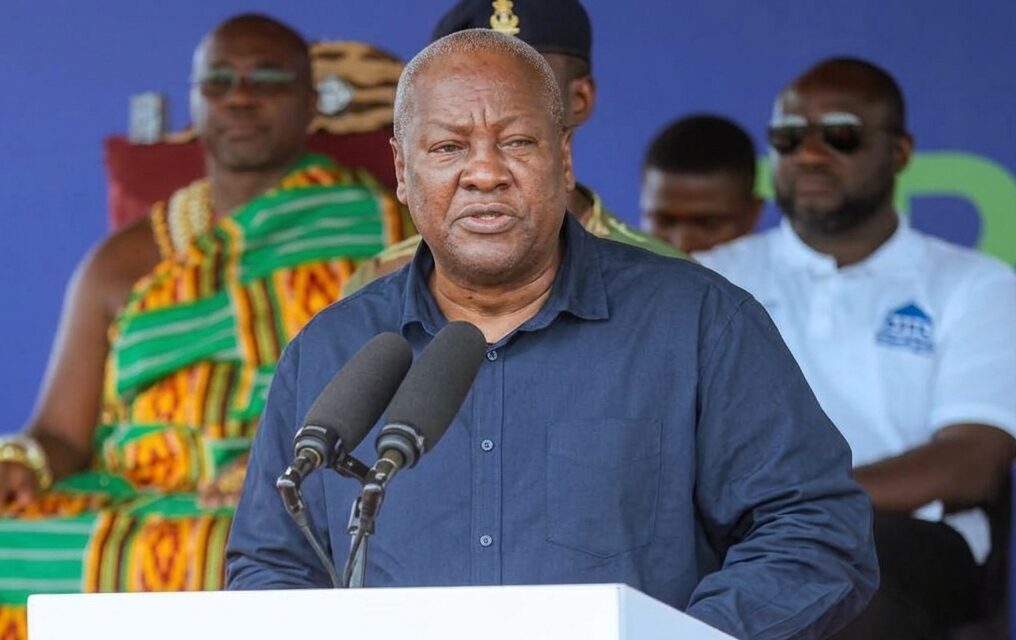
President John Dramani Mahama has called on African countries to take a more active role in shaping global migration policies, insisting that the continent must have a stronger voice in decisions affecting the movement and welfare of its people.
He said Africa must move beyond being viewed merely as a source of migration statistics and challenges and instead take the lead in developing solutions to migration-related issues.
Speaking at the opening of the 2026 Metropolis International Migration Conference in Accra, President Mahama said the continent must take ownership of its migration agenda and ensure that its interests are adequately represented in international discussions.
“When the world discusses Africa, Africa must have a voice in shaping that conversation,” he stated.
He observed that although the international conference had been held for three decades, its decision to take place on African soil for the first time offered the continent an important opportunity to influence conversations on migration, integration and belonging.
President Mahama noted that migration had always been part of Africa’s history, long before the establishment of modern national borders.
He cited historical trade routes across the Sahara and the movement of people through cities such as Kumasi, Kano, Timbuktu, Salaga and Djenné as evidence of Africa’s longstanding tradition of mobility and interconnectedness.
“Mobility did not arrive in Africa as a crisis. It has always been part of Africa’s story. Africans will continue to move as they have done for generations,” he said.
While acknowledging the challenges of irregular migration, human trafficking and exploitation, particularly the dangers associated with journeys across the Mediterranean, he called for stronger institutions, effective laws and international partnerships to guarantee safe and dignified migration.
President Mahama has condemned attacks on foreign nationals in South Africa, insisting that migration-related challenges must be addressed through lawful and institutional processes rather than violence.
His comments follow recent attacks on foreigners in the country amid growing tensions over migration.
“South Africa has a legitimate right to address its migration crisis, but the challenges of migration will not be solved by vigilantism,” he said.
“They will not be resolved by marauding crowds, searching for and brutalizing people believed to be illegal immigrants.”
He acknowledged that Ghana also faces migration-related challenges, particularly the arrival of refugees from the Sahel region fleeing violent extremism.
According to him, some of the refugees, whom he described as largely unskilled, have resorted to begging along roadsides, while their children remain out of school.
He called for improved migration management systems to address these concerns without compromising the rights and dignity of migrants.
The President also highlighted the economic benefits of migration, particularly the contribution of remittances to household incomes and national development.
He disclosed that Ghana had recorded remittance receipts exceeding $7 billion through the Bank of Ghana.
He said the funds provide essential support to families, helping them pay school fees, access healthcare, secure accommodation and establish businesses.
“Behind every remittance are people making decisions about their future,” he noted.
President Mahama, however, expressed concern about the high cost of transferring money to Africa and called for measures to reduce transaction charges, expand financial inclusion and encourage greater diaspora investment.
He urged African governments to regard their diaspora communities as strategic development partners rather than focusing exclusively on the money they send home.
President Mahama has also called for greater freedom of movement across African countries, arguing that restrictions on people could undermine the objectives of the African Continental Free Trade Area (AfCFTA).
He said the continent could not fully benefit from the free movement of goods and services if the people responsible for producing, transporting and trading those goods faced significant restrictions at national borders.
“The continental market cannot fulfill its promise if goods are able to move more easily than the people who produce them,” he stated.
He stressed the need to make cross-border movement easier for traders, professionals, transport operators, entrepreneurs and young people.
The President further called for stronger implementation of the African Union Free Movement Protocol, regional integration agreements and the African Union’s Agenda 2063.
He expressed concern about the gap between commitments made by African leaders at international conferences and the difficulties ordinary citizens continue to encounter at border crossings.
“Our declarations on integration should make a difference to our people’s daily lives,” he said.
President Mahama maintained that Africa’s migration policies must reflect the continent’s development ambitions, protect human dignity and create opportunities for its citizens to move freely and contribute to economic growth.