Omanghana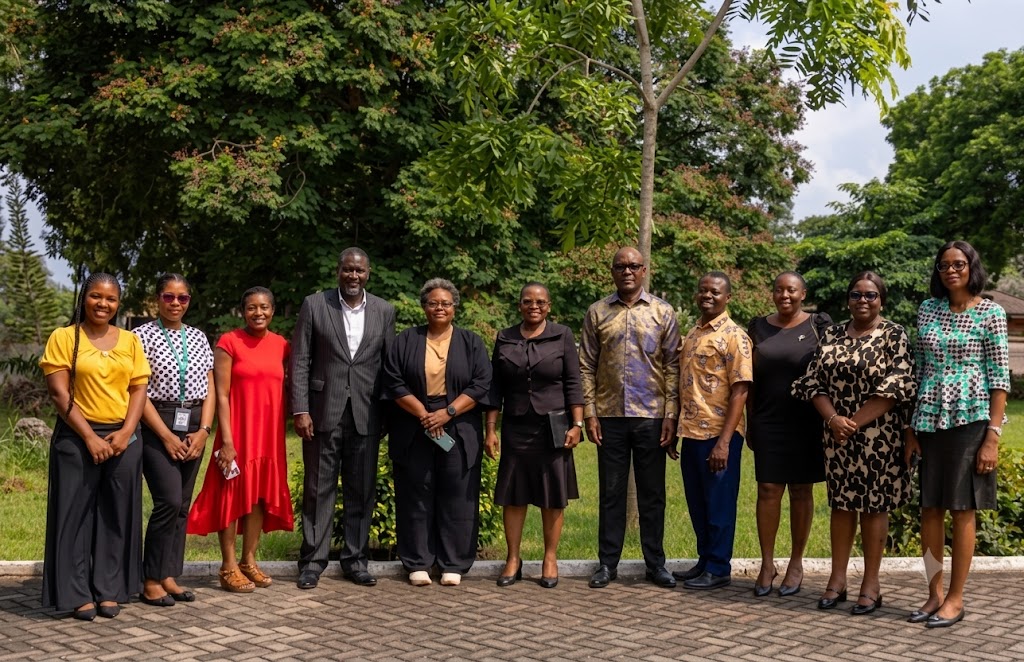
Ghana’s National Development Planning Commission (NDPC) and the African Institute for Development Policy (AFIDEP) have deepened their institutional partnership to make Women’s Economic Empowerment (WEE) a central component of the country’s macroeconomic policies and long-term national development strategies.
The collaboration seeks to move women’s economic advancement beyond a social development objective and establish it as a measurable driver of economic growth, productivity, and national transformation.
Making Women’s Economic Empowerment a Policy Priority
The partnership is designed to integrate gender considerations directly into Ghana’s economic planning processes, ensuring that women’s participation in the economy is reflected in national policies, budgets, and development programs.
Under the initiative, women’s economic empowerment will be treated as a critical economic policy issue rather than a standalone gender intervention.
The partners aim to develop systems that measure the impact of investments in women and demonstrate how greater economic inclusion can contribute to Ghana’s broader growth objectives.
Key Areas of Collaboration
The NDPC-AFIDEP partnership will focus on several strategic areas aimed at improving economic opportunities for women across Ghana.
Evidence-Based Economic Policymaking
A major focus of the collaboration is the use of research, data analysis, and economic modeling to support informed policy decisions.
By generating stronger evidence on the economic contributions of women, policymakers will be better equipped to design interventions that improve women’s access to opportunities, resources, and markets.
The approach seeks to demonstrate that investing in women’s economic participation can deliver wider benefits for households, communities, and the national economy.
Promoting Gender-Responsive Budgeting
The partnership will also strengthen the capacity of government institutions to incorporate gender analysis into public financial management.
Through training and technical support, state technocrats will be equipped with tools to evaluate how government spending affects women and men differently.
This will support the development of budgets and programs that respond more effectively to the needs of all citizens while promoting fairer resource allocation.
Addressing Structural Barriers Facing Women
Another key objective is to identify and remove systemic barriers that limit women’s economic advancement.
Areas of concern include unequal access to finance, challenges faced by female entrepreneurs in obtaining credit, and policies that may unintentionally create economic disadvantages for women.
The initiative will examine issues such as gender-blind taxation systems, including the potential impact of consumption taxes like Value Added Tax (VAT) on female-headed households and vulnerable groups.
Partnership Anchored Under AFIDEP’s Regional WEE Program
The collaboration forms part of AFIDEP’s Macroeconomic Policies for Women’s Economic Empowerment (WEE) Program, a regional initiative working across multiple African countries to influence fiscal and economic policy frameworks.
The program focuses on reshaping economic systems so that women’s empowerment becomes integrated into national planning, rather than addressed through isolated projects.
In Ghana, the NDPC serves as the institution mandated to coordinate and guide national development planning under the country’s constitutional framework.
By combining NDPC’s national planning authority with AFIDEP’s research expertise and technical frameworks, the partnership aims to strengthen the country’s ability to design inclusive economic policies.
Equipping Government Institutions with Practical Tools
A major outcome of the collaboration will be the development and adoption of practical frameworks to help ministries, departments, and agencies integrate gender considerations into their work.
These tools are expected to include:
- Gender mainstreaming frameworks for public policy design
- Data-driven approaches for evaluating economic programs
- Guidelines for gender-responsive budgeting
- Strategies for improving women’s access to economic opportunities
Through these measures, government institutions will be better positioned to allocate public resources in ways that promote equitable economic participation.
Toward a More Inclusive Economic Future
The NDPC-AFIDEP partnership reflects growing recognition that sustainable national development requires the full participation of women in economic decision-making and growth.
By embedding Women’s Economic Empowerment into Ghana’s macroeconomic frameworks, the initiative aims to create policies that unlock women’s productive potential, strengthen economic resilience, and support inclusive growth across the country.
Source: Omanghana