Omanghana
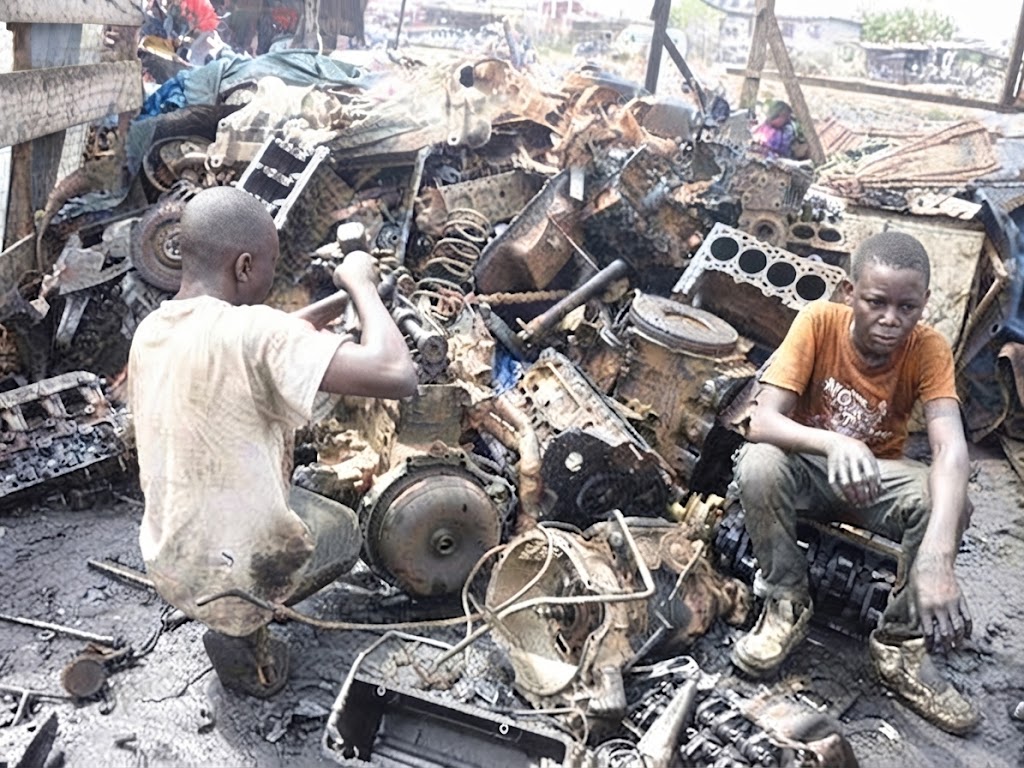
Security analyst Paul Coonley Boateng has called for the immediate introduction of a coordinated national regulatory framework to govern Ghana’s largely informal scrap metal trade.
Boateng, Chief Executive Officer of Coonley Security Solutions Limited, made the recommendation in a proposal submitted to the Minister for Local Government, Chieftaincy and Religious Affairs.
He argued that the absence of uniform regulations across the sector is creating security and economic challenges, including the alleged theft of public infrastructure and potential revenue losses for Metropolitan, Municipal and District Assemblies (MMDAs).
According to Boateng, the government should establish clear national policy guidelines and develop model by-laws that can be adopted by MMDAs across the country.
Scrap Trade Provides Livelihoods
Boateng acknowledged the importance of the scrap metal industry to Ghana’s informal economy, noting that the sector provides livelihoods for a large number of people.
However, he argued that the absence of a comprehensive regulatory system has created gaps that can be exploited by individuals involved in the theft and resale of metals.
He said formalizing the sector should not be aimed at eliminating legitimate scrap businesses but at establishing clear rules that protect legitimate operators while preventing criminal activity.
Concerns Over Infrastructure Vandalism
One of the major concerns highlighted in the proposal is the alleged theft and vandalism of public infrastructure.
Scrap metal theft has been linked to the removal of items such as electrical cables, railway components, bridge fittings and drainage covers, which can subsequently be sold to scrap dealers.
Boateng said the problem poses both financial and public-safety risks because the removal of infrastructure can disrupt essential services and expose communities to hazards.
He therefore called for stronger systems to establish the source of metals entering the scrap market.
Calls for Greater Traceability
The security analyst also raised concerns about the potential infiltration of criminal networks into the scrap metal business.
He proposed introducing mandatory documentation that would allow authorities and buyers to trace scrap metal from the point of collection to processing or sale.
Under such a system, legitimate operators would be expected to maintain records identifying sellers and documenting the origin of materials purchased.
Boateng believes improved traceability would make it more difficult for stolen public or private property to enter the formal scrap supply chain.
Proposed Licensing System
Among his recommendations is the introduction of mandatory licensing for participants throughout the scrap metal value chain.
This would include collectors, aggregators, brokers and transporters.
The licensing framework, he suggested, should establish minimum operating requirements and enable authorities to identify businesses and individuals involved in the trade.
Such a system could also provide local authorities with better information about the number and location of scrap operators within their jurisdictions.
Identity Verification for Sellers
Boateng further proposed requiring scrap metal buyers to verify the identity of sellers before purchasing materials.
Under the proposal, buyers could be required to request the Ghana Card of sellers and record information about the source of the scrap.
The measure would create a paper trail that could assist law enforcement agencies in investigating suspected theft and help legitimate dealers demonstrate that materials were acquired through lawful channels.
Stronger Inter-Agency Enforcement
The security analyst also called for closer cooperation among government agencies responsible for security, customs and revenue collection.
He proposed a coordinated enforcement mechanism involving institutions such as the Ghana Police Service, Ghana Customs and the Ghana Revenue Authority (GRA).
Such collaboration, he said, could help authorities monitor the movement of scrap metals, strengthen oversight of processing yards and improve enforcement along major transportation routes.
Broader Efforts to Formalize the Sector
The proposal comes amid wider discussions about regulating and formalizing Ghana’s scrap metal industry and developing the country’s iron and steel value chain.
Supporters of stronger regulation argue that formalization could improve accountability, protect public infrastructure and increase revenue while allowing legitimate scrap businesses to continue operating.
The challenge for policymakers will be to establish rules that address theft and illegal trading without unnecessarily disrupting the livelihoods of legitimate operators who depend on the sector.
Boateng’s proposal therefore calls for a coordinated national framework under which licensing, identity verification, record-keeping and inter-agency enforcement would form part of efforts to bring greater accountability to Ghana’s scrap metal trade.
Source: Omanghana