Omanghana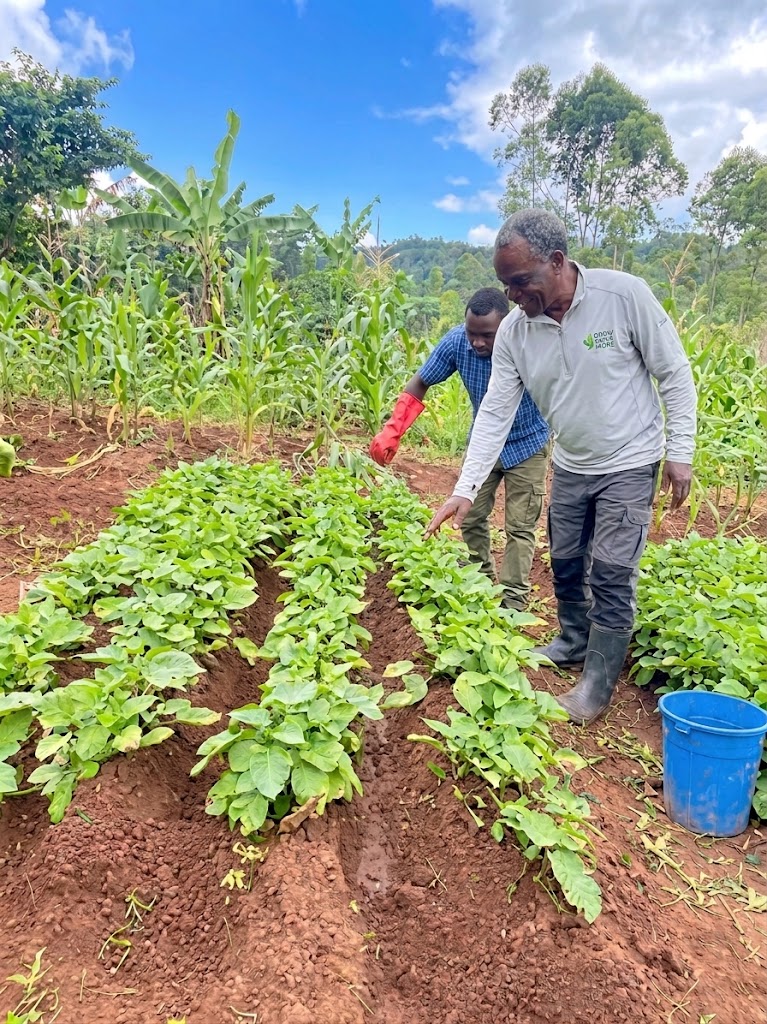
Research supported by the Ghana Agroecology Movement (GAEM) has identified fermented human urine as a potentially effective, affordable and environmentally sustainable alternative to synthetic herbicides used by smallholder farmers.
GAEM is a civil society-led platform facilitated by the Centre for Indigenous Knowledge and Organizational Development (CIKOD) and ActionAid Ghana. Its work seeks to combine indigenous farming knowledge with scientific testing to develop locally appropriate agricultural practices.
Trials conducted under the initiative reportedly found that properly collected and fermented urine could suppress weeds without the addition of conventional chemical herbicides.
The research is particularly relevant to small-scale farmers facing rising expenditure on imported agricultural inputs, including weedkillers and fertilizers.
Trials Show Potential for Weed Suppression
According to the findings, fermented urine displayed herbicidal properties when applied under controlled conditions and at appropriate concentrations. Treated areas reportedly recorded a significant reduction in weed pressure.
The approach builds on a practice already known among some farming communities in Ghana and other parts of West Africa, where stored or stale urine has historically been used for crop and weed management.
Supporters of the initiative say scientific testing has helped move the practice beyond anecdotal experience by examining its effectiveness under more standardized conditions.
Farmers in Ghana’s Upper East Region have also been reported to be adopting urine-based weed control as part of efforts to promote agroecological production.
A Source of Plant Nutrients
Human urine naturally contains nitrogen, phosphorus and potassium—three important nutrients required for plant growth. These nutrients explain why treated urine has been studied more widely as a fertilizer and nutrient-recovery product.
Research outside the Ghana project has found that processed urine can perform comparably to some conventional fertilizers under particular field conditions. However, results depend on the crop, soil, processing method and application rate. Frontiers in Sustainable Food Systems
Its use as a herbicide requires careful management because the same nitrogen and salt concentrations that damage unwanted plants could also injure crops if the solution is applied incorrectly.
Farmers would therefore need clear guidance on fermentation periods, dilution ratios, application methods and the appropriate distance between treated weeds and cultivated crops.
Possible Cost Savings for Farmers
One of the proposed benefits is its potential to reduce production costs.
Chemical herbicides and fertilizers constitute a substantial share of operating expenses for many smallholder farmers. Because human urine is a locally available waste stream, processing it for agricultural use could reduce dependence on some externally manufactured inputs.
The practice also fits within the principles of a circular economy by recovering nutrients from waste and returning them to agricultural production.
Its affordability at scale, however, would depend on more than the availability of the raw material. Safe collection systems, storage containers, transportation, labor, quality control and farmer training would all carry costs.
Reducing Dependence on Synthetic Herbicides
GAEM’s initiative comes amid wider debate about the health and environmental effects of intensive agrochemical use.
Glyphosate-based products remain widely used because of their effectiveness and relatively low cost. Nevertheless, their environmental effects and possible health risks continue to attract scientific and regulatory scrutiny internationally.
The urine-based formulation is being presented as a possible alternative for selected smallholder farming systems rather than an automatic replacement suitable for every crop or weed.
Its performance would need to be assessed against different weed species, weather conditions, soil types and farming systems before widespread recommendations could be made.
Implications for Soil Health
Advocates argue that biological preparations may reduce some of the ecological pressures associated with repeated synthetic herbicide applications. Recycled urine can also return nutrients to the soil rather than allowing them to enter waterways as waste.
However, claims that fermented urine will always improve soil health require caution. Scientific reviews indicate that repeated application can alter soil acidity, salt concentration and nutrient balance, particularly in soils with limited buffering capacity.
Appropriate application rates, periodic soil testing and pH monitoring may therefore be necessary. A 2026 scientific review noted that urine-derived fertilizers hold considerable potential but require treatment, careful dosing and site-specific management to address hygiene, nutrient loss and possible soil acidification. Frontiers in Soil Science
Safety and Handling Remain Important
Although urine from healthy individuals is generally considered a lower-risk waste stream than faecal matter, it should not be described as universally non-toxic or risk-free.
Poor collection practices may result in faecal contamination, while residues of medicines, salts and other substances can be present. Storage or fermentation methods must therefore follow appropriate hygiene and agricultural safety protocols.
The formulation should also undergo further testing to establish safe handling procedures, crop-specific application rates and possible effects on farmers, consumers, soil organisms and nearby water sources.
Regulatory standards would be necessary if the product were to be manufactured, distributed or promoted commercially.
Scientific Support for Indigenous Knowledge
Beyond its possible economic and environmental benefits, the research represents an effort to examine traditional agricultural knowledge through formal scientific methods.
Indigenous practices are often developed through years of observation and experimentation but may remain excluded from official extension programs because they lack documented testing or standardized instructions.
By investigating urine-based weed management, researchers and agroecology advocates can determine which elements are effective, identify potential risks and develop more reliable guidelines for farmers.
Ghana’s agroecology movement has increasingly promoted collaboration among scientists, farmers, civil society organizations and policymakers. The broader aim is to reduce harmful input use while protecting soil fertility, biodiversity and rural livelihoods. Agroecology Coalition
The findings suggest fermented human urine could become a useful weed-control option in some farming systems. Wider adoption, however, will require independent field trials, clearly defined preparation standards, environmental assessment and practical training to ensure that its use is effective and safe.
Source: Omanghana