Omanghana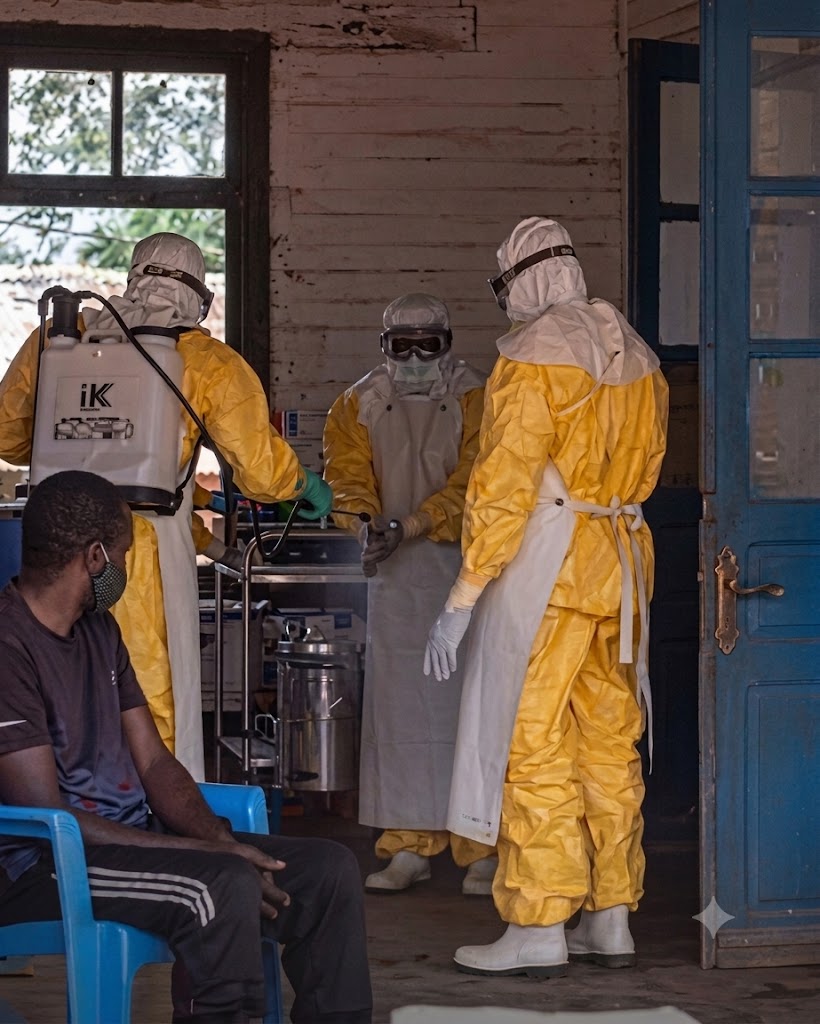
Health authorities are racing to contain a worsening Ebola outbreak in the Democratic Republic of the Congo (DRC) after revealing that nearly 300 people who tested positive for the virus cannot currently be located, raising fears of widespread community transmission.
The alarming development has prompted renewed concern from regional and international health agencies, which warn that the inability to trace infected individuals could significantly accelerate the spread of the disease both within the DRC and across neighboring countries.
Conflict Hindering Disease Control
Speaking on the growing crisis, Dr. Jean Kaseya, Director General of the Africa Centers for Disease Control and Prevention (Africa CDC), said ongoing armed conflict in eastern Congo has severely undermined efforts to contain the outbreak.
According to Dr. Kaseya, fighting in the region has displaced more than one million people, forcing many families into overcrowded camps where access to healthcare is extremely limited.
Health workers have struggled to reach several conflict-affected communities, making it increasingly difficult to identify infected individuals, monitor close contacts, and isolate new cases before the virus spreads further.
“The security situation continues to complicate surveillance and response efforts,” health officials have warned.
Outbreak Continues to Expand
The current Ebola outbreak, officially declared in mid-May 2026, has become the 17th recorded Ebola outbreak in the Democratic Republic of the Congo.
According to the DRC Ministry of Health, the country has recorded:
- More than 1,200 confirmed Ebola cases
- Over 320 deaths
- The highest concentration of infections in Ituri, North Kivu, and South Kivu provinces
The outbreak has also spread beyond the country’s borders.
Uganda has confirmed 20 Ebola cases, including two deaths in the capital, Kampala, while France recently reported its first imported case involving a doctor who tested positive after returning from a medical mission in the DRC.
Bundibugyo Strain Presents New Challenges
Health experts say this outbreak is particularly difficult to control because it is caused by the Bundibugyo virus species (BDBV), a less common strain of the Ebola virus.
Unlike previous outbreaks caused by the Zaire strain, there is currently no approved vaccine or specific antiviral treatment available for Bundibugyo Ebola.
The widely used Ervebo vaccine, which proved highly effective during earlier Ebola outbreaks, does not provide protection against the Bundibugyo strain.
As a result, response efforts depend heavily on rapidly identifying cases, isolating infected patients, and tracing everyone they have been in contact with.
Those measures become significantly more difficult when infected individuals cannot be located or are moving through areas affected by armed conflict.
Hundreds of Patients Unaccounted For
Officials say the disappearance of nearly 300 confirmed Ebola patients represents one of the greatest challenges facing the current response.
Many are believed to have fled conflict zones or been displaced by ongoing violence, while others may have relocated without notifying health authorities.
Without knowing their whereabouts, public health teams are unable to monitor their condition or identify people who may have been exposed to the virus, increasing the risk of silent community transmission.
WHO Warns of Worsening Outlook
The World Health Organization (WHO) has warned that the outbreak could grow substantially if transmission is not brought under control.
Current projections suggest the epidemic could exceed 8,000 confirmed cases and 1,400 deaths by mid-September if existing trends continue.
Health experts have also expressed concern that the virus could spread into neighboring countries, with modeling indicating a high probability of cross-border transmission into South Sudan because of population movement and porous frontiers.
In a worst-case scenario, uncontrolled transmission within internally displaced persons (IDP) camps could lead to tens of thousands of infections, placing enormous pressure on already fragile healthcare systems.
International Response Intensifies
Regional health agencies and international partners are continuing to deploy medical personnel, surveillance teams, and humanitarian support to affected areas.
However, officials stress that improving security, expanding access to conflict-affected communities, and locating the hundreds of missing Ebola patients remain essential to preventing the outbreak from escalating into an even larger regional public health emergency.
As the crisis unfolds, health authorities continue to urge neighboring countries to strengthen surveillance, enhance border screening, and prepare for the possibility of additional imported cases.
Source: Omanghana