Omanghana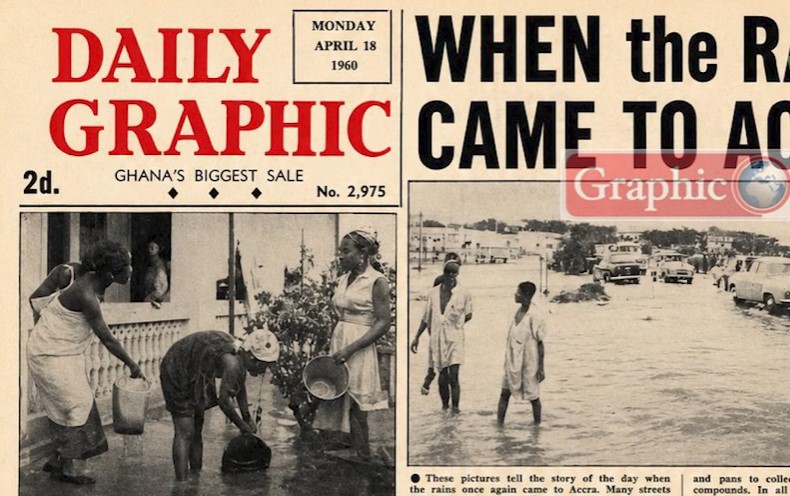
Perennial flooding in Ghana’s capital, Accra, is not simply a consequence of heavy rainfall, but the outcome of decades of planning failures, environmental degradation, and civic neglect, according to urban systems analyst.
Detailed breakdown of the crisis, shows that what is often framed as a “natural disaster” is in reality a predictable engineering and governance failure. Unregulated urban expansion has transformed routine rainy seasons into recurring humanitarian and economic emergencies.
Rather than assigning blame solely to weather patterns or political administrations, she calls for a dual accountability approach involving both state institutions and citizens.
A City Strained by Engineering and Environmental Breakdown
At the heart of Accra’s flooding crisis, Boahene identifies a series of structural failures that have fundamentally altered the city’s natural water absorption and drainage systems.
The “Concrete Jungle” Effect
One of the most significant contributing factors is uncontrolled urban development. Over time, large portions of the city’s natural landscape—once made up of wetlands, soil basins, and drainage corridors—have been replaced by concrete surfaces and paved infrastructure.
This transformation has eliminated the ground’s ability to absorb rainfall, forcing water to accumulate on roads and rapidly flow across urban surfaces. The result is high-speed runoff that overwhelms drainage systems within minutes of heavy rainfall.
Collapsing Drainage Infrastructure
Accra’s drainage network, including key channels such as the Odaw River basin, has reportedly become severely compromised.
According to the analysis, years of inadequate maintenance, combined with persistent dumping of waste and plastic materials, have reduced drainage capacity by more than 70%. Instead of channeling stormwater efficiently, many drains now function as choke points that worsen flooding during peak rainfall periods.
Destruction of Wetlands
Critical ecological zones that once acted as natural flood buffers—such as the Sakumono Ramsar site and the Densu Delta—have faced significant encroachment and degradation.
These wetlands historically absorbed excess rainwater and reduced pressure on urban drainage systems. However, unchecked development has seen residential estates, commercial buildings, and informal settlements expand into these protected areas, weakening their ecological function.
Weak Enforcement and Planning Failures
The report also highlights recurring weaknesses within Metropolitan, Municipal, and District Assemblies (MMDAs), where planning enforcement is often inconsistent or ineffective.
In some cases, building permits are allegedly issued for construction projects located directly on waterways or within designated drainage paths. These approvals, effectively institutionalize risk by allowing infrastructure that obstructs natural water flow and increases flood vulnerability.
Civic Behavior and the Role of Public Responsibility
While criticizing institutional failures, Boahene also places significant emphasis on public behavior as a contributing factor to the crisis.
“Weaponizing the Rain” Through Waste Disposal
One of the most damaging practices identified is the disposal of household waste into open gutters during rainfall.
In many neighborhoods, residents use heavy downpours as an opportunity to discard plastic waste and solid refuse, expecting flowing water to carry it away. Instead, this waste accumulates in drainage systems, forming blockages that rapidly trigger localized flooding and overflow into surrounding communities.
Encroachment Into High-Risk Zones
Informal construction in flood-prone areas also remains a persistent challenge. Small businesses, kiosks, and residential structures continue to be built along waterways and drainage corridors, often without adherence to safety guidelines or zoning regulations.
These encroachments not only obstruct water flow but also place thousands of residents directly in harm’s way when flooding occurs.
Breaking a Repeating Cycle of Disaster Response
In conclusion Accra’s flooding crisis has become trapped in a predictable cycle: heavy rainfall leads to flooding, officials conduct site visits, temporary relief is distributed, and long-term structural issues remain unresolved until the next storm.
To break this pattern, she outlines a dual-track intervention strategy requiring decisive action from both government and citizens.
What Authorities Must Do
- Remove illegal structures built on waterways and drainage paths
- Undertake large-scale desilting and rehabilitation of primary drainage systems
- Enforce planning regulations more strictly and hold officials accountable for illegal permitting
- Strengthen urban zoning laws to prevent future encroachment into wetlands and flood zones
What Citizens Must Do
- Stop disposing of waste into gutters and drainage channels
- Adopt proper waste management practices in homes and communities
- Respect zoning regulations and avoid construction in high-risk flood areas
- Embrace long-term civic discipline to reduce environmental strain on urban systems
A Call for Structural Change, Not Temporary Relief
Ultimately, Boahene’s analysis frames Accra’s flooding crisis as a structural urban governance challenge rather than an unavoidable natural event.
Without coordinated reform—combining enforcement, infrastructure renewal, and behavioral change—the city is likely to continue experiencing increasingly severe flooding events with each rainy season.
The report concludes that breaking this cycle will require sustained political will, institutional accountability, and a cultural shift toward shared responsibility in urban living.
Source: Omanghana \ Sarfoaa Boahene