Omanghana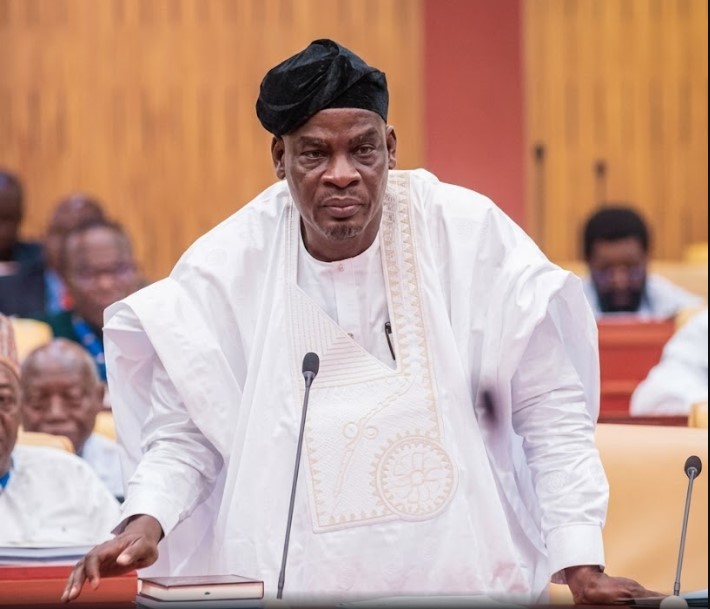
Ghana’s Minister for Education, Haruna Iddrisu, has raised concerns over the country’s continued dependence on imported goods, arguing that Ghana must strengthen local manufacturing and reduce reliance on foreign products.
Speaking during parliamentary discussions on job creation and industrial development, the former Minister for Trade and Industry expressed disappointment that Ghana still imports basic household items that could potentially be produced locally.
He specifically questioned why the country continues to import products such as toothpicks, describing the situation as a reflection of deeper structural weaknesses within Ghana’s industrial economy.
“How Come We Cannot Produce Toothpicks?”
Drawing from his previous experience as Minister for Trade and Industry, Iddrisu acknowledged his own responsibility as a former policymaker while reflecting on Ghana’s industrial challenges.
“I have been Minister for Trade and Industry before and I carry the shame. How come that in Ghana we cannot produce toothpicks and we have to import them?” he said.
The comment highlighted his broader argument that Ghana must move beyond exporting raw materials and importing finished products, a cycle that he believes continues to weaken the economy and place pressure on foreign exchange reserves.
Concerns Over Misuse of State Support Funds
The Education Minister also raised concerns about the effectiveness of government-backed private sector support programs.
According to Iddrisu, some individuals and businesses that received financial assistance intended to support economic development failed to use the funds for their intended purposes.
He alleged that in some cases, money allocated for productive activities—including agricultural development—did not reach the farms and projects it was meant to support.
The minister argued that stronger monitoring systems are needed to ensure public resources allocated for industrial and economic development create real jobs and expand productive capacity.
Youth Employment Requires New Approach
Iddrisu agreed that creating employment opportunities for Ghana’s growing population of young graduates remains one of the country’s most urgent priorities.
However, he questioned whether existing industrialization strategies have been sufficient to address Ghana’s deeper economic challenges.
He specifically criticized the government’s One District, One Factory (1D1F) initiative, arguing that while the concept aimed to promote industrial growth across the country, it has not delivered the scale of transformation required to solve Ghana’s unemployment and economic structural problems.
He called for a broader and more targeted approach focused on sustainable businesses, productivity, and long-term industrial competitiveness.
Call for Stronger Support for Local Manufacturers
The former Trade Minister urged Parliament and policymakers to introduce measures that encourage genuine private sector investment and support credible manufacturers.
He argued that government resources should be directed toward businesses with proven capacity to produce goods locally, create employment, and compete in domestic and international markets.
According to Iddrisu, strengthening local industries would help Ghana:
- Reduce dependence on imports.
- Preserve foreign exchange reserves.
- Create more employment opportunities.
- Add value to natural resources.
- Encourage entrepreneurship and innovation.
Ghana’s Import Dependency Remains a Major Economic Concern
Ghana continues to spend significant amounts of foreign currency importing goods ranging from industrial inputs to everyday consumer products.
Economists have repeatedly warned that heavy dependence on imports contributes to pressure on the Ghanaian cedi and exposes the economy to global price shocks.
While successive governments have introduced policies aimed at promoting local production, critics argue that challenges such as limited access to financing, high production costs, unreliable infrastructure, and weak industrial support systems continue to slow progress.
Push for Industrial Transformation
Haruna Iddrisu’s remarks add to ongoing national discussions about how Ghana can transition from a consumption-driven economy toward one based on production and value addition.
He emphasized that Ghana’s abundant natural resources must be better utilized through strategic investment in manufacturing and entrepreneurship.
The minister’s call reflects growing concerns among policymakers that achieving sustainable economic growth will require stronger domestic industries capable of producing more of what Ghanaians consume while creating meaningful employment opportunities for future generations.
Source: Omanghana