Omanghana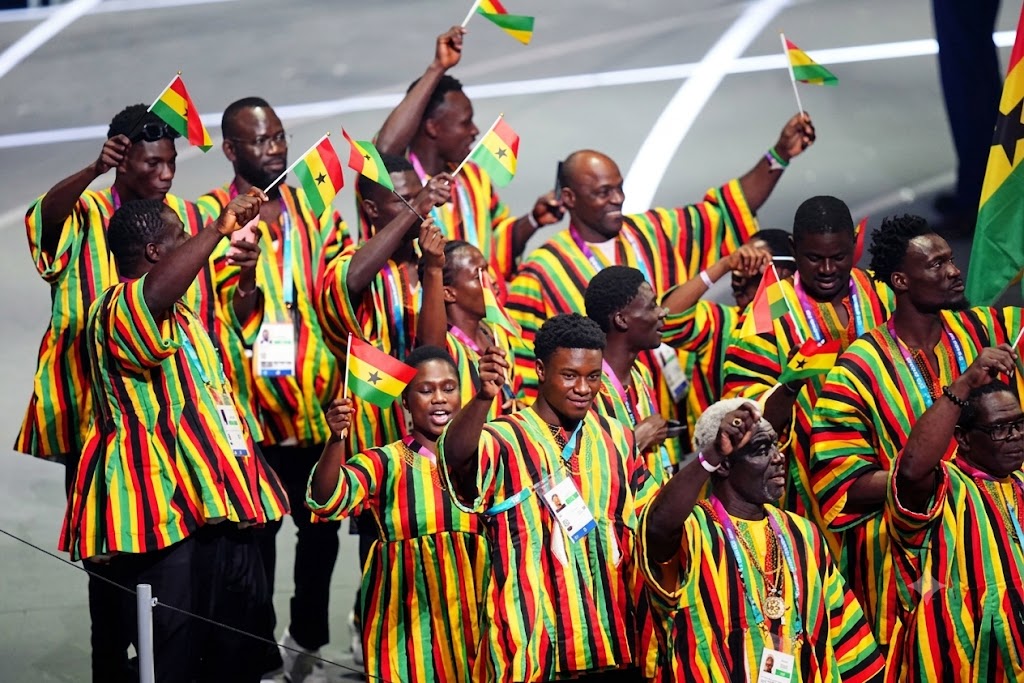
Ghana ended its campaign at the 2026 Commonwealth Games in Glasgow with two medals, placing 29th on the final medal table.
The country’s participation concluded on August 2, 2026, with one silver and one bronze medal. The outcome fell short of the Ghana Olympic Committee’s minimum target of five medals and represented a 60 per cent decline from the previous edition.
At the 2022 Commonwealth Games in Birmingham, Ghana won five medals—two silver and three bronze. However, a 40-member contingent competing across nine disciplines in Glasgow could not match that performance.
Para-athlete Zinabu Issah secured Ghana’s first medal after producing a season-best throw of 8.65 metres in the women’s F57 para-shot put. Her performance earned her silver and became Ghana’s highest achievement at the Games.
African Games boxing champion Amadu Mohammed delivered the country’s second medal in the men’s 55-kilogram division. He settled for bronze after losing his semifinal bout to Australia’s Jai Dixon by split decision.
Boxing had been expected to provide a significant share of Ghana’s medals, with the Ghana Olympic Committee projecting at least one gold from the Black Bombers. The team ultimately left Glasgow with only Mohammed’s bronze medal.
Ghana’s men’s 4×100-metre relay team came agonizingly close to reaching the podium. Joseph Paul Amoah, Ibrahim Fuseini, Barnabas Aggerh and Benjamin Azamati finished fourth in 38.13 seconds, missing bronze by just 0.01 seconds.
Australia won gold in 38.07 seconds, while Canada took silver in 38.11 seconds and Nigeria claimed bronze in 38.12 seconds.
Despite missing out on a medal, the relay result represented an improvement from Birmingham 2022, where Ghana was disqualified because of an administrative error.
There were also encouraging performances in the men’s 200 metres, where Joseph Paul Amoah and James Dadzie advanced to the final. Their efforts, however, did not produce additional medals.
The disappointing overall result has renewed debate about Ghana’s approach to developing sports outside senior men’s football.
Critics argue that the country’s limited success at major international competitions is not caused by a shortage of athletic talent but by weak institutional support and inconsistent investment.
Much of Ghana’s sports funding remains concentrated on the Black Stars, leaving boxing, athletics, para-sports and other disciplines dependent on limited or last-minute financial allocations.
As a result, many athletes struggle to access modern training equipment, sports medicine specialists, quality coaching and regular international competition. These deficiencies become particularly costly in events where medals are decided by milliseconds or extremely narrow margins.
Another concern is Ghana’s tendency to prioritize financial rewards for medal winners while investing less in long-term systems capable of producing elite athletes consistently.
Sports analysts have described this approach as attempting to harvest medals without first investing adequately in coaching, facilities, talent identification and sustained athlete preparation.
The performances of Zinabu Issah, Amadu Mohammed and the men’s relay team demonstrated Ghana’s potential. However, the country’s fall from five medals in Birmingham to two in Glasgow has strengthened calls for a long-term national sports policy backed by reliable funding and year-round development programmes.
Without deeper structural investment, Ghana risks continuing to attend major competitions primarily as a participant rather than emerging as a consistent international sporting force.
Source: Omanghana