Omanghana
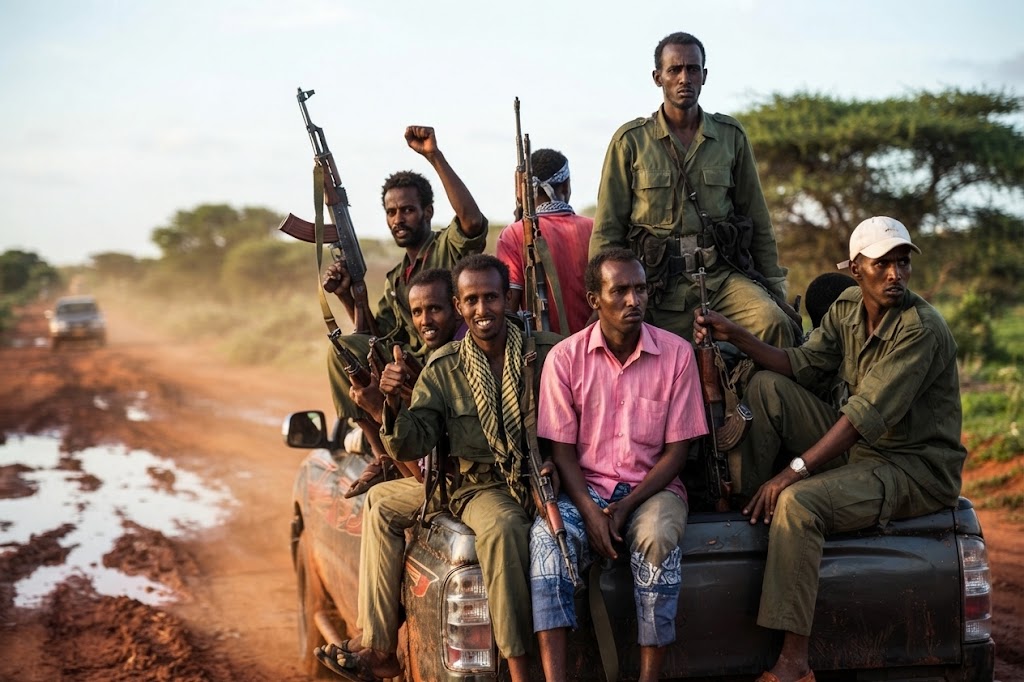
Somalia remains at risk of renewed territorial losses to al-Shabaab as political divisions, weak state institutions and uncertainty surrounding international security support continue to undermine efforts to stabilize the country.
The al-Qaeda-linked organization remains one of Africa’s most resilient militant groups. Although Somali and allied forces have periodically recovered territory, al-Shabaab continues to operate across extensive rural areas in southern and central Somalia.
The group exploits limited government presence to collect taxes, recruit fighters, regulate local economic activity and intimidate communities. Its ability to launch bombings, assassinations and coordinated attacks also allows it to challenge the authority of the federal government without permanently controlling major cities.
Security analysts warn that the threat cannot be addressed through military operations alone. Recovered communities require functioning local administrations, policing, justice systems and essential services. Without these structures, militants can return after government forces withdraw or redeploy.
Political disagreements between the Federal Government of Somalia and some federal member states have further complicated the response. Disputes over constitutional changes, electoral arrangements, resource sharing and the division of federal powers have weakened cooperation and diverted attention from the campaign against al-Shabaab.
The absence of a unified political and security strategy provides opportunities for the militant group to exploit local grievances, clan divisions and institutional rivalries. Analysts say sustained power-sharing and cooperation between Mogadishu and regional administrations are essential to building an effective national response.
Concerns have also intensified over the future of the African Union Support and Stabilization Mission in Somalia. AUSSOM replaced the African Union Transition Mission in Somalia in January 2025 and was mandated to support Somali forces while gradually transferring full security responsibilities to national authorities.
The transition has faced financial and logistical difficulties. African Union officials have repeatedly called for predictable international funding, warning that hard-won security gains could be reversed without sufficient resources for personnel, equipment and operations.
A premature reduction in international forces could leave strategic towns, supply routes and recently recovered areas exposed before Somali security personnel are adequately equipped to hold them independently.
Despite the seriousness of the threat, Somalia’s collapse into jihadist control is not inevitable. The country continues to receive support from the African Union and international partners, while Somali forces and local authorities remain engaged in operations against al-Shabaab.
Preventing further deterioration will require stronger political cooperation, reliable financing for AUSSOM, accountable national security institutions and sustained governance in areas recovered from militants. Without progress in these areas, al-Shabaab is likely to remain capable of exploiting Somalia’s political and institutional weaknesses.
Source: Omanghana