Omanghana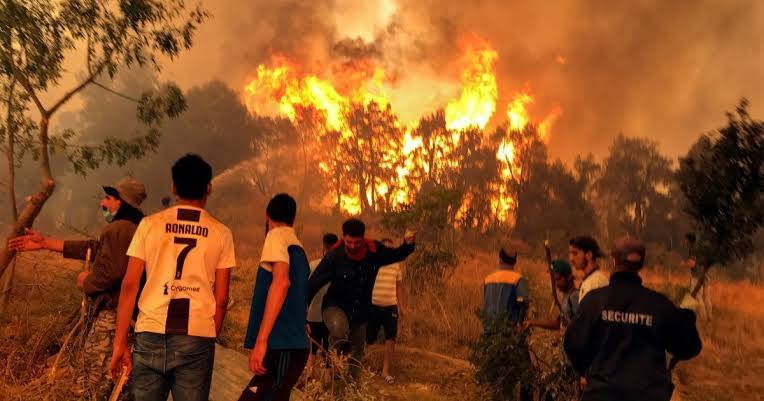
At least 12 people have been killed and 54 others injured after severe wildfires swept through northeastern Algeria amid an intense heatwave, strong winds and extremely dry vegetation.
Algerian Interior Minister Said Sayoud said the deaths and most serious injuries were recorded across the northern coastal provinces of Jijel, Béjaïa and Tizi Ouzou.
Jijel recorded five fatalities as fires spread through rural communities and heavily forested districts. Four people died in Béjaïa, where authorities evacuated dozens of homes as flames approached populated areas.
Three additional deaths were reported in the mountainous province of Tizi Ouzou.
At least 54 people suffered burns or smoke inhalation during the disaster. Several critically injured patients were admitted to intensive care units for treatment.
Algeria’s Civil Protection Directorate recorded more than 150 active forest and vegetation fires nationwide at the height of the emergency.
Authorities deployed aerial water bombers, specialized firefighting teams and local emergency personnel to contain the flames and protect threatened communities. Evacuation operations were also carried out in areas where the fires posed an immediate danger to residents.
Sayoud and Health Minister Mohamed Seddik Aït Messaoudène travelled to some of the worst-affected communities in Béjaïa to supervise the emergency response.
Their visit focused on coordinating evacuations, assessing the damage and ensuring hospitals and medical teams could respond to the rising number of casualties.
Firefighters faced difficult conditions as high temperatures, powerful winds and dry vegetation accelerated the spread of the blazes.
Northern Algeria is particularly vulnerable to seasonal wildfires during Mediterranean heatwaves. Prolonged drought, declining soil moisture and rising regional temperatures have increased the frequency and intensity of such emergencies.
Authorities continued working to bring the remaining fires under control while monitoring conditions in communities considered at risk of further outbreaks.
Source: Omanghana