Omanghana
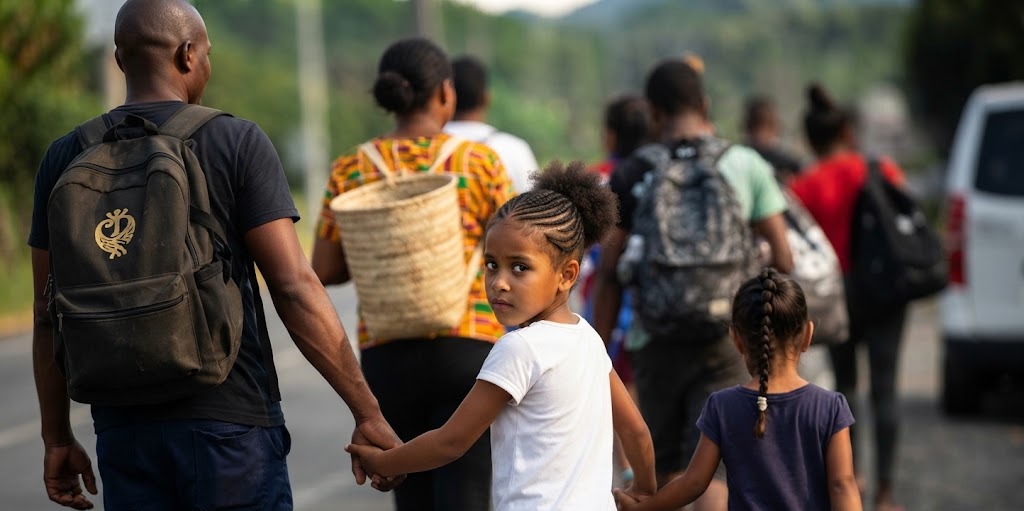
The Trump administration’s growing use of third-country deportations has drawn renewed scrutiny, with reports identifying agreements involving 14 African nations and human rights investigators warning that some deportees face detention and onward removal to danger.
Business Insider Africa reported that the wider network had transferred more than 25,000 people to 29 countries globally, with over US$49 million linked to arrangements in Africa. Third-country removals involve sending people to countries other than their own.
In a report released on October 8, 2026, Human Rights Watch said more than 500 people had been transferred from the United States to African countries where they had no connections, without meaningful opportunities to challenge their removal.
The organisation’s 125-page investigation included interviews conducted between February and July with 24 people sent to Cameroon, the Central African Republic, the Democratic Republic of Congo, Equatorial Guinea, Eswatini and South Sudan.
Researchers reported cases of arbitrary detention, inadequate access to medical treatment and pressure to return to countries where deportees feared persecution or torture. Human Rights Watch argued that some onward removals violated the principle of non-refoulement, which protects people against return to serious danger.
The organisation also raised concerns about at least a dozen LGBT people transferred to African states that criminalise same-sex relations or conduct. Some had previously received protection in the United States because of risks associated with their sexual orientation or gender identity.
Human Rights Watch urged Washington to halt transfers to countries unable to provide fair asylum procedures and called on receiving governments to suspend arrangements that expose people to abuse.
Separately, reporting on the wider immigration crackdown has highlighted estimates that more than 35,000 children have experienced the removal of both parents. That figure concerns the broader consequences of immigration enforcement and should not be treated as a count of children affected specifically by African third-country transfers.
Source: Omanghana