Omanghana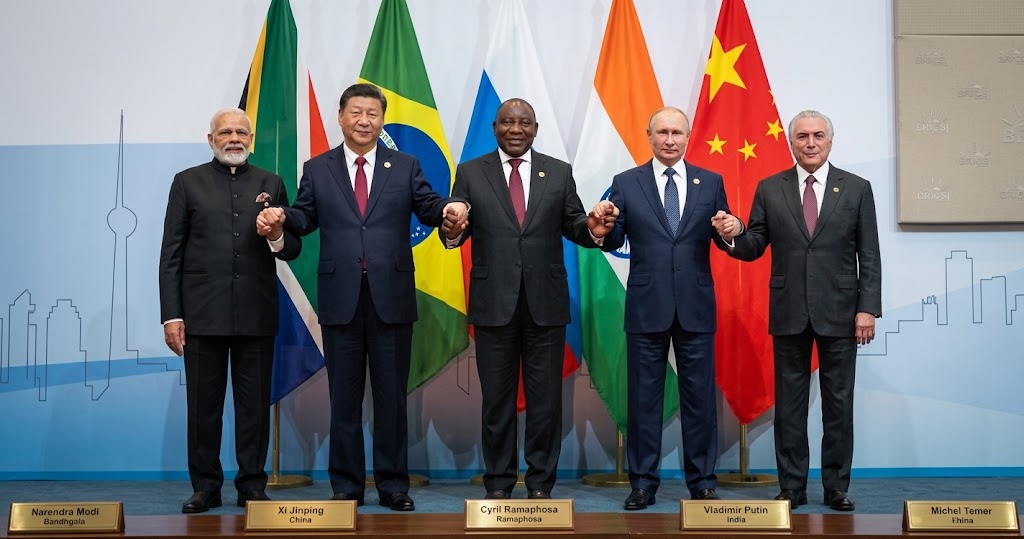
Leaders of the expanded BRICS group have renewed efforts to reduce their dependence on the United States dollar by promoting local-currency trade and developing alternative cross-border payment systems.
Financial autonomy featured prominently at the 18th BRICS Summit, held in New Delhi from September 12 to 13, 2026. The meeting brought together leaders and representatives from the bloc, including India, China, Russia, Iran, Saudi Arabia, Egypt, Ethiopia and South Africa.
Despite continued speculation about the introduction of a common BRICS currency, the summit did not endorse plans to create one. Members instead agreed to concentrate on practical measures that would make it easier to conduct trade and investment using their national currencies.
These measures include connecting domestic payment platforms, expanding bilateral currency-settlement arrangements and exploring links between central bank digital currencies.
The approach is intended to reduce transaction costs, shorten settlement periods and limit reliance on Western-controlled financial infrastructure, including the Society for Worldwide Interbank Financial Telecommunication, commonly known as SWIFT.
The BRICS Payment Task Force has been directed to continue developing an interoperable payment framework capable of connecting domestic instant-payment systems. India’s Unified Payments Interface is among the national platforms being considered within the broader initiative.
Rather than replacing existing payment systems with a single BRICS platform, the proposed arrangement would allow participating countries to connect their domestic networks and settle eligible transactions through local-currency channels.
The New Delhi Declaration also criticized unilateral coercive measures, secondary sanctions and trade restrictions. BRICS leaders argued that such measures disrupt global supply chains, distort international commerce and undermine established multilateral rules.
Russia and Iran have been among the strongest supporters of alternative payment channels because of the extensive sanctions imposed on their economies. Other members are primarily interested in reducing foreign exchange risks, lowering transaction costs and protecting trade from sudden policy changes in major Western economies.
The summit also called on the New Development Bank to increase financing in the currencies of member countries. Expanding local-currency lending could help governments and businesses avoid some of the exchange-rate risks associated with borrowing in dollars.
The bank was further encouraged to strengthen credit guarantees and other risk-sharing mechanisms capable of attracting private investment into infrastructure and development projects across BRICS economies.
Local-currency settlement is already being used in some bilateral trade relationships. India and Russia have explored rupee-ruble transactions, while China and Russia have significantly expanded the use of the yuan and ruble.
These arrangements may reduce dependence on correspondent banks and provide alternative channels for countries facing restrictions on dollar-based transactions. They can also lower intermediary fees and accelerate payments between trading partners.
However, replacing the dollar as the world’s dominant reserve and settlement currency remains a difficult long-term objective.
The dollar benefits from highly liquid financial markets, broad international acceptance and the depth of the United States’ capital markets. Several BRICS currencies are subject to capital controls, limited convertibility or relatively shallow financial markets, making them less attractive as global reserve assets.
Trade imbalances create another obstacle. When one country exports considerably more than it imports, it may accumulate large amounts of its trading partner’s currency. If that currency cannot be freely converted or invested in a sufficiently deep market, the holdings become difficult to use.
Political differences within BRICS could also slow the process. While Russia and Iran favour systems that provide insulation from Western sanctions, India, Brazil and the United Arab Emirates have generally pursued a more pragmatic strategy.
These countries maintain important economic relationships with Western nations and are more interested in expanding payment choices than transforming BRICS into an explicitly anti-Western economic alliance.
The summit’s decisions therefore point towards gradual financial diversification rather than an immediate attempt to displace the dollar. BRICS members are building additional settlement routes, increasing the use of national currencies and strengthening development financing while recognizing the structural challenges involved in changing the global monetary system.
Source: Omanghana