Omanghana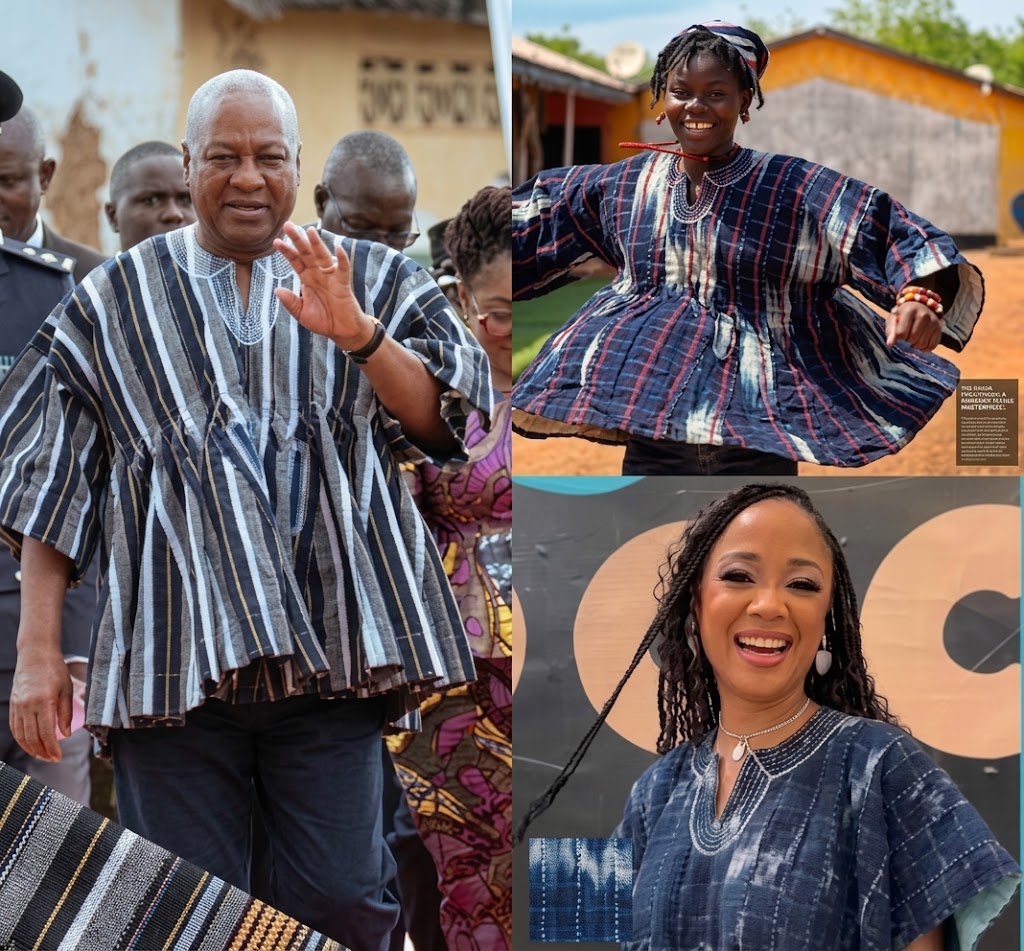
Ghanaian weaver Alice Bazaanaa has showcased the country’s traditional Fugu weaving craft at the Chocolate Has a Name Festival in Halifax, West Yorkshire, United Kingdom.
Bazaanaa held live weaving demonstrations at the Kokoo Museum, offering visitors an opportunity to observe how the celebrated Northern Ghanaian textile is produced on a traditional strip loom.
The sessions also introduced participants to the knowledge, skills and cultural traditions transferred from one generation of Ghanaian weavers to another.
The festival edition, held from late August to early September, was organized under the theme, “The Untutored Mind: A Thing of Beauty.” It received support from a British Council Biennales and Festivals Grant.
Its programme included public lectures, conversations with artists, practical workshops and cultural exchanges designed to promote learning through creative expression.
The Chocolate Has a Name Festival examines Ghana’s cocoa history, traditional craftsmanship and longstanding cultural connections with Britain. It uses art, fashion, storytelling and community engagement to highlight Ghanaian experiences and creative practices.
Bazaanaa’s participation placed attention on Fugu, which is also known as Batakari and has its roots in Ghana’s Northern, Upper East and Upper West regions.
The textile is produced by weaving narrow strips of cotton fabric on a traditional loom. The strips are subsequently joined together to create durable smocks, shirts, dresses and other garments.
Fugu is widely recognised as an important symbol of Ghanaian identity. Its distinctive patterns, colours and craftsmanship reflect the histories and traditions of the communities where it is produced.
The indigenous fabric has experienced renewed national prominence in recent years, leading the Ministry of Tourism, Culture and Creative Arts to designate Wednesdays as National Fugu Day.
The initiative seeks to encourage Ghanaians to wear locally made textiles, preserve traditional weaving skills and create greater economic opportunities for artisans.
Through her demonstration in Halifax, Bazaanaa helped introduce an international audience to the technical skill and cultural significance behind one of Ghana’s most recognizable traditional fabrics.
Source: Omanghana