Omanghana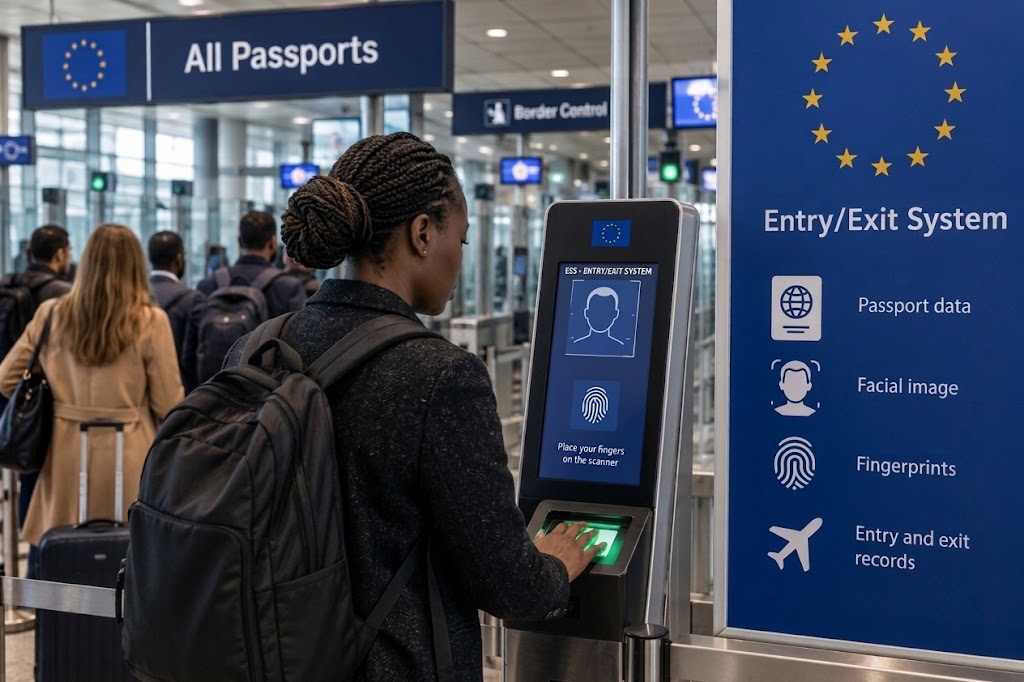
African travelers visiting Europe are facing new border procedures following the full enforcement of the Entry/Exit System across 29 participating European countries.
The development follows the expiration of temporary measures that allowed border authorities to suspend or ease some digital processing requirements during periods of severe congestion.
Under the system, traditional passport stamping has been replaced by a centralized digital record for non-European Union nationals travelling for short stays.
The EES records each traveler’s name, biometric information and the precise date and location of entry and departure. The system applies to tourists, business professionals, students and people visiting relatives, including travelers from African countries.
Eligible passengers must provide a digital facial image and fingerprints when registering. Although many African travelers may have previously submitted biometric information when applying for a Schengen visa, those records do not exempt them from completing the separate EES registration process at the border.
First-time users may be directed to self-service kiosks or processed by border officials. Subsequent journeys are expected to be faster because travelers’ details will already be stored in the system, although identity checks will still be required.
The transition has raised concerns about longer queues and missed flight connections. International airlines have warned that mandatory biometric registration could create bottlenecks at busy airports, ferry terminals and land crossings, particularly during peak travel periods.
With temporary emergency flexibility no longer available, travelers have been advised to arrive earlier than usual and allow additional time when using departure or transit hubs.
The EES will also automatically calculate how long a traveler is authorized to remain in the participating countries. For most short-term visitors, this is limited to 90 days within any 180-day period.
Authorities will be able to identify overstays, previous entry refusals and irregular travel records across all participating states. The digital system is intended to strengthen border security, prevent identity fraud and improve enforcement of short-stay immigration rules.
African travelers preparing to visit Europe should ensure that their passports and visas are valid, understand the biometric registration requirements and make adequate plans for possible processing delays.
Source: Omanghana