Omanghana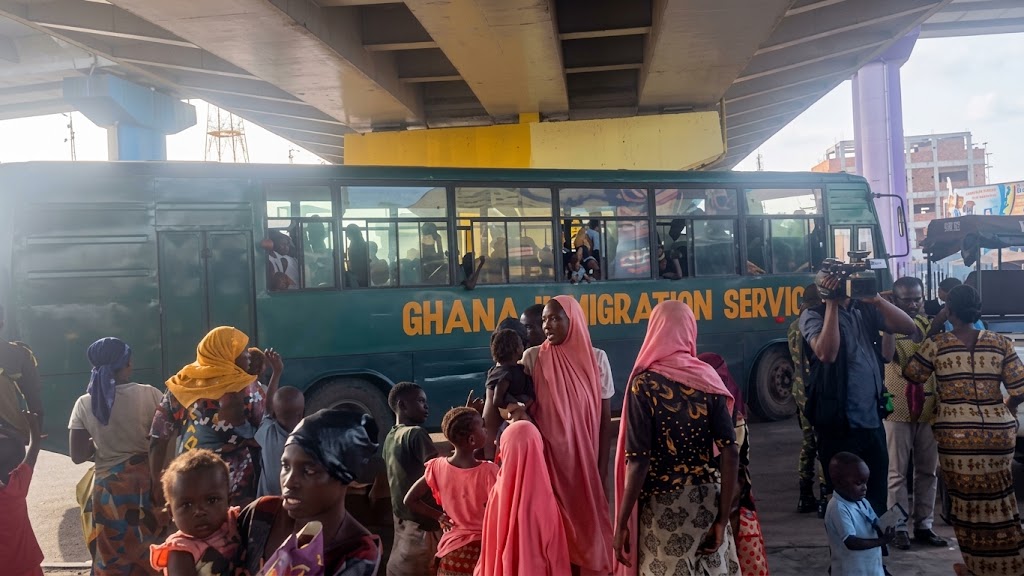
The Ghana Immigration Service, working with the Ministry of Gender, Children and Social Protection and local law-enforcement agencies, has removed and repatriated more than 4,000 foreign nationals and migrant street beggars from major urban centers.
The sustained operation is intended to address unlawful street begging, irregular migration and the suspected exploitation of women and children by organized cross-border networks.
Immigration officers have conducted enforcement exercises at busy commercial centers and major traffic intersections in Accra, Kumasi and surrounding areas.
Locations targeted include the Kwame Nkrumah Circle, Kaneshie and La, as well as Kasoa in the Central Region. Similar exercises have been undertaken in parts of the Ashanti Region, particularly Kumasi, where migrant begging has become increasingly visible.
Authorities said most of the people encountered during the operations originated from countries within the Sahel and West African sub-region.
The majority were reportedly Nigerien nationals, while smaller numbers came from Nigeria, Burkina Faso, Mali and Guinea.
Officials have maintained that the exercises are not based solely on nationality. Individuals taken into custody are expected to undergo immigration checks to determine their identity, legal status and circumstances before a decision is made concerning repatriation.
Those apprehended are transported to designated holding centers for profiling, biometric documentation and security screening. Adults and children are separated according to established protection procedures, while men and women are placed in appropriate holding areas.
The involvement of the Ministry of Gender, Children and Social Protection is particularly important in cases involving minors, pregnant women, nursing mothers and suspected victims of trafficking.
Authorities have expressed concern that some women and children may have been brought into Ghana by organized groups and compelled to beg at traffic intersections, markets and other crowded locations.
Children are frequently exposed to road accidents, extreme weather, hunger, violence and other forms of abuse while spending long hours on the streets. Some are also denied access to education and healthcare.
The operation is backed by Ghana’s Beggars and Destitute Act of 1969, NLCD 392, which prohibits begging and provides a legal basis for removing people involved in the practice from public spaces.
Immigration laws also permit authorities to remove foreign nationals who have entered the country irregularly, violated the conditions of their stay or engaged in prohibited activities.
Officials say the intervention is not simply an effort to clear streets and intersections. It is also intended to dismantle networks suspected of trafficking vulnerable people across borders for organized begging.
Following the screening process, undocumented migrants are repatriated through coordinated cross-border arrangements. Ghanaian authorities are expected to work with diplomatic representatives and immigration agencies in the migrants’ countries of origin to facilitate their return.
Despite the scale of the exercise, the Ghana Immigration Service continues to face difficulties preventing deported individuals from returning.
Some migrants reportedly re-enter Ghana through unapproved land routes shortly after being repatriated. The country’s extensive borders and numerous informal crossing points make sustained monitoring difficult.
The Economic Community of West African States’ free-movement framework allows citizens of member countries to travel within the region, but it does not eliminate immigration requirements or permit unlawful activities.
ECOWAS nationals are still expected to enter through recognized border points, present valid travel documents and comply with the laws of their host country.
Officials have therefore called for improved border surveillance, stronger cooperation among West African governments and better intelligence-sharing to stop trafficking networks from moving vulnerable people repeatedly across national boundaries.
There are also growing calls for enforcement operations to be supported by long-term social interventions. Critics warn that street sweeps and deportations alone will not resolve the poverty, conflict, displacement and unemployment that drive irregular migration and organized begging.
Authorities will need to ensure that all removals are conducted humanely and in accordance with Ghana’s domestic laws and international obligations. Special safeguards are particularly necessary for children, trafficking victims and individuals who may require international protection.
The continued return of undocumented migrants to Accra’s streets demonstrates the complexity of the problem and the need for a coordinated regional response involving immigration enforcement, child protection, anti-trafficking investigations and economic support.
A field report showing the enforcement operations and the difficulties posed by undocumented re-entry is available here.
Source: Omanghana