Omanghana
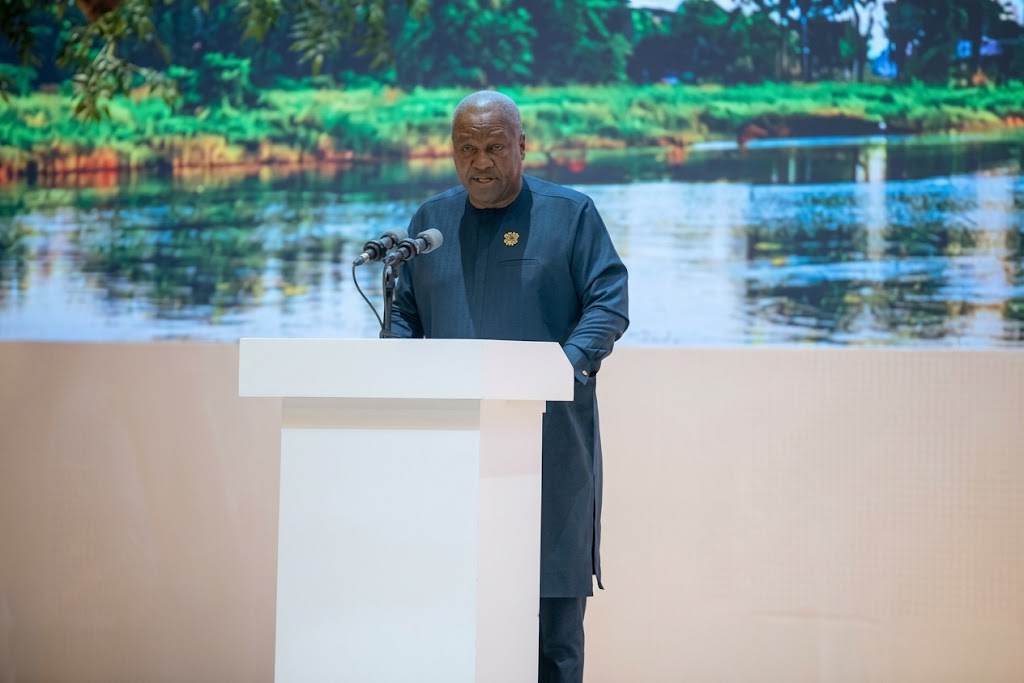
President John Dramani Mahama has urged African governments to modernize their security systems, warning that commercial drones and digital platforms are changing how armed groups operate across the continent.
Presenting the 2026 Tana State of Peace and Security in Africa Report, Mahama described the digital space as an “asymmetrical war zone,” where relatively inexpensive technologies allow non-state actors to challenge conventional security structures.
He pointed to the growing use of commercial drones by armed groups, citing Sudan as an example of the destructive consequences of technology-driven warfare.
The President also raised concerns about extremist organizations using TikTok, WhatsApp and Telegram to distribute disinformation, radicalize vulnerable young people and recruit supporters. Such platforms, he said, enable these groups to reach audiences beyond traditional media channels.
Mahama argued that government institutions have struggled to match the speed at which these threats are evolving. He warned that African countries are attempting to “fight a 21st-century digital insurgency with 20th-century bureaucracy.”
His remarks called attention to the gap between rapidly adapting armed groups and state systems constrained by slow administrative processes.
To address that imbalance, Mahama urged African countries to move beyond consuming imported technologies and develop stronger domestic capabilities. He advocated investment in cyber infrastructure, more responsive technology regulation and improved border surveillance.
The President’s call aligns with Ghana’s announced plans for a Cyber and Electronic Warfare Centre at the Tamale Air Force Base. The proposed facility is intended to strengthen border monitoring and support the country’s response to security threats, alongside investments in drones and advanced communication systems.
Mahama’s message placed technological preparedness at the center of Africa’s security priorities, stressing the need for institutions capable of responding as quickly as the threats they face.
Source: Omanghana