Omanghana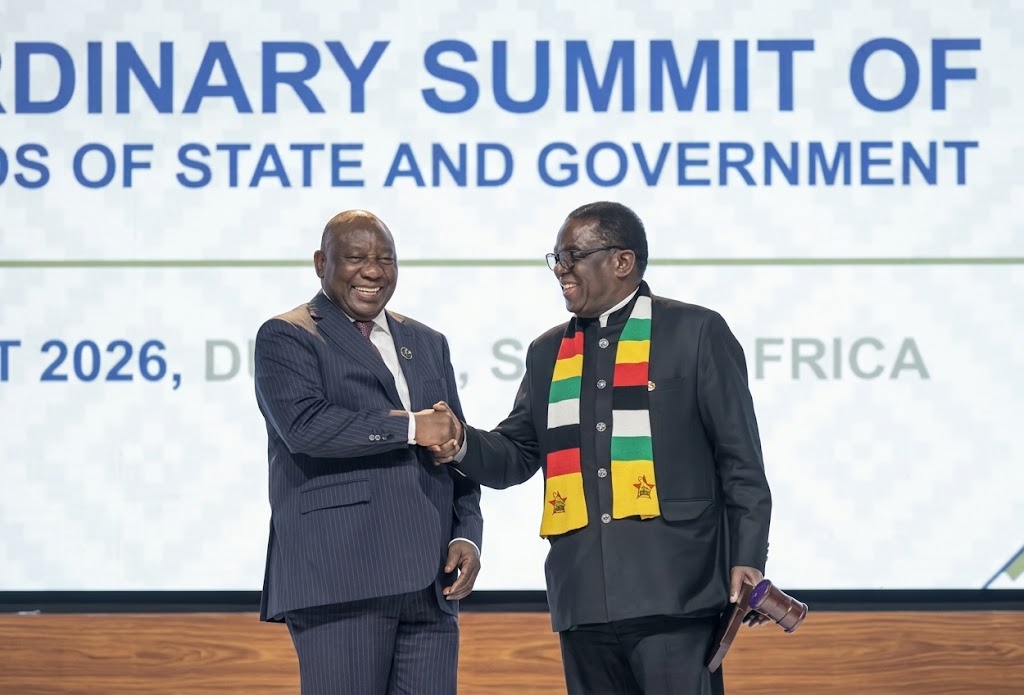
South African President Cyril Ramaphosa has condemned the latest wave of xenophobic violence and anti-immigrant vigilantism in the country, describing the situation as a source of deep concern and national shame.
Ramaphosa addressed the issue during the 46th Southern African Development Community Summit held in Durban, where undocumented migration, regional security and economic cooperation featured prominently on the agenda.
Speaking before leaders from across Southern Africa, the president warned that attacks on foreign nationals contradicted the regional integration principles promoted by SADC.
“We cannot preach integration at summits and practice exclusion in the streets,” Ramaphosa said.
He expressed concern about the growing activities of vigilante groups accused of intimidating migrants, blocking them from accessing public services and forcing them out of communities.
The latest escalation in anti-immigrant demonstrations and violence has reportedly forced more than 178,000 African migrants to leave South Africa. Many of those affected are citizens of neighboring SADC countries, including Zimbabwe, Malawi and Mozambique.
South Africa has experienced repeated outbreaks of xenophobic violence over the years. Migrants are frequently blamed for unemployment, crime, pressure on public services and the shortage of affordable housing.
The country continues to struggle with high unemployment, economic inequality and deteriorating basic services in several communities. These challenges have contributed to public frustration, which vigilante organizations and anti-immigrant groups have increasingly directed towards foreign nationals.
Human rights organizations have warned that undocumented migrants are particularly vulnerable because many fear reporting threats or attacks to law-enforcement agencies. Some also face difficulties accessing healthcare, education and other essential public services.
Ramaphosa stressed that the frustration of South Africans over unemployment, crime and poor service delivery could not justify violence or discrimination against people from other African countries.
He urged governments across the region to work collectively to address both irregular migration and the conditions that push people to leave their countries.
According to the South African leader, poverty, political instability, conflict and a lack of economic opportunities remain major drivers of migration within the region.
He called on SADC member states to strengthen their economies, improve governance and create employment opportunities, particularly for young people. Such measures, he argued, would reduce the desperation that often forces citizens to undertake unsafe or undocumented journeys across borders.
The summit highlighted the need for a coordinated regional approach to migration rather than separate national responses. Leaders discussed improving border management while protecting the dignity and human rights of migrants.
There have also been renewed calls for SADC to develop a unified protocol addressing xenophobia and hate speech. Supporters of the proposal want member states to introduce compatible laws that clearly criminalize xenophobic violence, incitement and organized intimidation.
Advocates argue that such a framework would make it easier for regional governments to share information, investigate cross-border extremist networks and hold perpetrators accountable.
However, migration experts have cautioned that stronger criminal laws must be accompanied by improved documentation systems and practical legal pathways for people seeking employment, protection or family reunification in other SADC countries.
South Africa remains a major destination for migrants because of its comparatively large and diversified economy. Many people from neighboring states travel there in search of employment, education, healthcare and protection from political or economic instability.
The scale of undocumented migration has nevertheless created political tensions. Communities facing unemployment and inadequate public services often believe that migrants are receiving access to limited resources at their expense.
Analysts say these perceptions are frequently exploited by political actors and vigilante groups, even though South Africa’s wider economic and governance challenges cannot be attributed solely to immigration.
Beyond migration and xenophobic violence, the Durban summit discussed the continuing security crisis in the eastern Democratic Republic of the Congo.
The conflict has displaced large numbers of civilians and created instability that extends beyond the DRC’s borders. SADC leaders reviewed regional efforts to support peace, protect civilians and encourage a political settlement.
Gender-based violence was another major subject of discussion. Leaders considered ways to strengthen national laws, improve support for survivors and address social conditions that allow violence against women and children to continue.
The summit also examined measures to increase trade and industrialization within Southern Africa. Despite efforts towards regional integration, trade among SADC member states remains constrained by infrastructure gaps, border delays and different regulatory systems.
Regional leaders stressed that expanding local manufacturing and cross-border trade would create employment and reduce economic pressures contributing to migration.
Ramaphosa’s remarks placed responsibility on both South Africa and the wider region. While neighboring governments were encouraged to address the conditions driving migration, South Africa was also urged to protect foreign nationals and prevent vigilante groups from operating outside the law.
The summit concluded with renewed calls for cooperation on migration, security and economic development. SADC leaders acknowledged that the region’s challenges are interconnected and require coordinated action rather than isolation, hostility or violence.
Source: Omanghana