Omanghana
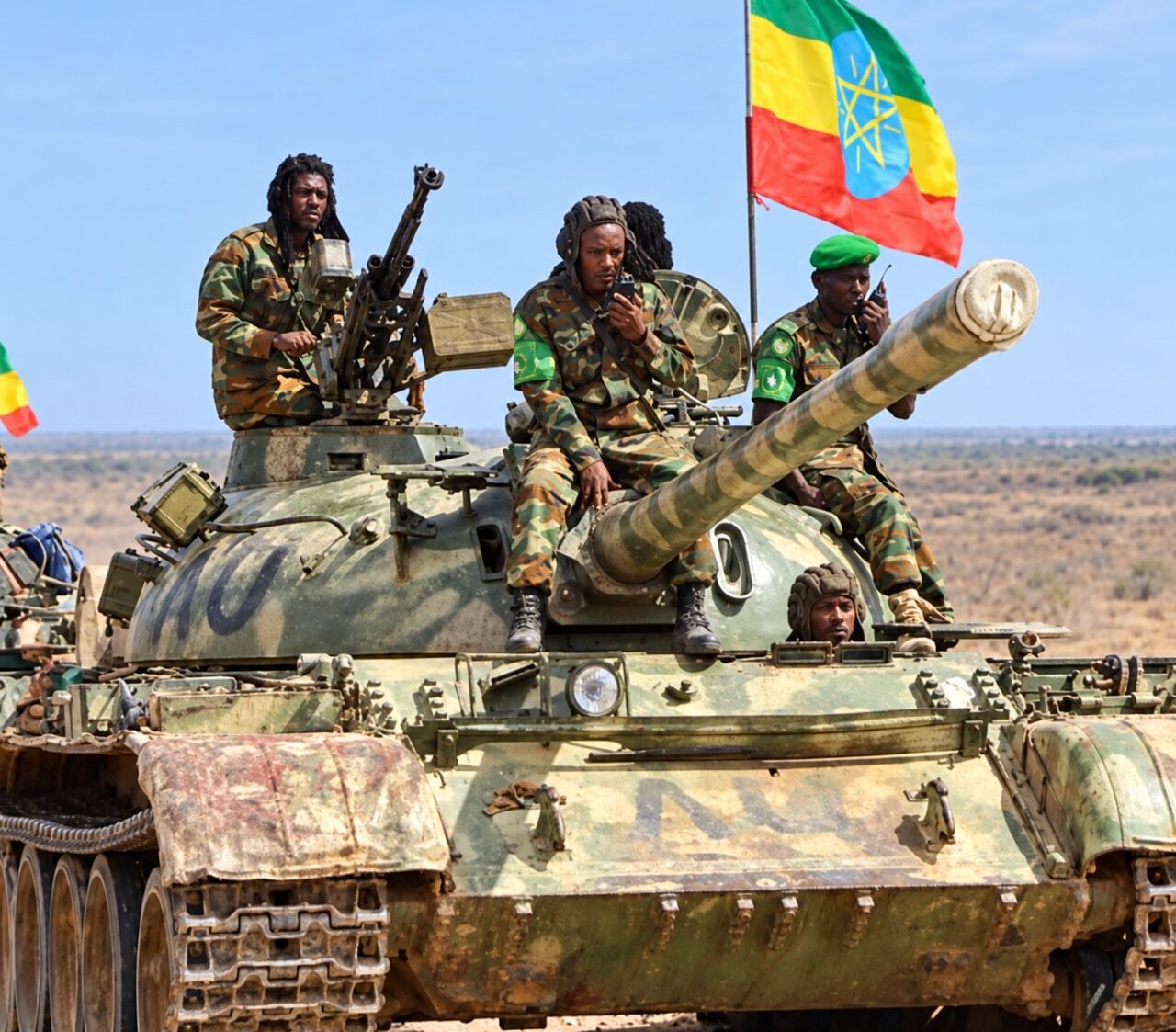
Renewed fighting in northern Ethiopia is raising concerns among conflict analysts that the country’s latest escalation could develop into a broader crisis affecting the wider Horn of Africa.
Tensions have intensified in Tigray, Amhara and Afar, more than three years after the 2022 Pretoria peace agreement brought the main phase of Ethiopia’s previous civil war to an end.
The renewed violence has involved Ethiopian federal forces, Tigrayan forces and Amhara Fano fighters, while a newly announced alliance of seven armed and political groups has added another dimension to the conflict.
The developments have prompted warnings that continued escalation could further destabilize an already volatile region, particularly given Ethiopia’s strained relations with neighboring Eritrea and the ongoing war in Sudan.
Former Rivals Join Forces
One of the most significant changes from the 2020–2022 conflict is the emergence of new alliances among groups that previously fought on opposing sides.
Seven armed and political factions have announced the formation of the Ethiopian Peoples’ Forces Alliance for Survival, whose stated objective is to remove Prime Minister Abiy Ahmed’s government.
The alliance includes the Tigray People’s Liberation Front (TPLF), the Amhara Fano National Movement, the Oromo Liberation Army (OLA), the Ogaden National Liberation Front, the Afar Revolutionary Democratic Unity Front, the Benishangul Peoples’ Liberation Front and the Gumuz Peoples’ Democratic Movement.
The alignment is particularly significant because the TPLF and Fano forces were on opposing sides during the previous Tigray war. ACLED analysts, however, caution that the groups have different political objectives and longstanding rivalries, which could make sustained cooperation difficult.
Fighting Spreads Across Northern Ethiopia
The latest escalation has extended beyond Tigray itself.
According to the Armed Conflict Location & Event Data Project (ACLED), clashes have been reported along the Tigray-Amhara and Tigray-Afar borders, involving federal forces, Tigrayan forces and Amhara Fano fighters.
On September 23, Tigrayan forces took control of airports in Mekelle, Aksum and Shire, according to ACLED. The organization also reported fighting along several areas of the Tigray-Amhara border and the Tigray-Afar border.
ACLED said the renewed fighting follows weeks of escalating military activity, including troop movements, heavy weapons deployments and drone strikes.
The organization described the current conflict as serious but noted that it remains in an early phase and has not yet reached the scale of the 2020–2022 war.
Eritrea Adds a Major Regional Dimension
Eritrea remains one of the most important variables in the unfolding crisis.
During the previous Tigray war, Eritrean forces fought alongside Ethiopia’s federal government against the TPLF. Relations between Addis Ababa and Asmara have since deteriorated, creating a very different regional environment from that of the earlier conflict.
ACLED has warned that renewed fighting in Tigray could have consequences beyond Ethiopia, particularly because of the changing relationships between Ethiopia, Eritrea and other regional actors.
Any direct Eritrean involvement would potentially add another international dimension to the conflict, although the precise nature of Eritrea’s current role remains contested.
Sudan Creates Another Risk
The crisis is also unfolding next to Sudan, which has been experiencing its own devastating civil war.
Ethiopia’s western regions border Sudan, raising concerns among regional analysts about the potential for the two conflicts to interact through population displacement, weapons movements and cross-border political or military activity.
The instability comes as Ethiopia is already dealing with armed conflict in Amhara and an ongoing insurgency involving the Oromo Liberation Army in Oromia. ACLED describes the combination of these conflicts, together with tensions involving Eritrea and Sudan, as a significant source of instability in the Horn of Africa.
Analysts Warn of Prolonged Instability
While some commentary has raised the possibility of a much wider regional conflict, ACLED analysts have emphasized that the new alliance faces significant challenges.
Jalale Getachew Birru, ACLED’s East Africa Senior Analyst, said the different groups do not share a common ideology and have historically been rivals. He warned that even if the alliance were able to seriously challenge the federal government, that would not necessarily produce stability.
Instead, ACLED said Ethiopia could face a prolonged period of high levels of violence across several regions.
The immediate concern, therefore, is not only whether the renewed fighting develops into another full-scale civil war, but whether continued instability creates opportunities for the conflict to spill across Ethiopia’s borders.
With fighting already reported across multiple northern regions and Ethiopia facing simultaneous security challenges elsewhere, regional observers are closely monitoring developments in Tigray, Amhara and Afar for signs of further escalation.
Source: Omanghana