Omanghana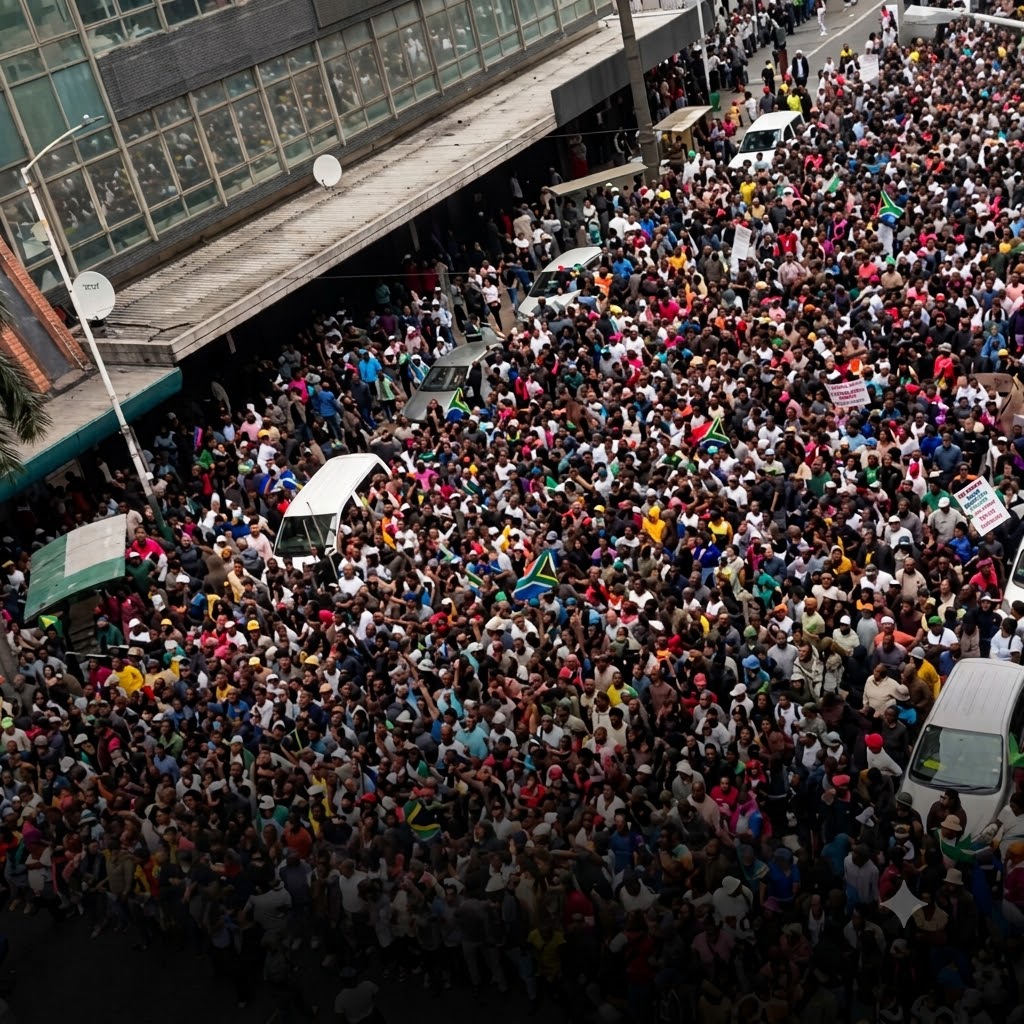
Thousands of anti-migrant protesters marched through several of South Africa’s largest cities on Monday following an unofficial June 30 deadline issued by citizen-led groups demanding that undocumented foreign nationals leave the country.
The demonstrations, organized primarily by the March and March movement, prompted the closure of businesses in several areas and led authorities to deploy thousands of police officers and members of the South African National Defence Force (SANDF) to prevent large-scale xenophobic violence.
Although protest organizers maintained that the demonstrations were intended to remain peaceful, violence erupted in several communities before and during the marches. At least four people have reportedly been killed, while incidents of looting, vandalism, and attacks on properties linked to foreign nationals have heightened fears of a broader humanitarian crisis.
Heavy Security Presence Across Major Cities
South African authorities mounted one of the country’s largest recent security operations, deploying police officers, tactical response units, armored vehicles, and SANDF troops to key urban centers.
Security forces were heavily visible in the central business districts of Johannesburg, Pretoria, Cape Town, and Durban, where thousands of demonstrators gathered amid concerns that the protests could escalate into widespread unrest.
Officials maintained a heightened presence throughout the day in an effort to separate protesters from counter-demonstrators and protect businesses and residential communities.
Violence Erupts on Protest Fringes
While many demonstrations remained orderly, several areas experienced violent confrontations.
In Thembisa, groups of rioters reportedly hurled stones at security personnel, prompting police intervention. Authorities fired rubber bullets in Pietermaritzburg to disperse aggressive crowds, while tactical police units were deployed in Benoni after approximately 500 protesters were reported to be threatening nearby communities.
Several homes and informal businesses owned by foreign nationals were also looted in parts of Johannesburg and Soweto, with eyewitnesses reporting widespread property damage.
In Durban, thousands of protesters dressed in traditional Zulu attire marched through the city carrying clubs, sticks, and shields while chanting “Abahambe!”—a Zulu phrase meaning “They must go.”
Growing Migrant Exodus
The escalating tensions surrounding the June 30 deadline have triggered what officials describe as one of the largest recent movements of migrants leaving South Africa.
Police say at least 25,000 foreign nationals have either been repatriated or voluntarily departed the country amid growing fears of violence.
Border crossings and foreign consulates have become overwhelmed as thousands of people from Malawi, Zimbabwe, and Mozambique seek assistance returning home.
Humanitarian organizations report that hundreds of Malawian nationals remain stranded in Mozambique without sufficient financial resources or transportation to complete their journeys home.
Human Rights Groups Raise Concerns
Although protest organizers insist their campaign is directed solely at undocumented migrants, human rights organizations have warned that the unrest is increasingly affecting legally documented foreign nationals.
Advocacy groups, including Amnesty International, say refugees, asylum seekers, and legal migrants from across Africa have faced intimidation, harassment, and attacks despite having lawful immigration status.
Rights advocates have called on authorities to strengthen protections for vulnerable communities and ensure that immigration enforcement is carried out within the rule of law.
Economic Frustration Fuels Demonstrations
Many protesters argue that undocumented immigration has contributed to rising crime, placed additional pressure on already strained public services, and increased competition for jobs in a country where unemployment remains close to 33%.
The demonstrations have been driven largely by citizens frustrated with persistent economic hardship, with many calling for stronger border controls and stricter enforcement of immigration laws.
However, critics contend that some political figures have amplified anti-migrant rhetoric ahead of South Africa’s local government elections scheduled for November, further inflaming tensions.
Ramaphosa Appeals for Calm
President Cyril Ramaphosa has appealed for restraint following the demonstrations, urging citizens not to take immigration enforcement into their own hands.
The South African leader met with representatives of the anti-migrant movement and emphasized that enforcing immigration laws is the responsibility of the state. He warned that acts of vigilantism, violence, and attacks against foreign nationals would not be tolerated as security forces continue efforts to restore calm across the country.
Source: Omanghana