Omanghana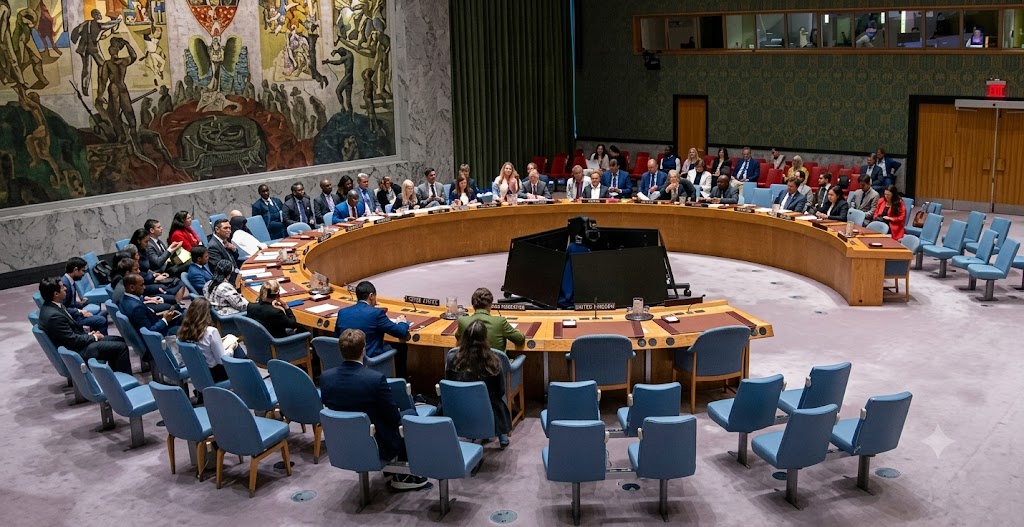
The United Nations Security Council has unanimously renewed sanctions targeting armed groups and designated individuals operating in the Central African Republic for another year.
All 15 members of the council voted in favour of Resolution 2827 on July 29, 2026. The resolution extends the sanctions regime until July 31, 2027, as the country continues to confront rebel activity, illegal weapons trafficking and insecurity in remote border regions.
The mandate of the UN Panel of Experts responsible for monitoring the sanctions has also been extended until August 31, 2027. The panel investigates suspected violations, tracks weapons and financial networks, and submits findings to the Security Council’s sanctions committee.
Under the renewed measures, UN member states must prevent the direct or indirect sale, supply and transfer of weapons, ammunition, military vehicles and paramilitary equipment to non-state armed groups operating in the country.
The restrictions are intended to disrupt the supply chains that enable rebel organizations to acquire weapons, sustain combat operations and challenge state authority.
Resolution 2827 also maintains asset freezes against designated individuals and entities considered responsible for undermining the Central African Republic’s peace, security or stability.
Financial institutions and other organizations in UN member states are required to freeze funds, economic resources and other assets belonging to sanctioned parties. The measures are designed to prevent armed groups and their supporters from financing military operations or benefiting from illicit commercial activities.
Travel bans will also remain in place against blacklisted militia leaders and their associates. Countries are required to prevent sanctioned individuals from entering or passing through their territories, except where exemptions have been authorized.
The Security Council stressed that the renewed arms restrictions apply to armed groups and associated individuals rather than the Central African Republic’s government and official security forces.
In 2024, the council adopted Resolution 2745, which lifted the territorial arms embargo previously imposed on the country. That decision allowed the government and its security services to obtain weapons and military assistance without being subject to the earlier restrictions.
The sanctions framework now focuses on preventing arms from reaching rebel organizations while allowing the government to strengthen national forces and expand state authority.
The council’s decision comes as the Central African Republic records progress in restoring government control and implementing disarmament programmes. However, persistent rebel activity, cross-border weapons trafficking and instability linked to conflicts in neighbouring countries continue to threaten communities outside the capital, Bangui.
The country’s long and difficult-to-monitor borders remain important transit routes for weapons, fighters and other illicit supplies. Armed groups also continue to operate in some rural areas where the presence of national security forces remains limited.
The sanctions renewal coincides with a reconfiguration of the UN Multidimensional Integrated Stabilization Mission in the Central African Republic, known as MINUSCA.
The mission is reducing parts of its physical presence in response to budgetary pressure, including an estimated 15% funding cut. Some smaller bases are being closed or transferred to Central African authorities, while peacekeepers shift toward mobile patrols and rapid-deployment operations.
Although MINUSCA has supported elections, civilian protection and the disarmament of thousands of combatants, concerns remain about whether national forces can immediately assume all security responsibilities in vulnerable areas.
Through Resolution 2827, the Security Council signalled that targeted sanctions remain necessary to prevent armed groups from rebuilding their military and financial networks as the country moves through a fragile political and security transition.
Source: Omanghana