Omanghana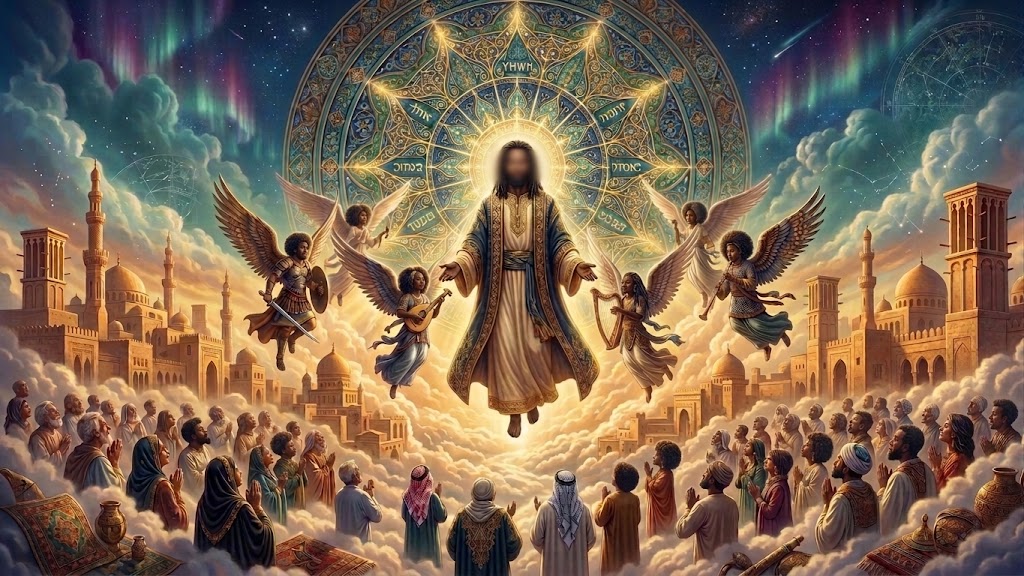
The question of whether the Messiah appears twice receives different answers across Christianity, Judaism and Islam. Christianity teaches two comings of the same Messiah, traditional Judaism generally expects the messianic mission to be fulfilled within one historical era, while Islamic teaching anticipates the return of Jesus near the end of time.
Although all three religions speak about a divinely guided figure associated with redemption and justice, they differ significantly over the Messiah’s identity, mission and manner of appearance.
Christianity: Two Comings of One Messiah
Christian theology teaches that Jesus Christ is the promised Messiah and that His mission unfolds through two separate appearances, commonly called the First and Second Advents.
This belief is used to explain biblical passages that portray the Messiah in apparently contrasting ways. Some passages, such as Isaiah 53, describe a suffering servant who is rejected and bears the sins of others. Other texts, including Daniel 7 and Zechariah 14, present a victorious ruler who defeats evil and establishes divine authority.
Christians understand these roles as referring to different stages of the same messianic mission.
The First Coming
The First Coming refers to the incarnation, earthly ministry, crucifixion and resurrection of Jesus. According to Christian belief, Jesus entered the world in humility and offered Himself as an atoning sacrifice for humanity’s sins.
His first appearance was therefore primarily associated with salvation, reconciliation with God and the inauguration of God’s Kingdom.
The Second Coming
The Second Coming, also known by the Greek term Parousia, refers to the future return of Jesus in glory and power.
Christian teaching holds that Christ will return to judge the living and the dead, defeat evil, raise the dead and bring God’s redemptive plan to its final completion. His return will also result in the full establishment of God’s Kingdom and the restoration of creation.
Christianity therefore does not teach the arrival of two different Messiahs. It teaches two appearances of the same person—Jesus Christ—with each appearance serving a different purpose.
Judaism: One Messianic Fulfilment and Two Possible Figures
Traditional Judaism does not accept the Christian doctrine that the Messiah may arrive, die before completing the expected messianic tasks and then return centuries later.
In mainstream Jewish thought, the Messiah is expected to accomplish his mission during his earthly lifetime. This mission is commonly associated with restoring the Davidic monarchy, gathering Jewish exiles, rebuilding the Temple in Jerusalem and helping establish an era of universal peace and knowledge of God.
Because Jesus did not accomplish these expectations during His lifetime, Judaism generally does not recognize Him as the promised Messiah.
However, some rabbinic writings discuss the possibility of two distinct messianic figures rather than two appearances of one individual.
Mashiach ben Yosef
Mashiach ben Yosef, meaning “Messiah son of Joseph,” is described in some Jewish traditions as a forerunner to the final Davidic Messiah.
He is sometimes associated with the northern tribes of Israel, national restoration and battles connected to Gog and Magog. Certain traditions suggest that he will die during the conflict, although interpretations of his identity and role vary.
Mashiach ben David
Mashiach ben David, meaning “Messiah son of David,” is the principal messianic king expected in traditional Judaism.
He is understood as a descendant of King David who will complete Israel’s restoration, gather the Jewish diaspora, establish justice and usher in an enduring period of peace. In traditions involving Mashiach ben Yosef, the Davidic Messiah completes the work begun by the earlier figure.
These teachings should not be confused with the Christian doctrine of the Second Coming. The Jewish tradition speaks about two separate individuals in certain interpretations, not one Messiah appearing on Earth twice.
Islam: The Return of Isa Near the End of Time
Islam also teaches that Jesus, known in Arabic as Isa al-Masih, is the Messiah. However, Islamic belief differs sharply from Christianity concerning His divinity, crucifixion and redemptive mission.
The Quran teaches that Jesus was not killed or crucified as His enemies believed, but that God raised Him. In mainstream Islamic eschatology, Jesus remains alive and will return to Earth before the Day of Judgment.
His descent is commonly known as Nuzul Isa, meaning the descent or return of Jesus.
According to Islamic tradition, Jesus will return during a period of intense deception and conflict. He will defeat Al-Masih ad-Dajjal, the false messiah, expose falsehood and help restore justice.
Jesus is also expected to appear during the time of the Mahdi, a guided leader who will play a major role in establishing justice before the end of the age. Traditions differ over some details of their relationship, but Jesus and the Mahdi are regarded as separate individuals.
Islam therefore anticipates two earthly stages involving Jesus: His original prophetic ministry and His future descent. Unlike Christianity, however, Islam does not understand His return as the Second Coming of God the Son or as the completion of salvation through the cross.
How the Three Traditions Compare
| Tradition | Expected Appearances | Basic Structure | Purpose of the Final Stage |
|---|---|---|---|
| Christianity | Two | The same Messiah, Jesus, comes first in humility and later in glory | Judgment, defeat of evil and restoration of creation |
| Judaism | One messianic era, with some traditions describing two figures | Mashiach ben Yosef may prepare the way for Mashiach ben David | Peace, restoration of Israel and ingathering of the exiles |
| Islam | Two stages involving Jesus | Isa’s original prophetic ministry followed by His future descent | Defeat of the Dajjal and restoration of justice |
One Question, Three Different Expectations
Christianity gives the clearest affirmative answer to the question, teaching that one Messiah appears twice. Islam also expects Jesus to return, but identifies Him as a human prophet and Messiah rather than God incarnate.
Traditional Judaism, meanwhile, expects the Messiah to complete the required mission within a single earthly era. Although some Jewish writings describe two messianic figures, this represents two separate individuals with connected roles—not the return of one Messiah after a long absence.
The three traditions therefore share an expectation of eventual justice and the defeat of evil, but they disagree profoundly over who the Messiah is, what He must accomplish and whether His mission unfolds through one appearance or two.
Source: Omanghana