Omanghana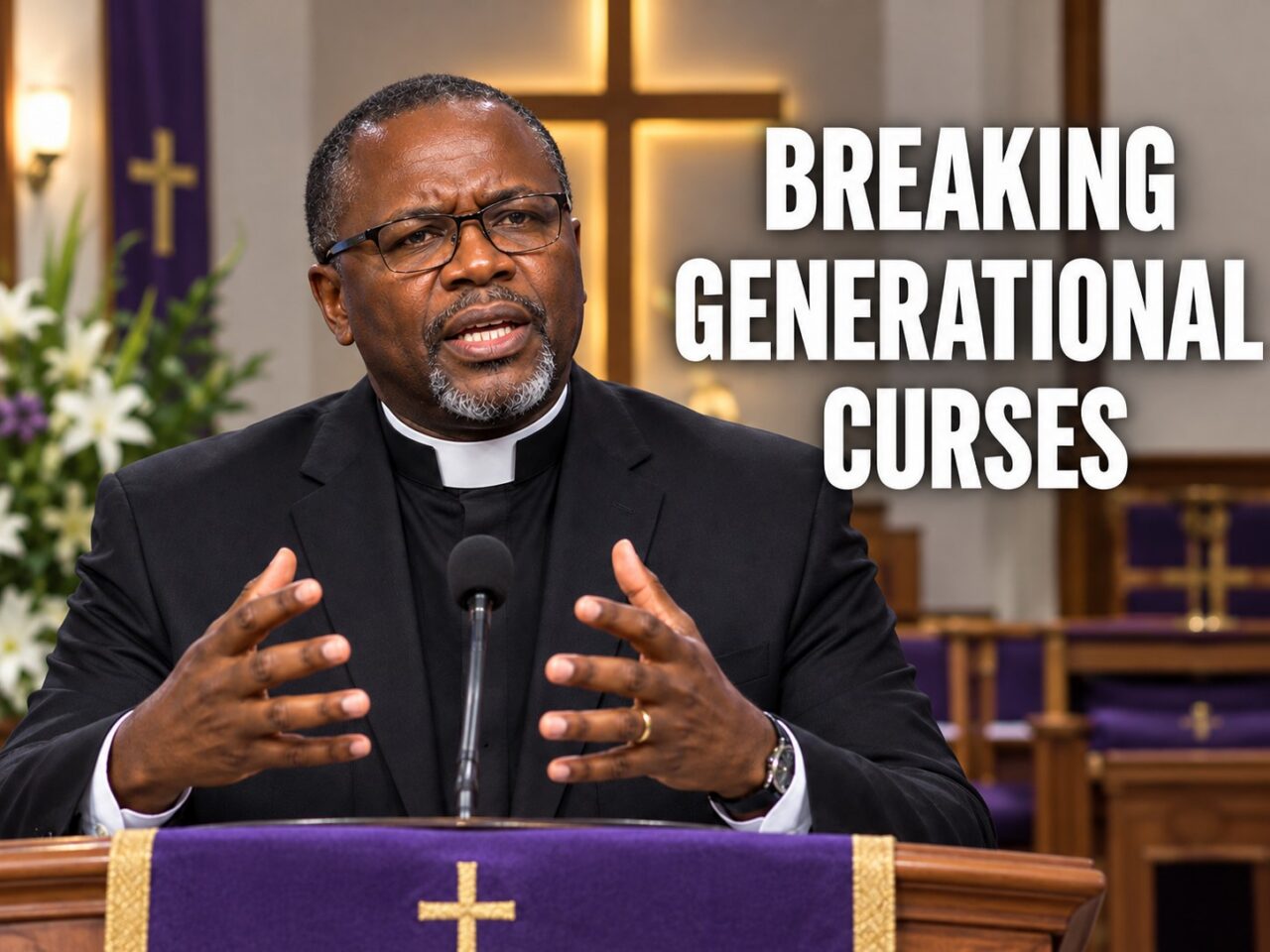
Understanding ancestral curses in a generation that is asking questions.
There is a familiar scene in many churches today. The pastor takes the microphone, calls the congregation to prayer, and declares that it is time to break ancestral curses. Members are encouraged to pray against the sins of their forefathers, the evil foundations of their families, inherited patterns, and spiritual battles that may have followed them from generation to generation.
The congregation prays fervently. Some shout, others weep, and many leave the service believing that something significant has happened in the spiritual realm.
Then, a few weeks or months later, the same call is made again.
Another ancestral curse must be broken.
For some members, this has become a regular feature of church life. But for others, particularly members of Generation Z and Generation Alpha, an important question is beginning to emerge:
If the curse was broken last year, why are we breaking it again this year? Was it not broken the first time? And if Christ has already set us free, what exactly are we still trying to break?
These are not necessarily questions of rebellion or unbelief. They may be genuine questions from a generation seeking to understand what it believes and why it believes it.
Perhaps it is time for the Church to address them openly.
What exactly is an ancestral curse?
In Christian circles, an ancestral curse is commonly understood as a spiritual consequence, bondage, or negative pattern believed to have been passed down through a family because of the sins, practices, or spiritual allegiances of previous generations.
People may associate ancestral curses with recurring family problems, destructive habits, persistent conflict, poverty, illness, failed marriages, or other difficulties that seem to repeat across generations.
The Bible does address the consequences of sin across generations. Exodus 20:5 speaks about the consequences of the sins of the fathers affecting subsequent generations. However, the Bible must be read in its entirety, not through one passage alone.
Ezekiel 18:20 provides an important balancing truth:
“The son shall not bear the iniquity of the father, neither shall the father bear the iniquity of the son.” (KJV)
This passage emphasizes personal responsibility before God. A person’s family history does not automatically mean that the person is guilty of the sins of their ancestors.
There is also a difference between inheriting the consequences of family behavior and being spiritually bound by a curse. Children may grow up in environments shaped by addiction, violence, fear, dishonesty, or unhealthy relationship patterns. These patterns can continue across generations, but they can also be confronted, changed, and stopped.
The question, therefore, is not simply whether family patterns exist. It is whether every recurring difficulty should be interpreted as evidence of an ancestral curse.
How often should an ancestral curse be broken?
This is the central question.
Should it be broken every Sunday? Every time a church holds a deliverance service? Once a year during a special program? Or should it be broken once and for all?
The Bible does not prescribe an annual, monthly, or weekly schedule for breaking ancestral curses.
There is no biblical instruction that says Christians must return every year to break the same curse again. Neither is there a scriptural calendar requiring pastors to conduct recurring ancestral deliverance sessions.
If a pastor teaches that a particular curse has been broken through prayer, it is reasonable for members to ask what biblical basis there is for declaring that the same curse must be broken again at the next service.
This does not mean that Christians should never pray about family struggles again. Prayer is an ongoing part of Christian life. We pray continually for wisdom, healing, protection, repentance, transformation, and strength.
But there is an important distinction between continuing to pray for God’s help and repeatedly declaring that the same spiritual bondage remains unbroken.
If the message is that Christ has provided freedom, why should believers be left feeling that they must continually return to have that freedom activated again?
Source: Omanghana