Omanghana
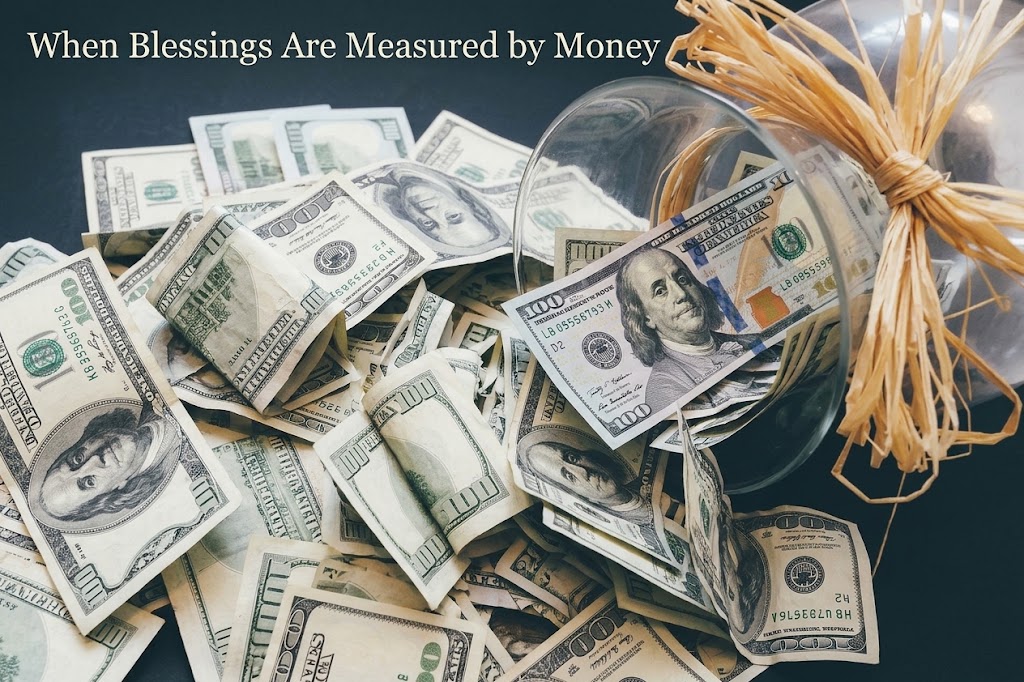
Are We Confusing Financial Prosperity with God’s Favor?
Scripture: Luke 12:15 (KJV)
“For a man’s life consisteth not in the abundance of the things which he possesseth.”
When Money Becomes the Proof of God’s Blessing
Have we become so impressed by wealth that we mistake financial success for God’s favour? In some churches, the person who buys a new house or drives an expensive car is celebrated as highly blessed, while the believer who quietly demonstrates faith, humility, and integrity receives little recognition.
But does having more money mean having more of God’s favour? And does financial hardship mean someone is less blessed?
Jesus reminds us in Luke 12:15 that life does not consist in the abundance of possessions. While financial prosperity can be a blessing, true blessing goes far beyond material wealth. It is found in a growing relationship with God, a life shaped by Christlike character, inner peace, contentment, love, and the ability to live faithfully and generously in every season.
Our blessings should not be measured merely by what we own, but also by who we are becoming in Christ.
1. Money Is a Blessing, but It Is Not the Measure of God’s Favor
There is nothing wrong with pursuing financial stability, building wealth, or enjoying the rewards of honest work. However, the danger begins when money becomes the primary evidence of God’s approval.
A person may have financial resources but lack peace, integrity, contentment, or meaningful relationships. Another may have limited resources yet demonstrate remarkable faith, generosity, and godly character.
God’s favour cannot be accurately measured by the size of someone’s bank account. Wealth may improve our circumstances, but it does not automatically determine our spiritual maturity.
2. Poverty Does Not Mean a Lack of Faith
One of the dangers of measuring blessings by money is the tendency to judge people experiencing financial hardship.
Some are made to feel that their struggles are the result of insufficient prayer, weak faith, or disobedience. Yet the Bible does not teach that every financial difficulty is evidence of spiritual failure.
Jesus Himself lived without the material privileges often associated with earthly success. The early church also included believers who experienced hardship but remained faithful.
We must never create a spiritual ranking system where wealthy people are considered more blessed and those who struggle financially are viewed as less favored.
3. When Testimonies Become Displays of Wealth
Testimonies should celebrate God’s goodness, but they should not be limited to financial achievements and material acquisitions.
What about the person who found the courage to forgive? The family that experienced reconciliation? The believer who remained faithful during unemployment? The individual who chose integrity over financial gain?
These are also powerful testimonies.
Sometimes God’s greatest work in our lives is not what He gives us materially, but what He transforms within us.
4. What Does It Truly Mean to Be Blessed?
A blessed life is not necessarily a life without challenges. True blessings include peace, good health, meaningful relationships, wisdom, contentment, integrity, and a personal relationship with God.
In 1 Timothy 6:6, Paul teaches that godliness with contentment is great gain.
This does not mean Christians should reject financial progress or stop praying for provision. Rather, we must pursue prosperity without allowing money to define our identity or replace our devotion to God.
A truly blessed person understands that material possessions are temporary, but a life rooted in God carries eternal value.
5. The Church Must Change What It Celebrates
Church leaders have a responsibility to teach a balanced understanding of God’s blessings.
We must celebrate financial breakthroughs, but we must also celebrate spiritual maturity, generosity, restored relationships, faithful service, and transformed character.
The church should be a place where people are valued because of who they are in Christ, not because of what they own or can contribute financially.
Let us create an environment where someone experiencing financial hardship can still feel loved, respected, encouraged, and valued.
Conclusion: Do Not Let Money Define Your Blessing
There is nothing wrong with praying for financial breakthroughs, pursuing business opportunities, or desiring a better life. Financial stability can create opportunities to support families and serve others.
However, money must never become the standard by which we measure God’s love, our spiritual maturity, or another person’s worth.
Let us celebrate the person who becomes wealthier, but also the person who becomes wiser, kinder, more compassionate, and more faithful.
The greatest evidence of God’s work in a person’s life is not always what they have acquired, but who they are becoming in Christ.
A Challenge to the Church
Let us preach provision without promoting greed, encourage prosperity without worshipping wealth, and celebrate material progress without neglecting spiritual growth.
May we never become so focused on what money can buy that we forget the blessings money can never provide.
Source: Omanghana