Omanghana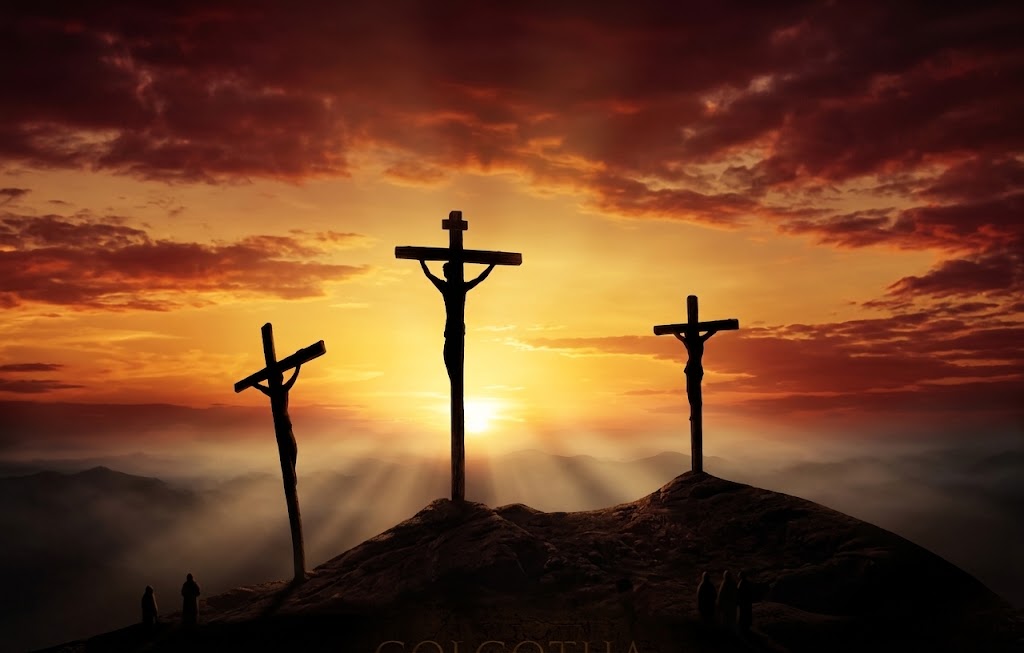
For centuries, theologians, historians and philosophers have considered why Jesus of Nazareth appeared at that particular moment in history.
Christian theology describes the timing as intentional rather than accidental. In Galatians 4:4, the Apostle Paul writes that God sent His Son “when the fullness of time had come.”
The Greek expression plērōma tou chronou refers to the completion or fulfilment of an appointed period. For Christians, it suggests that Jesus entered the world at the precise moment established within God’s redemptive plan.
Beyond this theological explanation, the political and cultural conditions of the first century created an unusually favorable environment for the message of Christianity to spread.
The Stability of the Roman Empire
Jesus was born during the period commonly known as the Pax Romana, or Roman Peace.
Although the empire was not free from conflict, Roman control created relative political stability across much of Europe, North Africa and the Near East. Territories that had previously been divided among competing powers were connected under one administrative system.
Rome constructed and maintained an extensive network of roads linking cities, military centers and commercial settlements. Maritime travel also became more organized as Roman forces reduced large-scale piracy across important Mediterranean routes.
These developments made it easier for merchants, soldiers, teachers and missionaries to travel across long distances.
The New Testament records how the Apostle Paul and other early Christian missionaries used Roman roads, commercial ports and major urban centers to carry the gospel beyond Judea.
Roman citizenship and law also provided certain protections. Paul sometimes invoked his rights as a Roman citizen when confronted by local authorities, illustrating how imperial structures could indirectly assist the movement’s expansion.
A Widely Shared Language
The conquests of Alexander the Great centuries earlier had spread Greek language and culture across the eastern Mediterranean and Near East.
By the first century, Koine Greek had become a widely understood language of trade, education and public communication. People continued to speak local languages, but Greek allowed individuals from different ethnic and regional backgrounds to communicate.
Most of the New Testament was written in Koine Greek. This made Christian teachings accessible to a broad audience without requiring immediate translation into numerous local languages.
Greek also possessed an extensive philosophical and literary vocabulary that early Christian writers used to explain theological concepts to Jewish and Gentile audiences.
The existence of a common language meant that letters, testimonies and teachings about Jesus could circulate rapidly among churches in different parts of the empire.
The Jewish Diaspora Prepared the Way
Long before the birth of Jesus, Jewish communities had become established throughout the Mediterranean world.
Synagogues existed in major cities and commercial centers, giving early Christian missionaries natural places to begin preaching. These communities were already familiar with the Hebrew Scriptures, belief in one God and expectations concerning the promised Messiah.
The Septuagint, a Greek translation of the Hebrew Scriptures, made Jewish religious ideas available to people who could not read Hebrew.
Many Gentiles also attended synagogues or respected Jewish monotheism and ethics without fully converting to Judaism. The Book of Acts refers to some of these individuals as God-fearers.
When Christian missionaries entered a new city, they frequently began at the synagogue before extending their message to the wider Gentile population.
The Jewish diaspora therefore provided an existing network through which teachings about Jesus could be introduced, discussed and compared with Old Testament prophecy.
A World Searching for Meaning
The Greco-Roman world was religiously diverse. Traditional worship remained influential, but philosophical schools and mystery religions also competed to answer questions about morality, suffering, death and human purpose.
Stoicism emphasized self-control, virtue and a moral order governing the universe. Platonism encouraged reflection on realities beyond the material world. Mystery religions promised personal spiritual experiences and, in some cases, hope beyond death.
These movements should not be understood as evidence that traditional religion had disappeared. However, they reveal that many people were searching for moral direction, personal transformation and assurance about life after death.
Christianity entered this environment with a distinctive message about one God, the dignity of every person, forgiveness of sin, resurrection and eternal life.
It offered a faith that addressed both intellectual questions and personal spiritual needs.
Jesus Revealed God Through Relationship
According to Christian belief, the significance of Jesus cannot be explained merely by favorable historical circumstances.
Christians believe Jesus was the ultimate revelation of God’s character and saving purpose. As John 1:14 states, “The Word became flesh and dwelt among us.”
Jesus did not simply introduce another philosophical system. His life, teachings, death and resurrection revealed a God who sought reconciliation with humanity.
He taught that love for God must be accompanied by love for other people. He challenged religious hypocrisy and showed compassion toward the poor, sick, socially rejected and morally broken.
Although Christianity retained moral commands and religious practices, it taught that salvation could not be earned through ritual performance alone. Reconciliation with God was presented as a gift of grace received through faith and expressed through a transformed life.
A Different Understanding of Power
Many people in first-century Judea hoped for a political deliverer who would overthrow Roman rule and restore national independence.
Jesus did not fulfil those expectations through military conquest. Instead, He taught humility, forgiveness, sacrifice and service.
He told His disciples that whoever wanted to become great must become a servant. He washed their feet, welcomed children and associated with people regarded as outsiders.
The crucifixion appeared to represent weakness and defeat. Within Christian theology, however, it became the supreme demonstration of sacrificial love and the means through which sin and death were overcome.
This understanding challenged both Roman ideas of domination and ordinary human assumptions about authority.
A Message Open to All People
Christianity emerged from Judaism, but its message quickly crossed ethnic, cultural and national boundaries.
Early Christian teaching declared that people did not need to become ethnically Jewish before following Jesus. Faith in Christ was made available to Jews and Gentiles alike.
Paul expressed this principle in Galatians 3:28, writing that distinctions involving ethnicity, social status and gender could not determine a person’s spiritual standing in Christ.
This did not immediately eliminate inequality within society. Christians continued to live in a world shaped by slavery, patriarchy and rigid class divisions.
Nevertheless, the belief that all people possessed spiritual dignity before God introduced a powerful foundation for Christian teaching about community, service and human worth.
Was the First Century the Perfect Time?
From a historical perspective, the first century brought together several conditions that helped Christianity expand:
- Roman political control connected large territories.
- Roads and shipping routes supported travel.
- Koine Greek enabled communication across cultures.
- Jewish communities provided an international religious network.
- The Septuagint made Scripture accessible in a widely understood language.
- Philosophical and religious diversity created an audience interested in spiritual questions.
None of these conditions made the spread of Christianity inevitable. Early believers still faced persecution, imprisonment, social rejection and execution.
The movement also began without military power, political influence or significant wealth. Its earliest leaders were ordinary people from a relatively small territory under Roman occupation.
Yet within a few centuries, Christianity had spread throughout the empire and far beyond it.
The Meaning of the “Fullness of Time”
For historians, the rise of Christianity can be studied through transportation networks, language, migration, politics and social change.
For Christians, those factors formed part of divine providence. The conditions of the Roman world did not create the message of Jesus; they provided the setting through which that message could travel.
The “fullness of time” therefore carries both historical and theological significance. It describes a world that was connected enough to receive a universal message and, according to Christian belief, the appointed moment when God entered human history through Jesus Christ.
What began as a small movement in Roman Judea eventually influenced worship, ethics, education, art, charity, law and social thought across many cultures.
Whether considered as an act of divine orchestration or an extraordinary historical convergence, the first century proved to be a remarkable setting for a message that continues to shape lives around the world.
Source: Omanghana