Omanghana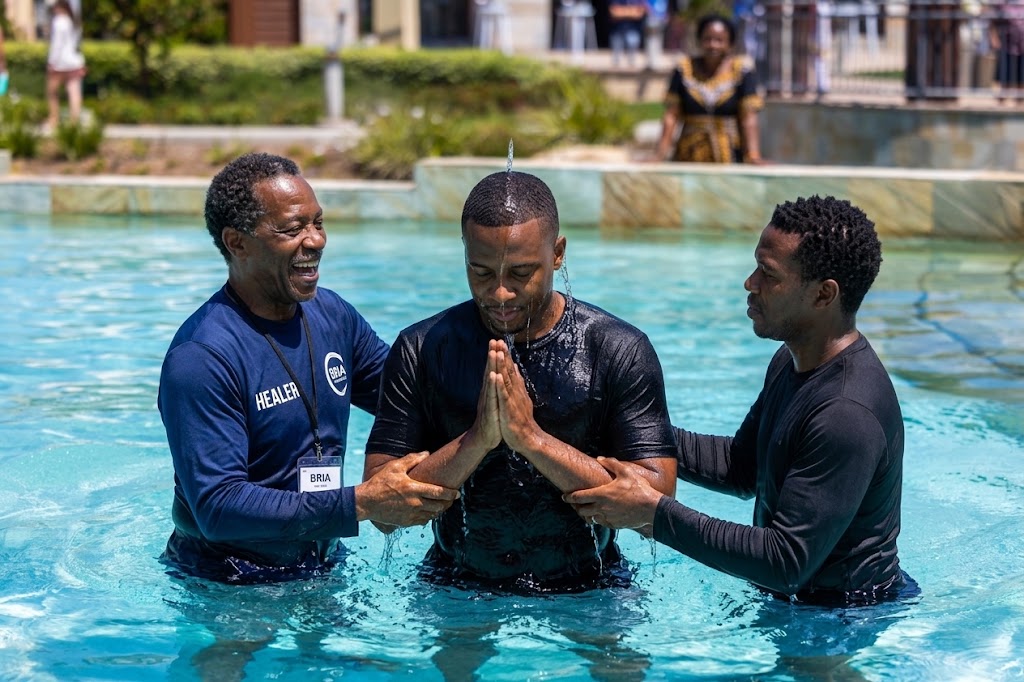
Baptism is widely regarded as the foundational rite of Christian initiation and the visible entry point into the life of the church.
Although denominations disagree over who should be baptized, how baptism should be administered and precisely what it accomplishes, most historic Christian traditions connect baptism with belonging to the Christian community.
The common pattern is straightforward: a person receives the Gospel, is baptized and becomes part of the visible fellowship of believers.
Churches therefore do not generally treat baptism as an arbitrary administrative requirement. They understand it as an act instituted by Jesus to identify His disciples publicly and unite them with His church.
Baptism Is the Biblical Sign of Christian Initiation
The New Testament frequently presents faith, baptism and inclusion in the Christian community as closely connected.
Acts 2:41 records what happened after Peter preached on the Day of Pentecost:
“Those who accepted his message were baptized, and about three thousand were added to their number that day.”
The passage does not portray baptism and entry into the church as unrelated events. Those who received the message were baptized and added to the visible community of believers.
The same pattern appears elsewhere in Acts. People heard the Gospel, believed in Christ, received baptism and began participating in the life of the church.
Jesus also included baptism in the Great Commission. In Matthew 28:19, He instructed His followers:
“Go and make disciples of all nations, baptizing them in the name of the Father and of the Son and of the Holy Spirit.”
Churches require baptism because they regard it as Christ’s appointed sign of discipleship and a believer’s first public act of obedience.
Baptism Makes Faith Public
Christian faith is personal, but it is not intended to remain entirely private.
Baptism provides a visible way for someone to confess allegiance to Jesus before the church and the wider community. It declares that the individual now identifies with Christ, His death and His resurrection.
Romans 6:3–4 connects baptism with union with Christ:
“All of us who were baptized into Christ Jesus were baptized into his death. We were therefore buried with him through baptism into death.”
For churches that practice believer’s baptism, immersion symbolically portrays death to the old way of life, burial with Christ and resurrection into a new life.
Church membership is likewise a public act. Through membership, a congregation affirms a person’s profession of faith and accepts responsibility for that individual’s spiritual care and accountability.
Because baptism is Christianity’s appointed public sign of identification with Christ, many churches believe they cannot formally recognize someone as a member before that foundational confession has been made.
As an explanation published by The Gospel Coalition puts it, membership is the church’s public affirmation of a person’s public profession of faith, while baptism is the appointed means through which that profession becomes visible.
Baptism Identifies a Person With God’s Covenant People
Many Christian traditions also understand baptism as the sign of entry into the New Covenant community.
In the Old Testament, circumcision marked inclusion within Israel’s covenant life. Colossians 2:11–12 connects spiritual circumcision, burial with Christ and baptism, although Christian traditions interpret the precise relationship differently.
Paedobaptist traditions view this covenant connection as support for baptizing the children of believers. Baptist and other credobaptist churches argue that New Covenant baptism should follow an individual’s personal repentance and faith.
Despite that disagreement, both groups ordinarily treat baptism as a visible boundary marker identifying people with the covenant community.
First Corinthians 12:13 states:
“For we were all baptized by one Spirit so as to form one body.”
Christians differ over whether this verse refers primarily to the work of the Holy Spirit or includes an allusion to water baptism. Nevertheless, the passage expresses the central theological reality signified by baptism: believers are united with Christ and incorporated into one body.
Baptism Ordinarily Comes Before Communion
Historic Christian practice generally places baptism before participation in the Lord’s Supper.
Baptism is the initiating ordinance received once, while Communion is the continuing meal through which the church remembers Christ’s sacrifice and expresses its unity.
The usual sequence is therefore conversion, baptism, incorporation into the church and regular participation in the Lord’s Table.
Early Christian writings such as the Didache reflect this ordered approach. Many contemporary churches continue to restrict Communion to baptized Christians, although policies vary over whether participants must also be members of that specific congregation.
The reasoning is that the Lord’s Supper expresses ongoing fellowship in the body, while baptism marks a person’s initial entry into that fellowship.
Organizations such as 9Marks consequently argue that baptism should precede both formal membership and admission to Communion.
Baptism Establishes Responsibility and Accountability
Church membership involves more than placing a person’s name on a register.
Members ordinarily commit themselves to worship, fellowship, service, doctrinal instruction and mutual accountability. The congregation, in turn, accepts responsibility to teach, encourage, protect and, when necessary, correct them.
Baptism publicly identifies the person with whom the church is entering that covenant relationship.
It tells the congregation that the individual is not merely attending services but has openly identified with Jesus and His people.
Requiring baptism can therefore protect membership from becoming a purely social association disconnected from Christian confession and discipleship.
Baptist Churches Require Believer’s Baptism
Baptist and other credobaptist traditions teach that baptism should follow a conscious profession of faith.
They generally require candidates for membership to have been baptized as believers, ordinarily by immersion. An infant baptism is not regarded as fulfilling this requirement because the child did not personally profess faith before receiving it.
For Baptists, the proper order is personal repentance and faith, followed by baptism and church membership.
Some Baptist congregations accept a believer’s baptism performed in another church, while others examine the doctrine, mode or circumstances surrounding it before recognizing it.
Paedobaptist Churches Recognize Infant Baptism
Reformed, Presbyterian, Methodist, Anglican, Lutheran, Catholic and Orthodox traditions generally recognize infant baptism as valid Christian initiation.
These churches understand the children of believers as belonging to the visible covenant community and therefore eligible to receive baptism.
In many such traditions, a baptized child is already considered a member of the church in some sense. Confirmation or a later public profession of faith marks personal ownership of the baptismal vows and may grant access to full communicant privileges.
Practices vary considerably. Some churches require confirmation before Communion, while others admit baptized children to the Lord’s Table earlier after instruction or an age-appropriate profession of faith.
The central difference is therefore not usually whether baptism matters for membership. It is what constitutes valid baptism and how baptized children progress into mature participation in church life.
Some Churches Practice Open Membership
A minority of Baptist, non-denominational and ecumenical congregations practice open membership.
These churches may admit someone who makes a credible profession of Christian faith even when that person disagrees with the congregation about the timing or method of baptism.
For example, an open-membership Baptist church might accept a committed Christian who regards an earlier infant baptism as valid and cannot conscientiously undergo believer’s baptism.
Supporters believe excluding such a person would place a secondary doctrinal disagreement above Christian unity.
Closed-membership churches respond that baptism is not an additional qualification placed beside faith. They believe it is the public form Christ appointed for professing faith and therefore cannot be separated from membership.
Does Baptism Save a Person?
The answer depends partly on denominational theology.
Many evangelical churches strongly distinguish salvation from baptism. They teach that people are justified by grace through faith and not by performing a religious ceremony. Baptism follows salvation as an act of obedience and public testimony.
Catholic, Orthodox, Lutheran and some Anglican traditions speak more strongly of baptism as a sacrament through which God communicates regenerating grace, while also rejecting the idea that it operates as a merely mechanical ritual detached from faith and God’s promise.
Despite these differences, churches generally agree that baptism must not be treated casually. Jesus commanded it, the apostles practiced it and the early church connected it directly with entry into Christian communal life.
Baptism Is the Church’s Front Door
Churches require baptism before membership because baptism visibly answers an essential question: Who has publicly identified with Christ and His people?
It does not mean the baptized person is spiritually perfect. Nor does it guarantee that every profession of faith is genuine. Rather, baptism provides the church with the public, Christ-appointed basis for recognizing a person as a disciple.
The main denominational debate concerns whether baptism should be given only after personal faith or also to the children of believers.
Across those differences, baptism remains Christianity’s foundational sign of initiation the visible beginning of a life intended to be lived within the worship, fellowship and accountability of Christ’s church.
Source: Omanghana