Omanghana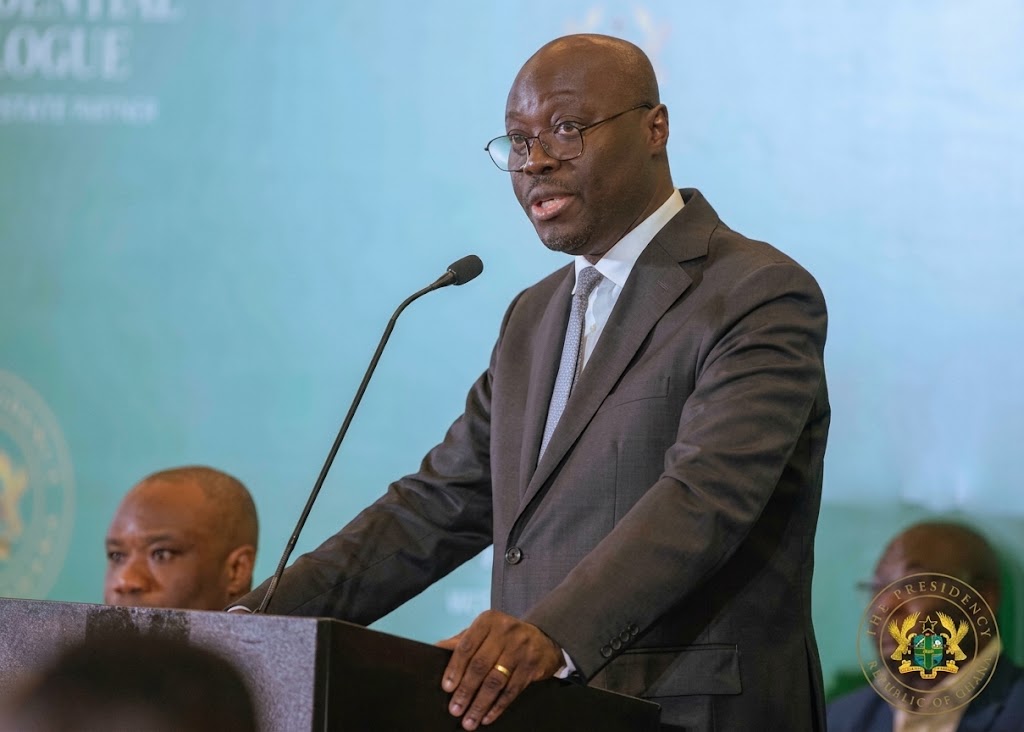
Ghana’s Minister for Finance and Economic Planning, Dr. Cassiel Ato Forson, has begun official stakeholder engagements with the Ministry of Trade and Industry as the government moves to operationalize its ambitious “New Economy” transformation agenda.
The high-level consultations are aimed at strengthening coordination between fiscal policy, trade development, industrialization and private-sector competitiveness as Ghana seeks to transition from economic stabilization to sustainable, job-driven growth.
Central to the discussions is the government’s determination to build a more productive economy capable of manufacturing more goods locally, expanding exports, creating employment and reducing the country’s dependence on imports.
Government Targets Industrial Revitalization
Industrial development is expected to occupy a central position in the New Economy agenda, with government seeking to stimulate domestic manufacturing across strategic sectors.
The discussions are focusing on incentives capable of attracting investment and expanding production in areas such as agro-processing, pharmaceuticals, textiles and light manufacturing and assembly.
Increasing domestic production is expected to help reduce Ghana’s import dependence while creating opportunities for local businesses and workers.
Import substitution is also considered important for reducing pressure on foreign exchange demand, particularly because businesses currently require significant amounts of foreign currency to import products that could potentially be manufactured domestically.
The government’s approach is therefore expected to combine targeted fiscal incentives with measures that improve the broader operating environment for manufacturers.
Ato Forson Pushes for Trade and Port Reforms
Trade facilitation and the efficiency of Ghana’s ports also featured prominently in the engagements.
Dr. Forson emphasized the need to streamline customs procedures and port clearance systems while addressing non-tariff barriers that increase the cost and time required to conduct international trade.
Competitive port handling charges are also expected to form part of the reform agenda.
Improving efficiency at Ghana’s ports could reduce operating costs for importers and exporters while strengthening the country’s competitiveness as a regional trading and logistics hub.
The reforms are particularly important as Ghana seeks to take advantage of opportunities created by the African Continental Free Trade Area (AfCFTA).
Ghana Targets Export-Led Economic Growth
The New Economy strategy also places significant emphasis on expanding Ghana’s export capacity.
Government wants domestic businesses, particularly small- and medium-sized enterprises (SMEs), to increase production and take advantage of preferential access to markets across Africa under AfCFTA.
This would require businesses to move beyond serving only the domestic market and develop products capable of competing regionally and internationally.
The broader objective is to gradually shift Ghana away from an economy heavily dependent on exporting raw commodities toward one that produces and exports more processed and higher-value goods.
Such a transition could strengthen foreign exchange earnings, diversify the country’s export base and create additional employment throughout manufacturing and associated supply chains.
Affordable Financing for Manufacturers on the Agenda
Access to affordable financing has also emerged as a critical component of the consultations.
High borrowing costs have historically constrained the ability of Ghanaian manufacturers to expand factories, acquire machinery, improve technology and increase production.
Government is therefore considering dedicated credit-enhancement mechanisms intended to improve access to financing for commercially viable industrial enterprises.
The initiative could involve closer collaboration with development finance institutions, including the Development Bank Ghana, to create financing arrangements capable of lowering the cost of capital for productive businesses.
Improved access to long-term financing is expected to be particularly important for industries that require substantial upfront investment before generating returns.
Finance and Trade Ministries Seek Policy Alignment
Another major objective of the stakeholder engagements is to improve coordination between the ministries responsible for Ghana’s fiscal and industrial policies.
The Ministry of Finance oversees important instruments such as tax incentives, duty exemptions, capital allowances and other fiscal measures, while the Ministry of Trade and Industry is responsible for policies aimed at expanding industrial production and trade.
The consultations seek to ensure that these policies reinforce each other rather than operating independently.
Under the proposed approach, fiscal incentives could be more closely linked to measurable industrial objectives such as investment, employment creation, local sourcing, production expansion and export generation.
Greater coordination is expected to improve implementation and ensure that government incentives deliver measurable economic benefits.
‘New Economy’ Agenda Targets Jobs and Structural Transformation
The government’s New Economy blueprint is intended to provide a broader framework for moving Ghana beyond macroeconomic stabilization toward long-term structural transformation.
While restoring fiscal and monetary stability remains important, the next phase of the economic strategy is expected to focus increasingly on productive investment, industrialization, employment and export competitiveness.
The government wants economic growth to translate into sustainable employment opportunities while strengthening Ghanaian businesses and reducing structural vulnerabilities associated with dependence on imported goods and raw commodity exports.
The engagement between the Finance and Trade ministries represents an initial stage in what is expected to become a wider national consultation.
Private-sector organizations, including the Association of Ghana Industries (AGI), the Ghana National Chamber of Commerce and Industry (GNCCI) and organized export groups, are expected to participate in subsequent discussions.
Their contributions are expected to help government refine its industrial policies, identify practical constraints facing businesses and determine which interventions could deliver the greatest economic impact.
For the government, the ultimate test of the New Economy agenda will be whether improved policy coordination can translate into more factories, stronger Ghanaian businesses, increased exports, reduced import dependence and sustainable jobs across the country.
Source: Omanghana