Omanghana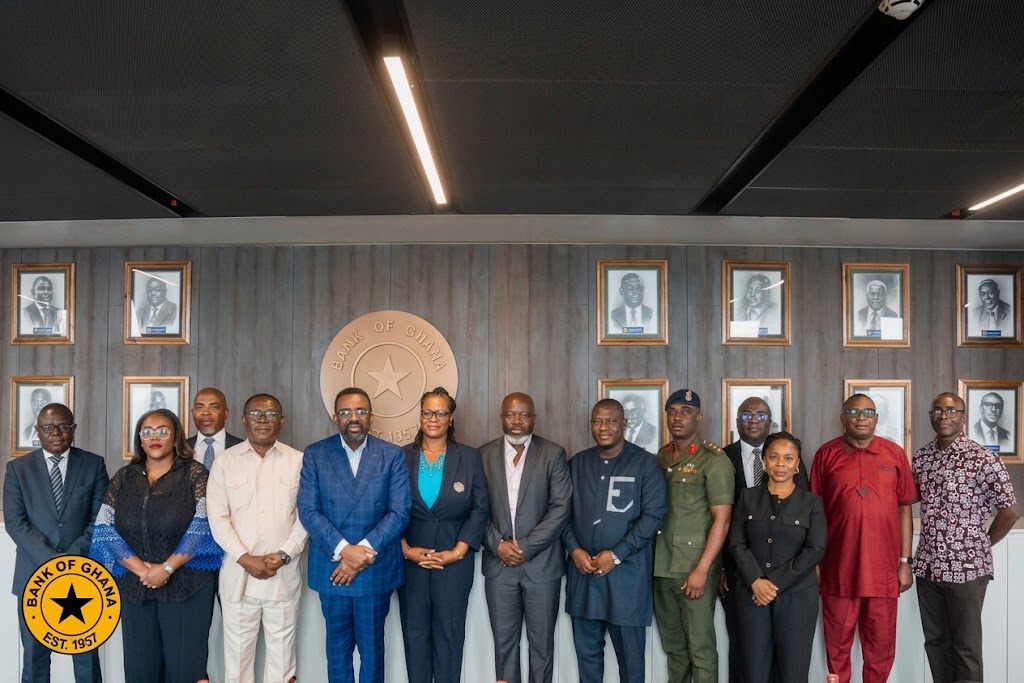
The Bank of Ghana has inaugurated a specialized joint investigative committee to examine how undeclared foreign currencies seized at the country’s entry and exit points are documented, transferred and kept in custody.
The committee has been tasked with reviewing the full chain of custody for foreign currencies intercepted by the Customs Division of the Ghana Revenue Authority, the Ghana Immigration Service and other border security agencies.
Its work will cover the initial seizure, documentation, transfer and final lodgment of confiscated funds. The review is intended to establish whether intercepted currencies have been handled in accordance with established financial and security procedures.
A key part of the investigation will involve reconciling amounts recorded by border agencies with official lodgments, Bank of Ghana vault deposits and any designated escrow accounts.
This process is expected to identify possible discrepancies and ensure that every amount seized can be traced from the point of interception to its final place of custody.
The committee will also assess existing reporting and handover arrangements among border security agencies, law enforcement institutions, the Financial Intelligence Centre and the central bank.
Differences in institutional procedures can create gaps in documentation and weaken accountability. The investigation is therefore expected to recommend a standardized system for recording, transferring and reporting intercepted foreign currency.
The initiative also seeks to strengthen compliance with the Foreign Exchange Act, 2006 (Act 723), anti-money laundering regulations and rules governing cross-border cash declarations.
Travelers carrying amounts above the prescribed threshold are required to declare the funds to the appropriate authorities. Failure to do so may result in the money being detained or seized for further investigation, subject to due process and applicable court orders.
The committee’s establishment forms part of broader efforts to curb illicit financial flows and prevent Ghana’s borders from being used to move undeclared funds.
Unregulated cross-border currency movements can support money laundering, tax evasion and other unlawful activities. They may also divert foreign exchange from the formal banking system and contribute to the growth of unauthorised currency markets.
Ensuring that lawfully forfeited foreign currencies are properly accounted for could help protect public funds, improve institutional transparency and support the country’s foreign exchange management framework.
The inquiry is also expected to clarify the treatment of funds that remain subject to investigations or court proceedings. Seized money cannot automatically be treated as state revenue before the relevant legal processes and confiscation orders have been completed.
Following its review, the committee is expected to propose a revised Standard Operating Procedure governing future currency seizures. The framework would provide clearer guidance on documentation, evidence preservation, institutional handovers, court-ordered confiscations and reporting to the Bank of Ghana.
The committee’s findings are expected to help close accountability gaps while improving cooperation among the institutions responsible for border protection, financial intelligence and foreign exchange regulation.
Source: Omanghana