Omanghana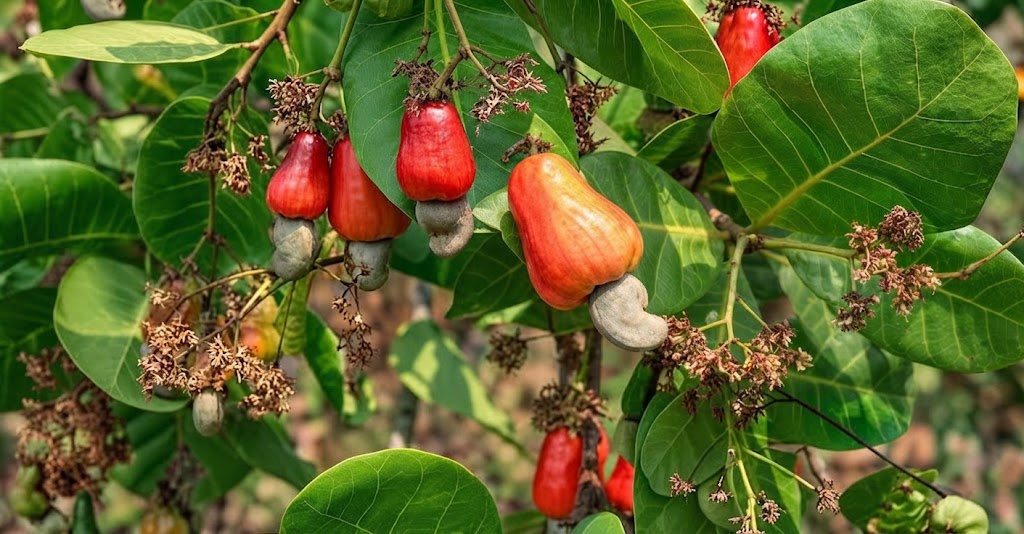
The Government of Ghana has announced a $200 million investment in the country’s tree-crop industry as part of a broader strategy to reduce raw commodity exports and build a competitive, value-added agricultural sector.
Minister for Trade, Agribusiness and Industry Elizabeth Ofosu-Adjare said the program would support the development of major tree crops, with the cashew industry positioned as one of the leading beneficiaries.
The investment is expected to increase cashew production, improve farm yields and strengthen every stage of the domestic value chain, from cultivation and harvesting to processing, packaging and exports.
A major focus of the initiative will be addressing Ghana’s limited processing capacity. Although the country produces significant quantities of raw cashew nuts, much of the crop is exported without being processed locally, depriving the economy of additional revenue and employment opportunities.
Under the program, the government intends to encourage greater investment in processing facilities capable of converting raw cashew nuts into finished kernels and other derivatives before they are exported.
Expanding local processing is expected to allow Ghana to retain more value from its agricultural resources while improving the country’s position in international markets.
The initiative will also promote the modernization of processing infrastructure, grading technologies and certification systems. These interventions are intended to improve product quality, traceability and compliance with international standards.
The government has invited private investors and development partners to participate in the program by providing financing, technical expertise and technology to support farmers, processors and exporters.
Increased production and processing are expected to create opportunities for small and medium-sized enterprises operating in packaging, logistics, equipment supply, agricultural inputs and other supporting services.
The program is also intended to generate sustainable employment in rural communities, particularly for young people and women, while creating stronger commercial links between farmers and processors.
Improved access to modern farming inputs, technical assistance and reliable markets could further help cashew farmers raise productivity and earn better incomes.
Beyond Ghana, the investment forms part of a wider call for cooperation among Africa’s leading cashew-producing countries.
The government believes countries such as Côte d’Ivoire, Nigeria, Benin, Tanzania and Mozambique should work as strategic partners instead of competing against one another for the same export markets.
Such collaboration could support the development of shared quality standards, stronger processing capacity and coordinated strategies to increase Africa’s share of the global cashew market.
The framework also seeks to take advantage of opportunities provided by the African Continental Free Trade Area by encouraging the movement of processed agricultural goods, technology and investment across the continent.
Through the $200 million commitment, Ghana hopes to shift from being primarily a supplier of raw agricultural produce to becoming a major producer and exporter of processed tree-crop products.
Source: Omanghana