Omanghana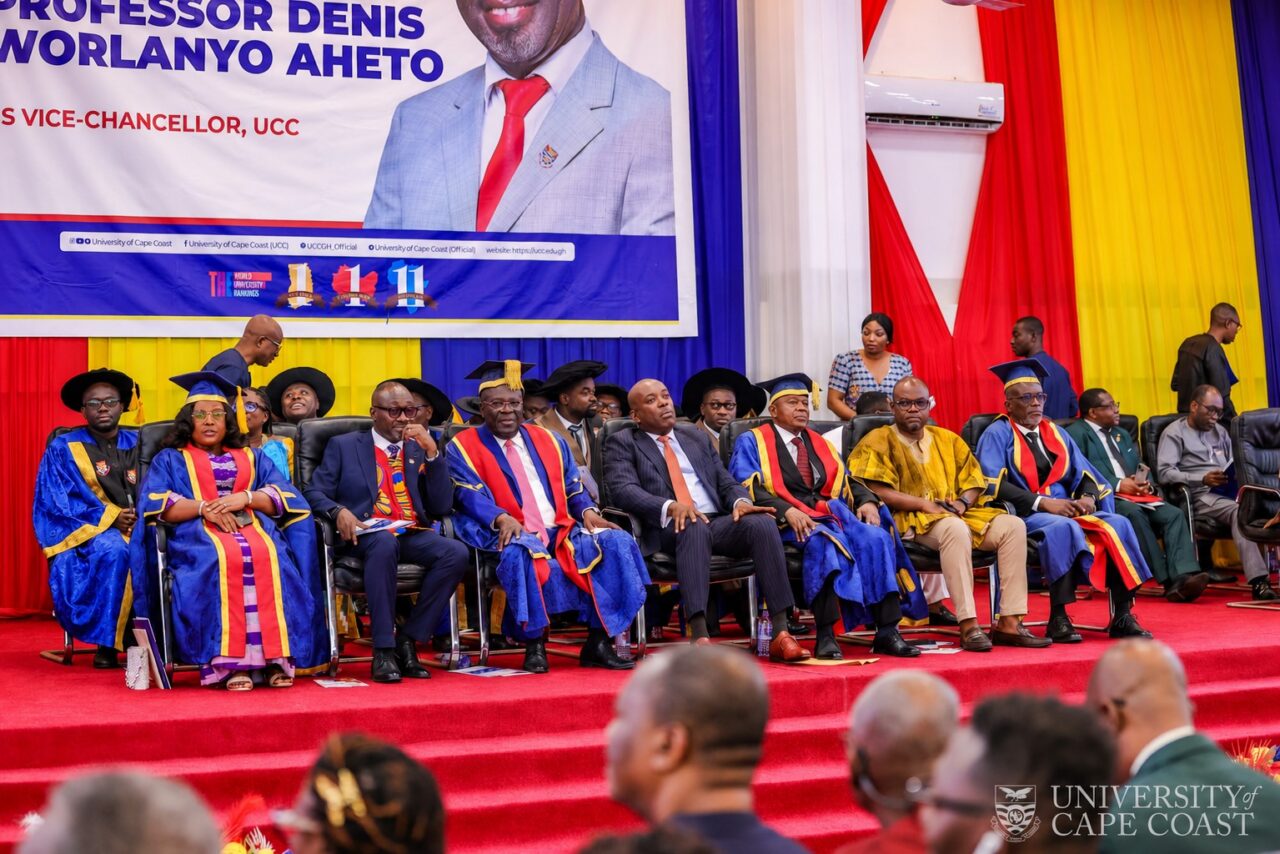
Ghana’s public universities are undertaking a major academic “skills reset” by revising traditional degree programs to include artificial intelligence, coding and practical industry training.
The reforms follow warnings from Vice-Chancellors Ghana about a growing mismatch between the skills taught at universities and those required by employers.
University leaders believe urgent curriculum changes are necessary to prevent graduates from being displaced as artificial intelligence and automation transform the labor market.
The University of Cape Coast is among the institutions facing calls to place human-AI collaboration at the center of teaching, learning and research.
Industry analysts have warned that automated platforms can now perform a significant share of routine administrative, data-processing and review tasks previously assigned to entry-level employees.
Some estimates suggest that AI systems could handle as much as 80% of these routine responsibilities, threatening many of the junior positions through which graduates traditionally acquire workplace experience.
University authorities are consequently being encouraged to move teaching away from memorization and theory-driven instruction towards critical thinking, ethical judgment, creativity and practical problem-solving.
The proposed reforms would teach students how to use AI as a workplace tool while understanding its risks, limitations and ethical implications.
UCC’s leadership is also facing pressure from the Ministry of Education and internal academic bodies to establish comprehensive policies governing the use and deployment of artificial intelligence across the institution.
Such policies are expected to address teaching, research, academic integrity, data protection and the responsible use of generative AI tools.
The University of Ghana is also taking steps to embed technology skills across its academic programs.
The institution has integrated the government’s One Million Coders Program into its core curriculum, extending digital training beyond students enrolled in computer science and related disciplines.
Minister for Communications, Digital Technology and Innovation Samuel Nartey George has maintained that coding and AI competence should be treated as fundamental graduate skills rather than optional additions.
The curriculum overhaul is not limited to traditional universities. Technical universities are also being urged to update programs in business, humanities and the creative arts.
Proposed additions include content creation, social media analytics, cybersecurity, digital marketing and data literacy to reflect changing global employment trends.
However, academics and computer scientists have raised concerns about delays associated with approving new university programs.
They have called on the Ghana Tertiary Education Commission to introduce more flexible approval processes for technology-related courses, warning that lengthy reviews could make curricula outdated before they reach students.
University-industry partnerships are also expected to become an important part of the reforms, providing students with internships, practical projects and direct exposure to workplace technology.
The broader objective is to produce graduates who can work effectively with emerging technologies instead of being replaced by them.
By embedding digital skills across disciplines, Ghana’s universities hope to transform students from passive consumers of foreign technology into innovators capable of developing solutions to the country’s economic and social challenges.
Source: Omanghana