Omanghana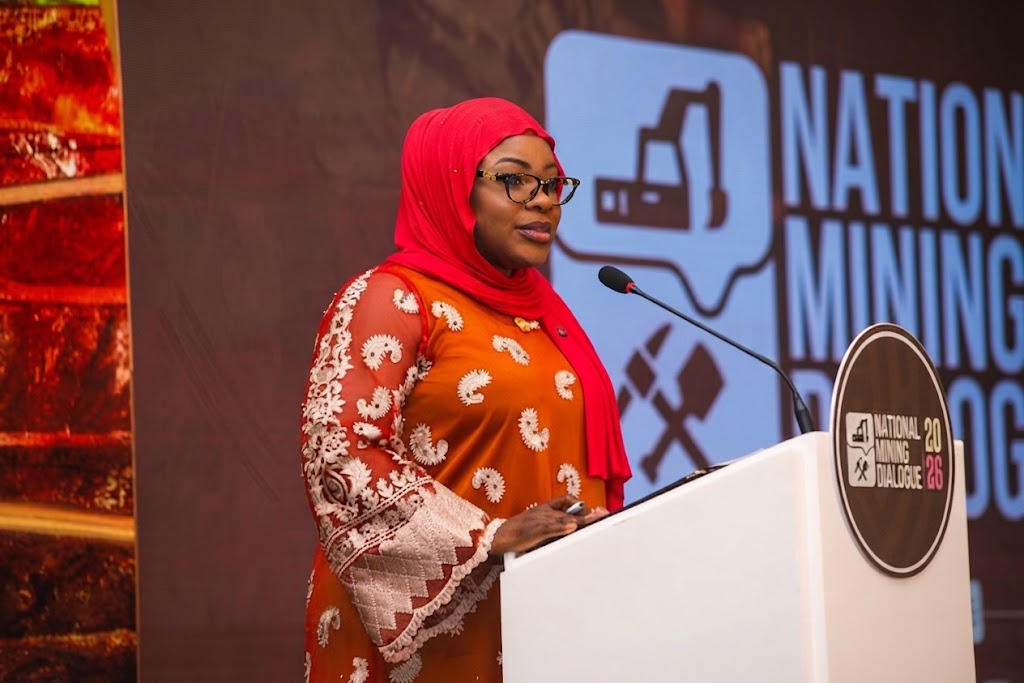
The Government of Ghana has acknowledged that environmental destruction, displacement and land-use conflicts remain unresolved concerns in several mining communities across the country.
Deputy Presidential Spokesperson Shamima Muslim said the government must address these grievances honestly while ensuring that disputes are resolved fairly, based on evidence and through the appropriate legal and regulatory institutions.
She made the remarks on behalf of Chief of Staff Julius Debrah at the National Mining Dialogue 2026, organized by Asempa 94.7 FM and its Ekosiisen program in partnership with Semmis DS and the Ministry of Lands and Natural Resources.
The dialogue was held under the theme, “Rethinking the Social License to Operate.”
Government Recognises Community Concerns
Ms Muslim said Ghana could not discuss the future of mining without recognizing the concerns of people living in areas where extraction takes place.
“Honesty also requires us to acknowledge unresolved grievances, including environmental damage, displacements and land-use conflict,” she said.
Mining operations have displaced households, destroyed farmlands and disrupted traditional livelihoods in some communities. Pollution of rivers and streams has also limited access to safe water for drinking, farming and other domestic activities.
These effects can continue long after mining has ended, particularly when pits are not properly reclaimed or contaminated land is not restored.
The government maintained that every complaint should be assessed on its merits and addressed through established institutions rather than ignored or politicized.
Communities Bear Environmental and Economic Costs
Although mining generates export revenue, taxes, royalties and employment, host communities frequently argue that they receive an inadequate share of the resulting economic benefits.
Farmers who lose land may struggle to secure alternative sources of income, while households affected by resettlement can lose access to social networks, cultural sites and community resources.
Water pollution also increases household expenses because residents may have to travel longer distances or purchase water that was previously available from local sources.
Civil society organizations and community advocates have consequently demanded stronger environmental enforcement and clearer compensation procedures for people whose land, property and livelihoods are affected.
Ghana Should Not Choose Between Jobs and Environment
Ms Muslim rejected the suggestion that Ghana must sacrifice either economic livelihoods or environmental protection.
“We can protect livelihoods while protecting our land and water resources,” she said. “Ghana should never be forced to choose between the two.”
She explained that the same balance must guide the government’s approach to formalizing artisanal and small-scale mining.
Formalization is expected to bring operators under regulatory supervision, improve safety and allow authorities to monitor production. However, stakeholders have warned that licensing alone will not solve the problem unless environmental rules are consistently enforced.
Responsible mining requires operators to avoid protected areas and water bodies, reclaim disturbed land and comply with conditions attached to their licenses.
Calls Grow for Stronger Accountability
Civil society groups, policy analysts and representatives of mining communities continue to call for stricter accountability across both large-scale and small-scale mining.
Their proposals include regular environmental audits, transparent publication of monitoring results and stronger penalties for companies and individuals that violate mining regulations.
They have also called for compensation arrangements that are clear, timely and based on the full economic and social value of land lost by affected people.
A credible grievance process should allow community members to report damage, receive updates and challenge decisions without intimidation or excessive delay.
Advocates maintain that environmental and human rights obligations must apply to all operators, regardless of their political connections, financial influence or scale of production.
Gold Traceability Expected to Improve Transparency
The government has expressed support for the Ghana Gold Board’s work to introduce greater transparency into the purchase and sale of gold produced by artisanal and small-scale miners.
Improved traceability is expected to help authorities determine where gold was produced, how it entered the market and which businesses participated in its trade.
Such a system could make it easier to distinguish responsibly produced gold from minerals obtained through illegal operations or activities that damage water bodies and forest reserves.
Traceability may also support investigations into gold smuggling, improve revenue collection and create stronger incentives for miners to operate legally.
Its success will depend on reliable monitoring, accurate records and enforcement against buyers who continue purchasing gold from unauthorised sources.
Host Communities Must Become Development Partners
Stakeholders at the dialogue stressed that mining communities should not be treated merely as landowners expected to surrender their property for national development.
They should participate meaningfully in decisions concerning mining licenses, resettlement, compensation, environmental protection and the use of mineral revenues.
Treating residents as development partners would also require investment in sustainable livelihoods, healthcare, education, roads, safe water and local businesses.
Community benefits must continue beyond short-term corporate donations and remain useful after the life of a mine has ended.
This approach is increasingly described as necessary for maintaining a mining company’s “social license to operate”—the acceptance and trust it receives from surrounding communities, beyond the formal permits issued by the state.
Responsible Mining Requires Effective Enforcement
The government reaffirmed its commitment to lawful and responsible extraction but acknowledged that policies will have limited impact without consistent enforcement.
Regulators must be properly resourced to inspect mining sites, investigate complaints and sanction operators that breach environmental or licensing conditions.
Traditional authorities, local assemblies, community organizations and state agencies must also coordinate their activities to prevent conflicting land allocations and unresolved ownership disputes.
The National Mining Dialogue highlighted the need for a new relationship among the government, mining companies and host communities—one based on transparency, shared benefits and environmental responsibility.
For residents in mining areas, the credibility of that commitment will ultimately be measured by cleaner water, restored land, fair compensation and visible improvements in their quality of life.
Source: Omanghana