Omanghana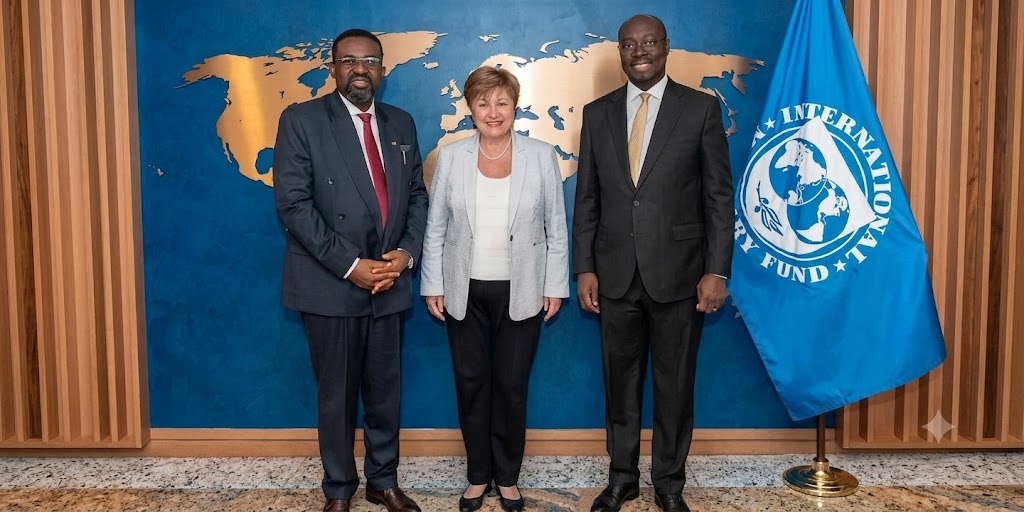
The Executive Board of the International Monetary Fund has completed the sixth and final review of Ghana’s Extended Credit Facility program, clearing the way for an immediate disbursement of approximately US$371 million.
The decision, announced on Monday, July 27, 2026, formally concludes the 39-month, US$3 billion financial arrangement approved in May 2023. The final payment of SDR265.9 million brings total disbursements under the program to about US$3 billion.
Ghana entered the program after the severe economic crisis of 2022, which was marked by rapidly rising inflation, a sharp depreciation of the cedi, declining international reserves and the government’s loss of access to international capital markets.
The country subsequently defaulted on most of its external debt and began restructuring domestic and foreign obligations as part of efforts to restore debt sustainability.
IMF Reports Broadly Satisfactory Performance
The IMF described Ghana’s overall performance under the program as broadly satisfactory, pointing to significant improvements in economic stability, public finances and debt sustainability.
Real gross domestic product expanded by 6% in 2025, before recording year-on-year growth of 6.4% during the first quarter of 2026. The expansion was driven by activity across several sectors of the economy.
Inflation also declined significantly, supported by tighter monetary policy, improved food supplies and the appreciation of the cedi. Headline inflation fell to 5.4% at the end of 2025 and declined further to 5.3% in June 2026.
Ghana’s external position improved considerably as historically high gold prices supported export earnings. The country recorded a current-account surplus equivalent to 7.9% of GDP in 2025.
Gross international reserves nearly doubled to US$11.9 billion by the end of 2025, providing approximately four months of import cover.
Fiscal performance also strengthened, with the primary balance moving into a surplus of 2.1% of GDP. A primary surplus means the government collected more revenue than it spent when interest payments on existing debt are excluded.
Debt-Distress Risk Returns to Moderate
The IMF said Ghana’s domestic and external debt restructuring had delivered substantial improvements in the country’s debt trajectory.
Ghana’s risk of external and overall debt distress has been upgraded to “moderate,” two years earlier than anticipated when the program was approved.
The improved rating means the country’s debt indicators are now below the relevant thresholds used in the IMF and World Bank debt-sustainability framework. It does not mean that Ghana’s debt challenges have disappeared, however.
Some bilateral and commercial debt negotiations remain to be completed, while the government will have to prepare for future maturities without allowing debt levels to become unsustainable again.
Prudent borrowing, transparent debt management and careful implementation of the debt rollover strategy for 2027 and 2028 will therefore remain important.
Board Grants Waiver Over Bank of Ghana Breach
In completing the review, the IMF Executive Board approved a waiver concerning Ghana’s failure to meet one performance criterion at the end of December 2025.
The breach involved the ceiling on Bank of Ghana claims on the central government and public entities. According to the Fund, the target was exceeded by a small margin because of cost-sharing arrangements under the Domestic Gold Purchase Program.
The waiver was approved because the deviation was considered temporary and the authorities had taken corrective action.
The IMF has nevertheless raised concerns about losses and quasi-fiscal risks associated with the gold-purchase program. It has called for greater transparency and measures to prevent such operations from weakening the Bank of Ghana’s balance sheet.
Future costs connected to the program are expected to receive clearer budgetary recognition, while the government works to separate commercial gold-trading activities from the central bank’s primary monetary-policy responsibilities.
Ghana Moves to Non-Financing IMF Framework
Although the Extended Credit Facility has ended, Ghana is not ending its engagement with the IMF.
The country is moving to a 36-month Policy Coordination Instrument, a non-financing arrangement intended to maintain reform momentum and strengthen policy credibility.
Unlike the ECF, the PCI will not provide Ghana with new IMF loans. Instead, it will allow the Fund to regularly assess the government’s economic policies and progress on agreed reforms.
| Extended Credit Facility | Policy Coordination Instrument |
|---|---|
| Provided direct financial support | Provides no IMF financing |
| Focused on crisis stabilization | Focuses on consolidating stability |
| Supported debt restructuring | Seeks to preserve debt sustainability |
| Helped reduce inflation and rebuild reserves | Targets resilience and structural reforms |
| Included loan disbursements after reviews | Uses reviews to signal policy credibility |
The PCI could help reassure investors, development partners and financial markets that Ghana remains committed to sound economic management. It may also help attract donor and market financing without the country relying directly on another IMF loan.
The IMF’s earlier staff-level agreement identified fiscal management, debt sustainability, financial-sector stability, economic diversification and inclusive growth as key priorities under the new framework.
Governance and Financial Reforms to Continue
The next stage of Ghana’s economic program will require stronger transparency and accountability across public institutions and state-owned enterprises.
The IMF has encouraged the government to close gaps in the country’s anti-corruption framework, including improving the standardization and public disclosure of asset declarations while maintaining appropriate privacy safeguards.
Safeguarding the operational independence and financial position of the Bank of Ghana will also remain central to the reform agenda. The central bank will be expected to pursue a forward-looking monetary policy, strengthen its balance sheet and limit activities that create unbudgeted financial risks.
In the financial sector, authorities must complete bank recapitalization measures, address weaknesses in state-owned banks and specialized deposit-taking institutions, and reduce the high level of non-performing loans.
The government will also be required to improve financial-crisis management and ensure that regulators can intervene promptly when banks fail to meet capital or governance requirements.
Fiscal Discipline Remains Essential
The end of the ECF does not remove the need for expenditure controls and responsible borrowing.
Under the PCI, Ghana will have limited fiscal space to increase development spending, strengthen social programs and address youth unemployment. However, that additional spending must remain consistent with debt sustainability.
The government is expected to work toward achieving the legally established public-debt anchor of 45% of GDP by 2034.
Improved public financial management will be critical to preventing the accumulation of unpaid bills and avoiding a return to the recurring cycle of large fiscal deficits, currency pressure and rising debt.
State-owned enterprises, particularly in the energy and cocoa sectors, continue to present major financial risks. Reforms will therefore focus on reducing electricity distribution losses, improving payment discipline, resolving legacy arrears and strengthening the long-term financial position of the Ghana Cocoa Board.
The completion of the final review represents an important milestone in Ghana’s recovery from the 2022 crisis. The larger test will be whether the country can preserve the gains after the final IMF funds are disbursed.
Ghana Business News reported the final review and US$371 million release, noting that sustained implementation of the PCI reforms will be necessary to support private-sector-led growth and protect debt sustainability.
Source: Omanghana