Omanghana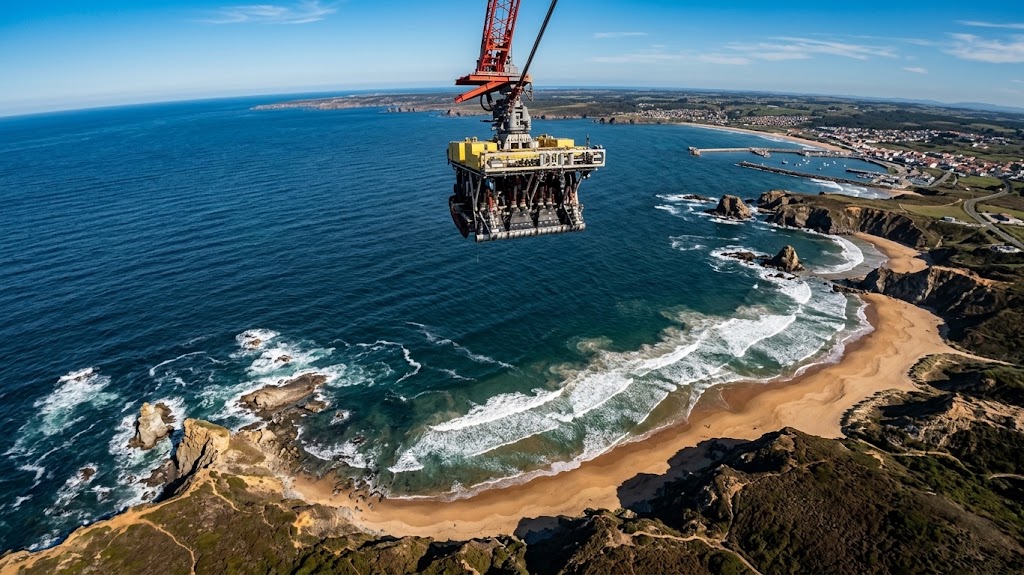
Mauritius has secured sovereign rights over an additional 145,000 square kilometers of continental shelf in the Indian Ocean, significantly expanding the country’s jurisdiction over seabed resources around Rodrigues Island.
The approval was granted by the United Nations Commission on the Limits of the Continental Shelf following years of scientific research and diplomatic engagement by the Mauritian government.
The decision recognizes that the natural continental shelf surrounding Rodrigues extends beyond the country’s standard 200-nautical-mile Exclusive Economic Zone. It grants Mauritius exclusive rights to explore and potentially exploit resources found on or beneath the seabed within the approved area.
Mauritius, ranked behind Seychelles as one of Africa’s wealthiest countries by GDP per capita, is expected to use the expansion to strengthen its blue economy and long-term resource security.
Preliminary assessments suggest that sections of the newly recognized seabed could contain polymetallic nodules and other mineral formations. Such deposits may hold cobalt, nickel, copper and rare earth elements used in electric vehicle batteries, renewable energy systems and advanced electronics.
However, the commercial value of these resources will depend on further scientific exploration, technological feasibility, environmental safeguards and international regulations governing deep-sea activity.
The expanded continental shelf also creates opportunities for marine research, geological mapping and the development of offshore energy projects. Mauritius could explore areas such as undersea infrastructure, carbon storage and renewable energy, subject to technical and environmental assessments.
The decision primarily concerns rights to resources on and beneath the seabed. It does not automatically extend Mauritius’ control over fisheries or the water column beyond its existing Exclusive Economic Zone.
Mauritius began pursuing the claim in 2009, presenting scientific evidence to demonstrate that the underwater landmass around Rodrigues formed a natural continuation of its territory.
The submission was later strengthened with updated oceanographic, geological and bathymetric data in 2024. This information mapped the seabed and supported Mauritius’ argument that the continental shelf extended beyond the conventional 200-nautical-mile limit.
The successful claim is regarded as an important diplomatic and scientific achievement for the island nation. It also demonstrates how African coastal countries can use international maritime law and specialized research to establish rights over offshore territories.
The development comes as Mauritius continues to pursue sovereignty over the Chagos Archipelago, which the United Kingdom separated from the country in 1965 before Mauritius gained independence.
Mauritius has received substantial international support for its position. The International Court of Justice concluded in a 2019 advisory opinion that the decolonization of Mauritius had not been lawfully completed and that the United Kingdom should end its administration of the archipelago as rapidly as possible.
The United Nations General Assembly subsequently adopted a resolution supporting the return of the Chagos Islands to Mauritius.
Diego Garcia, the largest island in the archipelago, hosts a strategically important joint United Kingdom-United States military facility. The base supports operations across the Indian Ocean, Middle East and wider Indo-Pacific region.
Its future has therefore remained central to negotiations between Mauritius and the United Kingdom. Diplomatic discussions have sought to reconcile Mauritian sovereignty with the security interests of London and Washington.
Reports have suggested that the United States is interested in financial and diplomatic arrangements capable of guaranteeing the uninterrupted, long-term operation of the Diego Garcia base. Any final framework would require agreement among the governments concerned while addressing sovereignty, security and the rights of displaced Chagossians.
The continental shelf approval and the continuing Chagos negotiations highlight Mauritius’ growing strategic importance in the Indian Ocean.
With its enlarged seabed jurisdiction, Mauritius now has an opportunity to expand scientific research and resource exploration. The challenge will be to ensure that any future development protects fragile marine ecosystems while producing sustainable economic benefits for the country.
Source: Omanghana
Source: Omanghana