Omanghana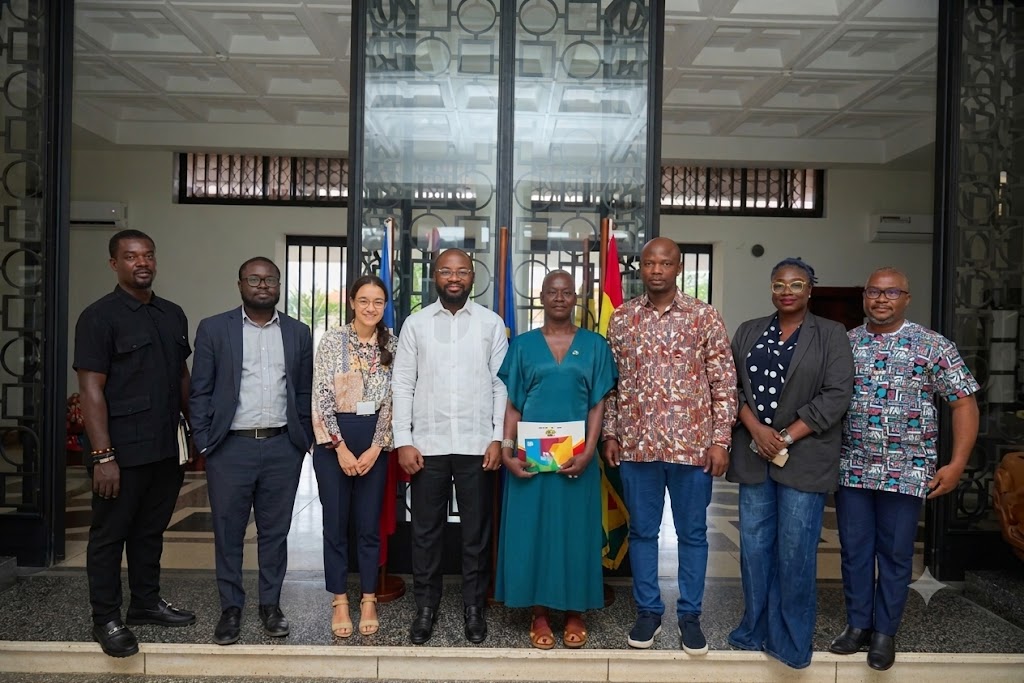
The renewed cooperation will focus on apprenticeships, disability inclusion, youth mobility, artificial intelligence and preparing young Ghanaians for a changing job market.
Ghana’s National Youth Authority and the Embassy of France have strengthened their partnership to expand opportunities in youth empowerment, technical skills, innovation and social inclusion.
The renewed commitment followed a meeting between NYA Chief Executive Officer Osman Abdulai Ayariga, Esq., and the French Ambassador to Ghana, H.E. Diarra Dimé-Labille, at the French Embassy in Accra.
The engagement focused on moving beyond conventional development assistance toward a model based on strategic investment, institutional cooperation and direct support for youth-focused programs.
Both sides expressed their readiness to develop initiatives that equip young Ghanaians with practical skills and improve their ability to compete in the digital and industrial economy.
NYA Seeks Support for National Apprenticeship Program
A major focus of the discussions was Ghana’s National Apprenticeship Program, which is intended to provide young people with employable technical and vocational skills.
The NYA appealed to the French government for technical resources, knowledge exchange and institutional support to help expand the program.
Potential areas of cooperation include instructor development, modern training equipment, curriculum improvement and links between Ghanaian training institutions and their counterparts in France.
International partnerships could also expose beneficiaries to modern production methods and industry standards while helping program administrators develop stronger assessment and certification systems.
The NYA believes that expanding apprenticeship opportunities will help address youth unemployment by providing practical alternatives for young people who may not immediately enter universities or other tertiary institutions.
Program Reserves Places for Persons With Disabilities
The National Apprenticeship Prograe has set aside between 5% and 10% of its beneficiary positions for persons with disabilities.
The allocation is intended to ensure that young people with disabilities are not excluded from technical training, entrepreneurship and employment opportunities.
The NYA said the measure reflects the government’s wider commitment to social inclusion and economic independence for vulnerable groups.
Effective implementation will require accessible training centers, appropriate learning materials and instructors equipped to support beneficiaries with different needs. Cooperation with France could provide additional expertise in designing inclusive vocational programs and workplace-transition systems.
The long-term objective is to help beneficiaries develop marketable skills, secure employment or establish their own businesses.
Quarterly Meetings Proposed to Track Progress
Ambassador Dimé-Labille proposed the introduction of quarterly meetings between the French Embassy and the NYA.
The regular engagements would allow both institutions to monitor agreed projects, address implementation challenges and identify new areas of cooperation.
Establishing a formal review schedule could also help ensure that commitments made during diplomatic meetings are translated into practical programs with measurable results.
The meetings are expected to provide a platform for assessing participation levels, training outcomes, funding requirements and the overall impact of joint initiatives.
They could also bring together representatives from educational institutions, technology organizations, businesses and civil society groups whose expertise may support the partnership.
Artificial Intelligence Included in Cooperation Agenda
The discussions also covered artificial intelligence and its potential contribution to Ghana’s development.
The French Embassy highlighted its support for the Artificial Intelligence for Sustainable Development initiative, which is being implemented through the Responsible AI Lab at the Kwame Nkrumah University of Science and Technology.
The initiative promotes the responsible use of artificial intelligence to address development challenges while considering issues such as safety, fairness, transparency and data protection.
Connecting the NYA to the program could provide young Ghanaians with opportunities in research, digital training and technology entrepreneurship.
Artificial intelligence is increasingly influencing sectors such as agriculture, healthcare, education, finance and manufacturing. Developing local expertise could therefore help Ghanaian youth participate in new industries rather than remain only consumers of imported technology.
Youth Mobility and Institutional Investment
The expanded partnership also places emphasis on youth mobility and institutional co-investment.
Youth mobility programs can provide opportunities for students, trainees and young professionals to gain international experience, build networks and exchange ideas with their counterparts in other countries.
The NYA and French Embassy are expected to explore arrangements that produce lasting benefits for institutions in Ghana, including stronger training systems and partnerships with industry.
The approach represents a shift from short-term assistance toward sustained cooperation capable of generating skills, employment and innovation.
By combining Ghana’s large youth population with French technical and institutional expertise, the two sides hope to develop programs that respond directly to changing labor-market demands.
French Delegation Invited to National Youth Conference
Deputy NYA Chief Executive Officer for Operations and Programs, Alhaji Inusah Mahama, formally invited the French diplomatic delegation to participate in the National Youth Conference 2026.
The conference is expected to bring together young people, government officials, development partners and private-sector representatives to discuss employment, entrepreneurship, technology and national development.
French participation could provide an opportunity to announce new areas of cooperation and connect Ghanaian youth organizations with international partners.
According to the NYA, the broader objective of the partnership is to prepare young Ghanaians to become competitive in an increasingly digital, technology-driven and industrialized global economy.
The success of the cooperation will ultimately depend on whether the commitments produce accessible training, sustainable jobs and measurable improvements in the lives of young people, including those who have historically faced barriers to education and employment.
Source: Omanghana