Omanghana
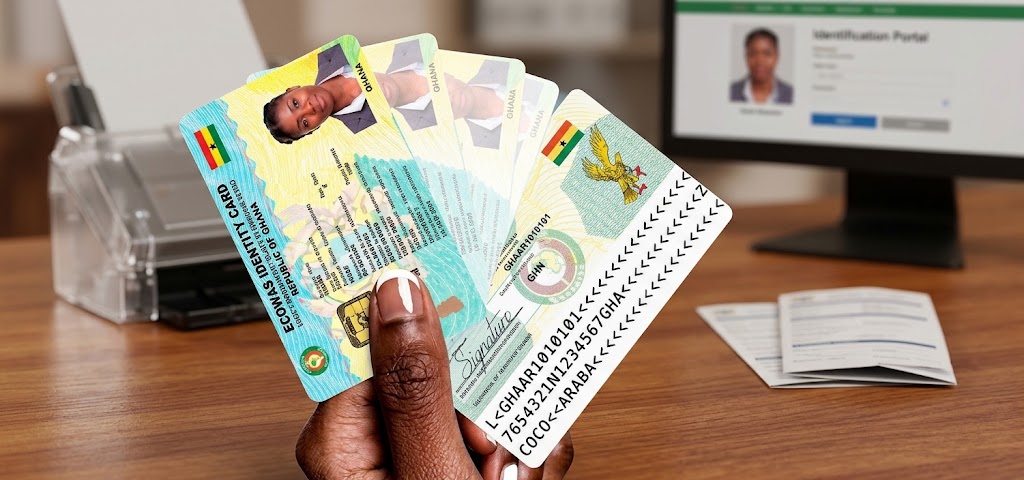
The National Identification Authority (NIA) has begun a nationwide enforcement exercise to ensure institutions use approved biometric methods to verify the identities of Ghana Card holders.
The exercise began on Tuesday, November 3, 2026, after a three-month grace period for public education and compliance ended on November 2. The NIA says its Biometric Verification Implementation Task Force will visit institutions to monitor compliance.
The requirements are contained in the National Identity Register (Amendment) Regulations, 2026 (L.I. 2523). The regulations came into force on June 9, 2026, ahead of the enforcement exercise.
Biometric Verification Required
Under the rules, organizations covered by the regulations must use approved biometric verification when confirming a person’s identity for relevant transactions. The process may involve matching a fingerprint or another approved biometric feature against information on the Ghana Card or in the national identity register.
The NIA says visual inspection of a Ghana Card alone is not sufficient. Organizations must not request, photocopy, scan or retain copies of the card for identity verification purposes, except where permitted by law.
The requirements affect public and private institutions that verify identities as part of their operations, including financial institutions, telecommunications companies and other service providers.
Penalties for Breaches
The NIA has warned that violations may lead to prosecution and fines following conviction.
Corporate bodies face fines ranging from 500 to 2,000 penalty units, equivalent to GH¢6,000 to GH¢24,000 at the current value of GH¢12 per unit. Individuals who breach certain requirements relating to private or informal transactions may face fines of 50 to 500 penalty units, or GH¢600 to GH¢6,000.
The authority may also suspend or terminate an organization’s access to its verification platform where applicable.
No New Ghana Card Required
The NIA has assured cardholders that they do not need to obtain a new Ghana Card or undergo fresh biometric registration because of the new rules.
Existing cards remain valid, and approved verification can use biometric information captured during registration. Some methods require the physical card, while institutions connected to the NIA’s system may use other approved verification arrangements.
The NIA says the changes are intended to reduce impersonation and identity fraud and improve the protection of personal information. It has asked the public to report suspected breaches through its task force hotline, 030 2999 309.
Source: Omanghana