Omanghana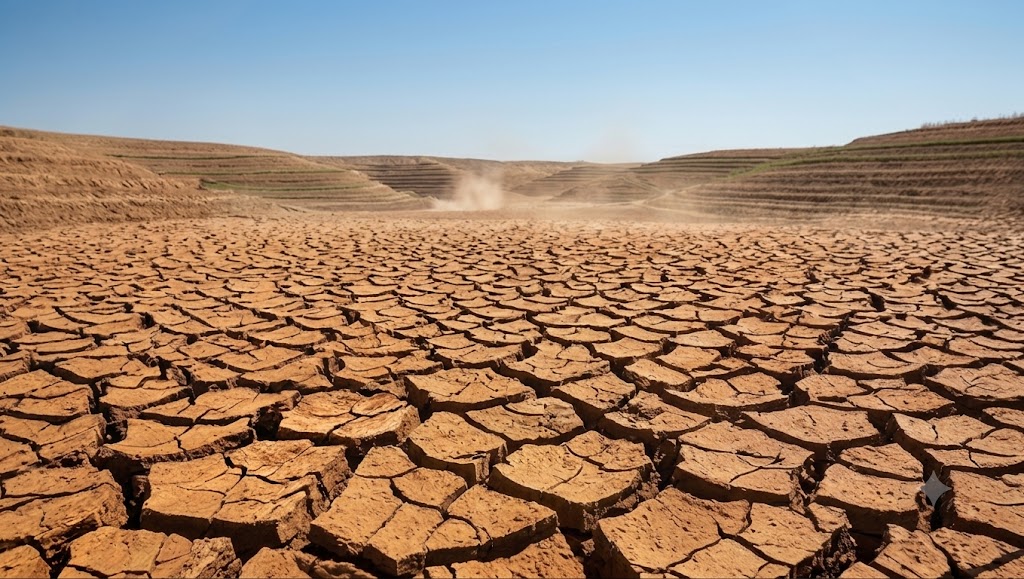
Africa could suffer economic losses of between $10 billion and $20 billion as an unusually powerful El Niño threatens agriculture, infrastructure, food security and economic growth across the continent.
The African Development Bank (AfDB) warned that countries experiencing the most severe effects could lose between 1% and 2% of their gross domestic product as droughts, floods and storms disrupt livelihoods and place additional pressure on government finances.
The climate threat could undermine Africa’s economic recovery. In May, the AfDB projected that the continent’s economy would expand by 4.2% in 2026 and 4.4% in 2027. However, those forecasts were issued before warnings that the developing El Niño could become one of the strongest on record.
Anthony Nyong, the AfDB’s Director for Climate Change and Green Growth, said the weather event could cause economic damage lasting far beyond the initial emergencies.
“Just this event is going to reduce heavily affected countries’ GDP by 1% to 2% on average, which is about $10 billion to $20 billion across the continent,” Nyong said in an interview with Reuters.
El Niño is a naturally occurring climate pattern associated with unusual warming in the central and eastern equatorial Pacific Ocean. Although it develops thousands of kilometres away from Africa, it can significantly alter rainfall and temperature patterns across the continent.
Its effects vary by region. Some countries may experience prolonged drought, while others could face destructive rainfall, flash floods, landslides and powerful storms. These conditions can destroy crops, kill livestock, damage roads and power systems, contaminate water supplies and increase the spread of disease.
Agriculture and food supplies under pressure
Agriculture is expected to be one of the sectors most affected by the climate shock. A large proportion of African farming depends on rainfall, leaving producers particularly vulnerable when seasonal weather patterns change.
The AfDB estimates that African farmers are already facing nearly $330 million in lost income in 2026. Fisheries productivity could also decline by between 1% and 4% as rising sea temperatures and severe storms affect fish populations, coastal infrastructure and fishing activity.
Lower agricultural production could reduce household incomes, weaken export earnings and increase demand for food imports. That would create an additional financial burden for countries already struggling with high debt, expensive borrowing and foreign-exchange shortages.
Maize prices could double in some of the hardest-hit markets, according to the AfDB warning. As maize is a major staple consumed by millions of households, a sharp increase could worsen hunger and place essential food beyond the reach of low-income families.
The previous El Niño cycle in 2023 and 2024 brought severe drought to Southern Africa and heavy rainfall and flooding to parts of East Africa. The resulting crop failures and livestock losses contributed to food shortages and rising prices in several countries.
Countries facing the greatest danger
The AfDB identified Sudan, South Sudan, the Democratic Republic of Congo, Somalia, Burundi, Mali and Nigeria among the countries that could experience particularly serious humanitarian, economic and environmental consequences.
Many of these countries are already dealing with armed conflict, political instability, displacement, poverty or weakened public institutions. Additional pressure on water, farmland and grazing areas could intensify competition between communities and increase the risk of further instability.
Prolonged drought may force pastoralists to travel farther in search of water and pasture, while floods could drive farming communities from their homes. Families that lose their crops, livestock or businesses may also migrate to urban areas or cross national borders in search of safety and employment.
Nyong warned that the scale of the disruption could trigger mass migration from severely affected communities.
Governments caught in a climate-finance trap
The AfDB also raised concerns about what it described as a “climate finance trap.”
When climate disasters occur, governments must provide emergency relief, repair damaged infrastructure and support displaced communities. Countries with limited fiscal space often finance those responses by diverting money from healthcare, education and development projects.
Repeated disasters can therefore reverse years of progress. Governments may be forced to borrow on expensive commercial terms to rebuild roads, bridges, schools, hospitals and power systems, further increasing national debt.
The damage could also affect domestic banking systems. Governments, businesses and farmers may struggle to repay loans after losing productive assets or income, while financial institutions could face rising defaults.
Nyong said climate shocks often force African countries to take “two steps back,” raising the danger that vulnerable economies could fall deeper into poverty.
Africa may need up to $100 billion
Africa’s climate-adaptation requirements were already estimated at approximately $50 billion over the next 12 months. The expected intensity of the El Niño event could add another $30 billion to $50 billion, pushing the continent’s total needs as high as $100 billion this year.
That amount is far beyond the adaptation funding currently available. International public adaptation finance for developing countries stood at only $26 billion in 2023, despite rapidly increasing climate-related needs.
The AfDB is expected to hold a bank-wide seminar in September to assess how the weather threat could affect its existing and proposed investments. It may restructure some projects and help countries seek additional assistance from the Green Climate Fund, Adaptation Fund, Climate Investment Funds and loss-and-damage financing mechanisms.
Climate specialists are urging governments and development partners to invest in early-warning systems, climate-resilient crops, irrigation, flood defenses, water storage, stronger transport networks and disaster-preparedness programs before the most severe effects arrive.
The AfDB maintains that financing resilience before disasters occur is less expensive than repeatedly paying for emergency relief and reconstruction afterward.
With Africa contributing only a small proportion of global greenhouse-gas emissions but facing some of the world’s most severe climate consequences, the warning is expected to strengthen calls for increased international support ahead of the next round of global climate negotiations in Turkey in November.
Source: Omanghana