Omanghana
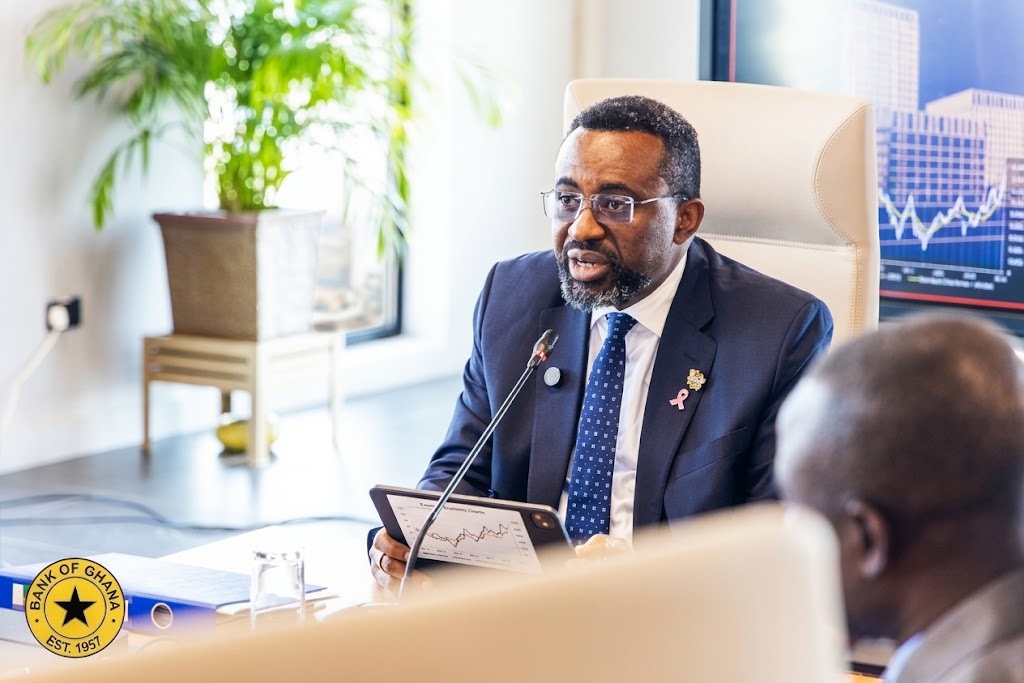
Bank of Ghana Governor Dr Johnson Pandit Asiama says virtual asset infrastructure could make it faster and less expensive for Ghanaians abroad to send money home while improving payments for cross-border trade.
Speaking at the Africa Virtual Assets Summit 2026 in Accra on Monday, November 2, Dr Asiama said digital financial technologies could help address high transaction costs, fragmented payment systems and barriers to investment.
He stressed, however, that innovation must be accompanied by regulation that protects consumers and maintains confidence in Ghana’s financial system. Bank of Ghana
Potential benefits for remittances
Remittances are an important source of income for Ghanaian households and foreign exchange for the economy. In an earlier address, Dr Asiama said Ghana received nearly US$7.8 billion in remittances in 2025, compared with approximately US$4.6 billion in 2024. bog.gov.gh
The Governor said virtual asset infrastructure could help reduce delays and costs associated with sending money across borders. For families receiving support from relatives abroad, lower transaction costs could mean retaining more of the funds sent.
The benefits would depend on how the services are designed and regulated, including the fees charged for transfers and currency conversion.
Opportunities for African trade
Dr Asiama also pointed to opportunities to improve payments and settlement under the African Continental Free Trade Area (AfCFTA).
He said virtual assets and tokenization could help address barriers that make it difficult for businesses to move money and access financing across African markets. Tokenization involves representing rights to an asset, such as a security, commodity or trade receivable, in digital form.
According to the Governor, such approaches could give businesses additional ways to obtain financing and potentially reduce the time needed to settle transactions.
He cited the growth of Ghana’s existing digital payment system as evidence of the country’s ability to adopt financial technology. Bank of Ghana data show that mobile money platforms processed 1.046 billion transactions worth GH¢518.8 billion in August 2026. Mobile money is a separate digital financial service from virtual assets. bog.gov.gh
Regulation and stable coin risks
Ghana’s Virtual Asset Service Providers Act, 2025 (Act 1154) provides a legal foundation for the registration, licensing and supervision of virtual asset service providers. The Bank of Ghana and the Securities and Exchange Commission (SEC) have regulatory responsibilities under the framework. Bank of Ghana
The SEC has also admitted firms into a regulatory sandbox to test services such as asset tokenization, virtual asset exchanges and trading platforms under supervision. Securities and Exchange Commission Ghana
Dr Asiama said the central bank was developing a directive to provide clearer requirements for stable coin activities. Stable coins are digital assets designed to maintain a value linked to another asset, often a currency.
While acknowledging their possible use in payments, he cautioned that wider use of foreign-currency stable coins could affect demand for the cedi, capital flows and the effectiveness of monetary policy.
He said consumer protection, the safeguarding of customer assets and financial integrity would be essential to building public trust as Ghana develops its virtual asset sector.
Source: Omanghana