Omanghana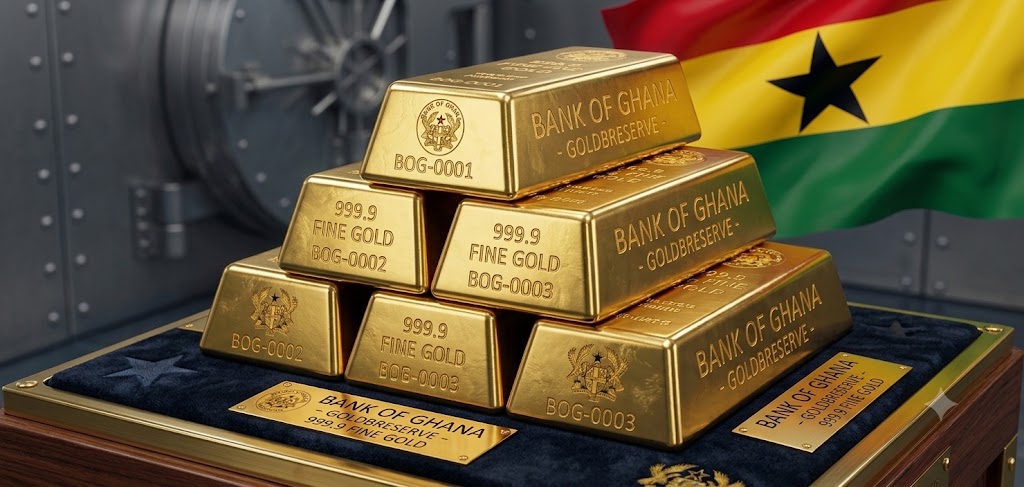
Ghana was unlikely to have accumulated the same level of gold reserves at a lower immediate cash cost through the international market, despite the substantial losses associated with the Bank of Ghana’s Domestic Gold Purchase Program.
The International Monetary Fund reported that the program generated more than $1.7 billion in losses for the central bank in 2025. However, supporters of the policy argue that Ghana’s foreign-exchange constraints and weakened international credit position made direct purchases from the global market impractical and potentially more damaging to the economy.
Purchasing billions of dollars’ worth of gold internationally would have required the Bank of Ghana to pay in US dollars or another hard currency. At the time, the country was recovering from a sovereign debt default and facing critically low foreign reserves.
Using scarce dollars to acquire gold abroad would therefore have placed additional pressure on the country’s reserves. It could also have weakened the cedi further by increasing demand for foreign currency.
Under the Domestic Gold Purchase Program, the Bank of Ghana instead provided cedi financing to purchase gold produced by local artisanal and small-scale miners. The central bank could retain the acquired gold as a reserve asset or sell it internationally to obtain foreign currency.
The arrangement effectively allowed Ghana to convert locally financed gold purchases into internationally recognized reserve assets without making an equivalent upfront payment in dollars.
A significant portion of the program’s reported losses reportedly came from premiums paid to gold aggregators above official exchange-rate valuations. These payments were intended to make formal sales more attractive and discourage miners and traders from smuggling gold across Ghana’s borders.
Analysts defending the program have consequently characterized part of the deficit as a policy-related or accounting loss rather than a straightforward commercial cash loss. The distinction does not eliminate the effect on the Bank of Ghana’s balance sheet, but it changes how the program’s overall cost is assessed.
The initiative also involved substantial operational expenditure. Assaying, refining, aggregation and other intermediary costs reportedly absorbed about 14.5% of the acquired gold’s value, amounting to approximately $1.9 billion.
Buying gold internationally would ordinarily involve lower intermediary costs and standard trading commissions. Ghana’s poor credit standing and shortage of hard currency, however, would have limited its access to favorable international transactions.
Supporters of the program maintain that its wider economic benefits outweighed its operational weaknesses. Ghana’s gross international reserves reportedly increased eightfold to $11.9 billion by the end of 2025, while the cedi appreciated by about 41%.
The strengthened currency was also associated with a sharp reduction in inflation, which reportedly declined from above 23% to 5.4%. Advocates argue that attempting to purchase the same reserves internationally could have produced the opposite result by draining dollars, weakening the cedi and intensifying inflationary pressures.
The program nevertheless imposed a heavy quasi-fiscal burden on the central bank and exposed weaknesses in pricing, aggregation and cost control. Its economic contribution therefore does not remove the need for stronger oversight and more efficient purchasing arrangements.
Although direct international purchases might have appeared commercially cleaner, they were not necessarily a realistic or cheaper option once Ghana’s limited access to foreign currency and the broader consequences for the cedi were considered. The more relevant policy question is whether the domestic program’s economic benefits justified its $1.7 billion impact and whether similar reserve gains could have been achieved with substantially lower operational costs.
Source: Omanghana