Omanghana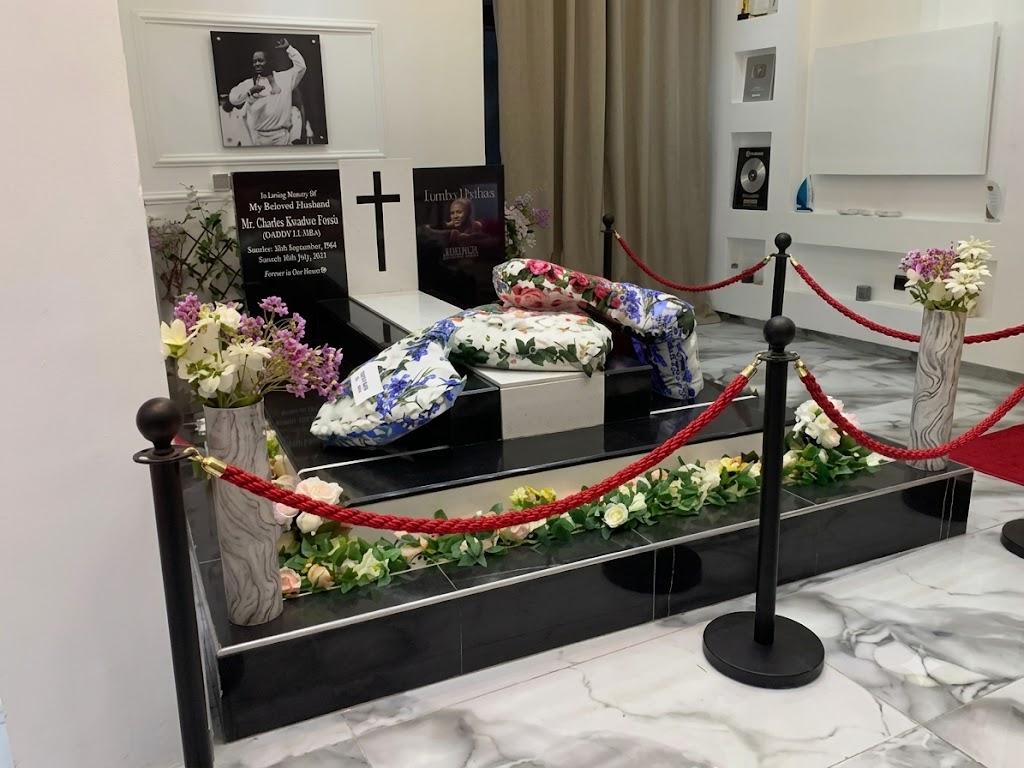
The Highlife legend’s final resting place at his East Legon residence has been transformed into a memorial displaying awards, photographs and audiovisual records from his celebrated career.
The family of Ghanaian Highlife legend Daddy Lumba, born Charles Kwadwo Fosu, has marked the first anniversary of his death by publicly revealing the location of his final resting place.
The commemorative ceremony, held on Sunday, July 26, 2026, confirmed that the musician was buried in a private mausoleum at his residence in East Legon, Accra.
The unveiling ended a year of public speculation about where the celebrated musician had been laid to rest following his death on July 26, 2025.
Relatives, close associates and invited guests gathered at the residence to remember his life, music and contribution to Ghana’s entertainment industry.
Mausoleum Designed as a Career Memorial
The family has transformed the burial site into a carefully arranged memorial celebrating Daddy Lumba’s four-decade career.
His tomb is located inside a specially prepared room containing awards, photographs and other items documenting his musical journey.
Among the objects displayed are trophies and industry honours he received during his lifetime. The collection also includes plaques recognizing his digital achievements, such as his Boomplay streaming milestones and YouTube Silver Creator Award.
The display reflects both his traditional influence on Ghanaian Highlife and the continued popularity of his music on modern digital platforms.
Music Videos Play Inside Memorial Room
A television installed inside the mausoleum continuously shows a selection of Daddy Lumba’s music videos and recorded performances.
The audiovisual presentation allows visitors to experience the musician’s work while viewing the awards and photographs displayed around his grave.
Framed portraits on the walls capture different stages of his career, from his early rise in Ghanaian music to his status as one of the country’s most influential performers.
The images also document his changing musical style and public appearance over the decades.
Rather than functioning only as a burial chamber, the room has been designed as a compact museum preserving important elements of Daddy Lumba’s career and public legacy.
Family Plans Tourist Attraction
Daddy Lumba’s sister, Faustina Fosu, said the family intends for the memorial to become a permanent attraction for fans.
According to her, the space was created so admirers from Ghana and other parts of the world could visit, pay their respects and learn more about the musician’s achievements.
Further details about public access, visiting hours and the management of the memorial have not yet been announced.
If opened regularly, the mausoleum could become an important destination for music lovers and cultural tourists. It could also contribute to wider efforts to preserve the history of Ghanaian Highlife and recognize the artists who shaped the genre.
Daddy Lumba’s extensive catalogue continues to attract listeners across generations, making the preservation of his recordings, awards and personal memorabilia an important cultural undertaking.
Anniversary Includes Traditional Widowhood Rites
The first-anniversary gathering also featured customary observances connected to the musician’s death.
The family head, known as Abusuapanin “Tupac,” supervised the formal performance of widowhood rites involving Daddy Lumba’s second wife, Odo Broni.
The ceremony added a deeply emotional dimension to the anniversary as relatives combined remembrance with the fulfillment of traditional family obligations.
Guests also reflected on the musician’s influence, celebrated his songs and paid tribute to the legacy he left behind.
Elder Sister Alleges She Was Denied Access
Despite the commemorative nature of the event, the unveiling also exposed continuing disagreements within the family.
Daddy Lumba’s elder sister, Ernestina Fosu, publicly appealed to President John Dramani Mahama and state authorities to intervene in the dispute.
She alleged that some relatives had excluded her from important family matters and prevented her from visiting or viewing her brother’s grave after his burial.
Her claims have drawn attention to tensions surrounding the management of the late musician’s burial arrangements and estate.
The relatives accused by Ernestina have not been fully represented in the public account of the dispute. Her allegations therefore remain claims requiring responses from the other parties involved.
Traditional Authority Demands Exhumation
A separate controversy has emerged over the decision to bury Daddy Lumba on residential property in East Legon.
The Office of the Gborbu Wulomo has called for the body to be exhumed, arguing that the burial violated Ga customs governing the use of land and the interment of human remains.
Representatives of the traditional office contend that private ownership or occupation of land does not automatically override customary requirements relating to burial.
The family’s position on the demand for exhumation has not been fully detailed. It also remains unclear whether the traditional authority intends to pursue the matter through state institutions or the courts.
Any attempt to exhume and relocate the body would require compliance with Ghanaian law, including the relevant public-health, judicial and local-government procedures.
Legacy Overshadowed by Family Disagreements
The unveiling was intended to celebrate Daddy Lumba’s musical achievements and provide clarity about his burial place. However, the competing family claims and objections from traditional authorities have introduced fresh controversy.
Resolving those disputes may be important to the family’s plans to open the mausoleum as a public memorial.
Questions concerning access, cultural approval, property rights and control of the musician’s legacy could affect how the site is managed in the future.
Despite the disagreements, Daddy Lumba remains one of the defining voices of Ghanaian Highlife. His songs, performances and distinctive storytelling continue to influence musicians and connect with audiences in Ghana and abroad.
The East Legon memorial now stands as a physical record of that legacy, even as relatives and traditional authorities work through the unresolved issues surrounding his burial.
Source: Omanghana