Omanghana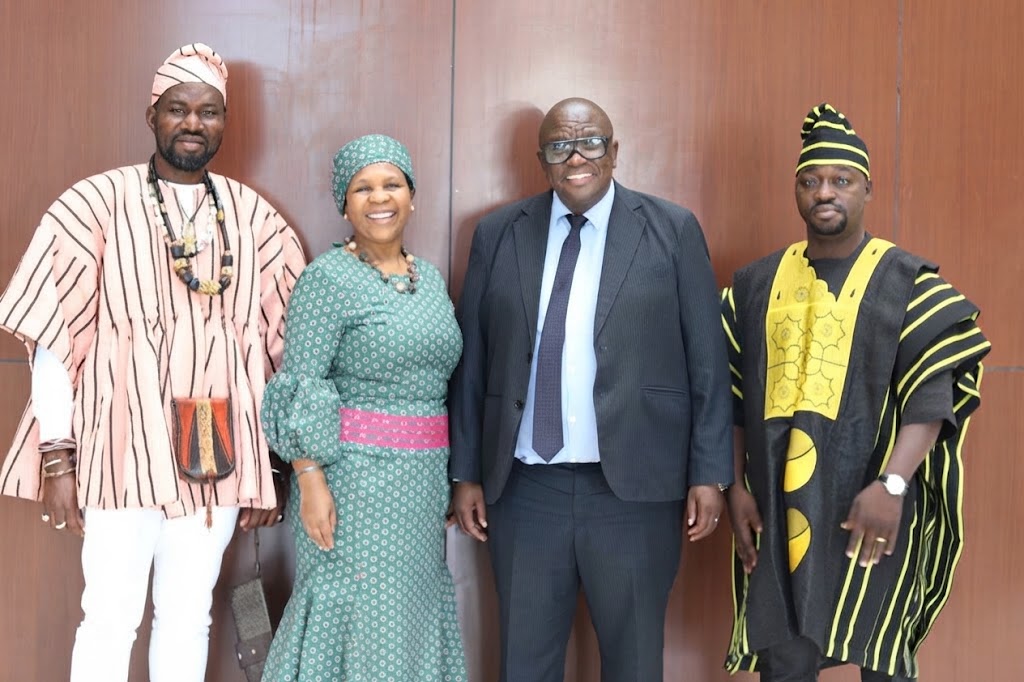
A traditional Northern Ghanaian smock took center stage at the Lesotho Tourism Pitso in Maseru as part of efforts to promote Ghana’s cultural heritage and strengthen tourism cooperation among African countries.
Representatives of Kacstone Records and the Sister Kingdom Network presented the handwoven garment to Lesotho’s Minister for Tourism, Sports, Arts and Culture, Mputi Steven Mputi, during the two-day summit held from September 16 to 17, 2026.
The gesture was described as an act of cultural diplomacy highlighting Northern Ghana’s distinctive artistic traditions. Commonly known as a fugu or batakari, the smock is produced from strips of handwoven cotton and remains an important symbol of Ghanaian heritage, identity and traditional authority.
The Ghanaian delegation included Kacstone Records Managing Director Wenawome Aborah Duriyem, Sister Kingdom Network Supreme Leader Ambassador Dr Tengol K. Kplemani and Kacstone Records Public Relations Officer Alexander Naaga Bombande.
During the event, the delegation called for stronger youth participation, increased cultural exchanges and deeper cross-border partnerships to expand Africa’s tourism industry. It also advocated greater investment in community-based cultural tourism to help create economic opportunities while preserving indigenous traditions.
The inaugural Tourism Pitso brought together government officials, investors, tourism operators, entrepreneurs, development partners and creative-industry stakeholders. Participants discussed ways to attract investment, improve market access and make tourism a stronger driver of inclusive economic growth in Lesotho.
Held under the theme “Unlocking Tourism Investment and Sustainable Growth for Inclusive Economic Development,” the summit was hosted by Lesotho’s Ministry of Tourism, Sports, Arts and Culture and implemented by the Lesotho Tourism Development Corporation.
Lesotho also used the gathering to showcase its tourism potential and signal its interest in foreign investment and regional partnerships. The presentation of the Ghanaian smock added a West African dimension to the event and reinforced calls for African countries to use culture, heritage and creative enterprise to build stronger connections across the continent.
Source: Omanghana