Omanghana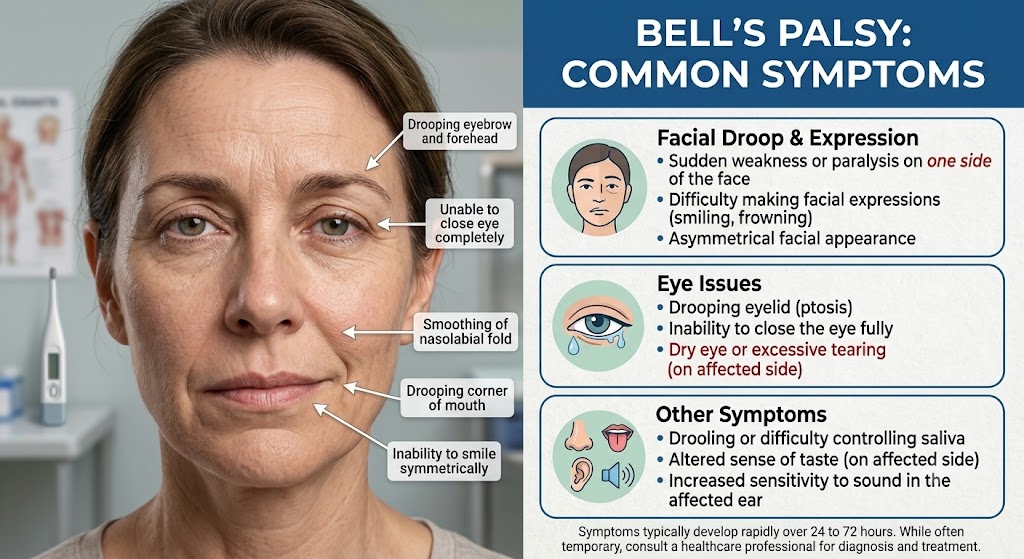
Bell’s palsy is a neurological condition that causes sudden weakness or paralysis on one side of the face. It develops when the seventh cranial nerve, commonly known as the facial nerve, becomes inflamed or compressed.
This nerve controls facial expressions and contributes to taste, tear production and saliva control. When it is affected, one side of the face may droop, making it difficult to smile, blink or close the eye completely.
Symptoms usually develop rapidly and may worsen over 48 to 72 hours. Because sudden facial weakness can also be a sign of a stroke or another serious condition, anyone experiencing it should seek emergency medical assessment immediately rather than attempting to diagnose Bell’s palsy at home.
The precise cause is often unknown. Researchers believe some cases may be connected to the reactivation of dormant viral infections, including herpes simplex or varicella-zoster, which can cause inflammation around the facial nerve.
Common symptoms include weakness or complete paralysis on one side of the face, drooping at the corner of the mouth, difficulty smiling and loss of control over facial movements. Some people may also experience drooling.
The affected eye may be difficult or impossible to close completely. This can cause dryness, irritation, excessive tearing and possible damage to the cornea if the eye is not adequately protected.
Other symptoms may include altered taste on the front part of the tongue, increased sensitivity to sound in one ear and pain around or behind the ear. Symptoms and severity can vary considerably between patients.
Bell’s palsy can affect people of any age but is more frequently reported among those between 15 and 45. The risk may be higher among people with diabetes, obesity or high blood pressure.
Pregnant individuals, particularly during the third trimester or shortly after delivery, may also face an increased risk. Bell’s palsy can additionally occur after a cold, influenza or another upper respiratory infection.
There is no single test that confirms the condition. Diagnosis usually involves a physical and neurological examination, during which a clinician evaluates facial movement and checks for signs of stroke, infection, tumors or other nerve disorders.
Blood tests or imaging studies may be ordered when the symptoms are unusual, progress differently than expected or suggest another medical condition.
Corticosteroids such as prednisone are commonly used as the first treatment and are most effective when started within 72 hours of symptom onset. These medicines help reduce inflammation around the facial nerve and may improve the likelihood of recovery.
A healthcare professional may add antiviral medication in some severe cases, although antivirals are generally not used as a replacement for corticosteroids.
Eye protection is one of the most important parts of treatment when the eyelid cannot close properly. Recommended measures may include lubricating eye drops during the day, ointment at night and an eye covering or other protection advised by a clinician.
These precautions help prevent dryness, scratches, ulcers and other damage to the cornea. Eye pain, redness or changes in vision require prompt medical attention.
Some patients may benefit from guided facial rehabilitation as nerve function returns. Exercises should preferably be performed under the direction of a qualified clinician or therapist because excessive or inappropriate movements may not be helpful.
The outlook for Bell’s palsy is generally favorable. Many people begin noticing improvement within two to three weeks, while most recover significantly or completely within three to six months.
Recovery may take longer in severe cases. A small number of patients may experience lasting weakness, facial tightness or involuntary linked movements known as synkinesis.
Although Bell’s palsy is often temporary, sudden facial paralysis must always be treated seriously. Immediate medical evaluation is essential to rule out stroke and begin appropriate treatment as early as possible.
Source: Omanghana