Omanghana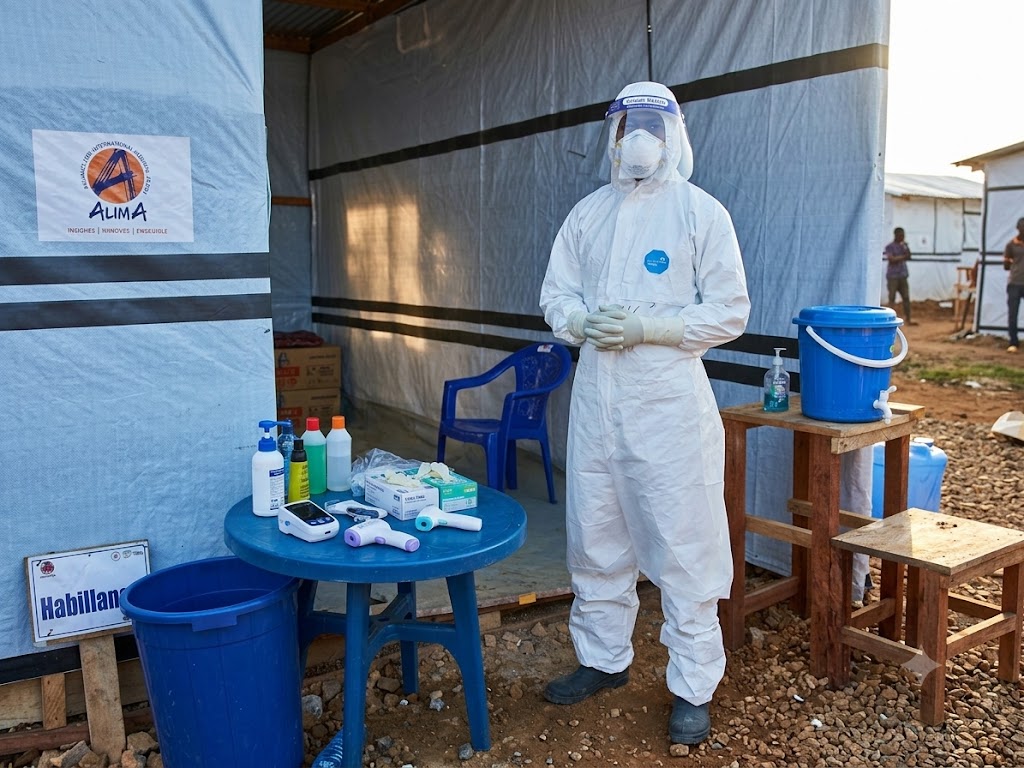
The Ebola outbreak in the Democratic Republic of Congo has become the fastest-growing in the disease’s recorded history, placing enormous pressure on an already fragile health system in the country’s conflict-affected east.
As of August 3, 2026, authorities had recorded 3,874 confirmed cases and 1,751 deaths in DR Congo. The epidemic is now the country’s largest Ebola outbreak and the second-largest globally, behind only the 2014–2016 West African crisis.
The outbreak, confirmed by Congolese authorities on May 15, is being driven by the Bundibugyo virus. Unlike the Zaire strain responsible for several previous epidemics, there is currently no approved vaccine or specific treatment for Bundibugyo Ebola, although clinical trials involving potential vaccines and therapies are underway.
Contact tracing remains one of the biggest challenges. Africa Centers for Disease Control and Prevention Director-General Jean Kaseya said between 60% and 70% of new infections were being detected among people who were not listed as contacts of previously confirmed patients. This indicates that many transmission chains are going undetected within communities.
The crisis is particularly severe in Ituri Province, which accounts for most of the confirmed infections. Cases have also been reported in North Kivu, South Kivu, Haut-Uélé and Tshopo, while infections linked to the outbreak have previously been detected outside DR Congo.
Armed conflict, population displacement, illegal mining and frequent movement along domestic and cross-border trade routes are complicating containment efforts. Insecurity has prevented response teams from reaching some communities, while attacks on health facilities and mistrust of medical workers have further disrupted surveillance and treatment.
The outbreak has maintained a crude case fatality ratio of approximately 44%. Health authorities have warned that the real number of infections could be significantly higher because some patients die without being tested or treated at recognized Ebola centers.
Healthcare workers are also paying a heavy price. More than 150 infections have reportedly been recorded among medical personnel, with at least 44 deaths. Delayed salaries, shortages of protective equipment and attacks on health teams have added to the pressure on frontline workers.
The effects of the epidemic extend beyond Ebola treatment. Maternal deaths in Ituri have nearly doubled as pregnant women avoid hospitals because they fear contracting the virus or being placed in isolation. United Nations data show that average weekly maternal deaths increased from 3.1 before the outbreak to 5.8 between May 25 and July 19.
The World Health Organization declared the outbreak a Public Health Emergency of International Concern on May 17. It has called for stronger community engagement, faster detection, improved contact tracing and expanded access to treatment.
Without a major improvement in surveillance, funding and access to affected communities, health officials fear the epidemic could continue spreading across eastern DR Congo and potentially threaten neighboring countries.
Source: Omanghana