Omanghana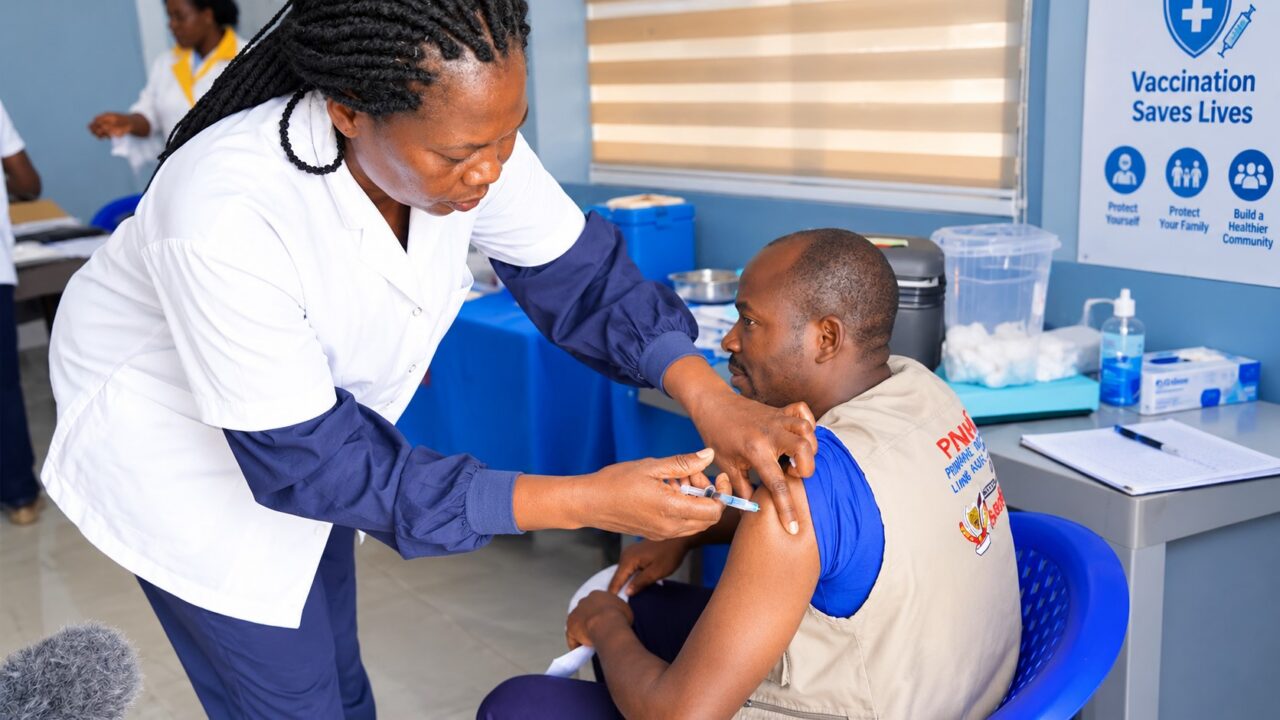
Healthcare and other frontline workers in the Democratic Republic of the Congo are receiving the Ervebo vaccine as authorities confront the country’s deadliest recorded Ebola outbreak.
Workers in Beni, North Kivu province, received doses on Friday, October 16, as part of efforts to protect personnel exposed to infected patients. Government figures cited this week put the outbreak’s toll at 9,066 confirmed cases and 4,381 deaths.
The vaccination campaign faces a significant scientific uncertainty. Ervebo was developed and licensed against Zaire ebolavirus, while the current epidemic is caused by Bundibugyo ebolavirus. Its ability to prevent illness caused by Bundibugyo has not yet been established.
Doctors Without Borders, also known as Médecins Sans Frontières, is working with the Congolese Ministry of Health, Africa CDC and scientific partners on the BRAVO study to evaluate the vaccine’s use among frontline workers. The organization says Ervebo has an established safety profile, but protection against the virus driving this outbreak remains under investigation.
Authorities are administering the vaccine through a compassionate-use program. Of the 70,000 doses approved for the response, approximately 50,000 are intended for healthcare and frontline personnel, with 20,000 allocated to research on protection against Bundibugyo.
The epidemic has become the largest and deadliest in Congo’s history, surpassing the country’s 2018–2020 outbreak. Globally, it remains second in scale to the 2014–2016 West African epidemic, which infected more than 28,600 people and killed over 11,000.
Containment efforts face insecurity, displacement, population movement and disruption to healthcare services. Despite the absence of a licensed treatment specifically targeting Bundibugyo, health officials have emphasized that supportive medical care can improve patients’ chances of survival.
The outbreak has also raised concerns beyond Congo’s borders. Kenya announced four additional infections on October 17, bringing its confirmed total to seven. Three of the new cases involved healthcare workers who treated the country’s first patient, a man who had travelled from Congo.
Source: Omanghana