Omanghana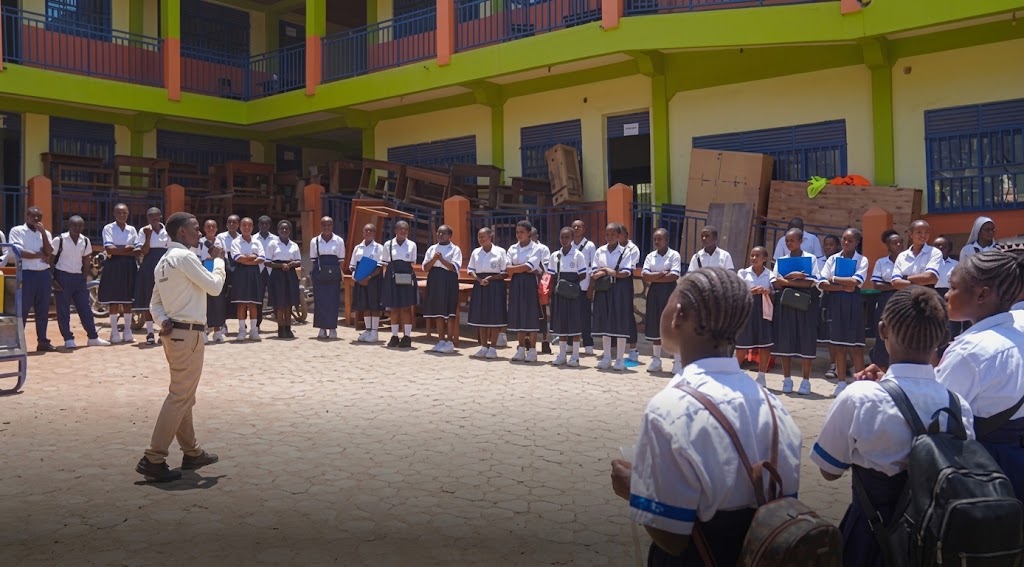
Schools across the Democratic Republic of the Congo reopened for the 2026–2027 academic year on September 1 despite growing concern among parents, teachers and health organizations over the country’s rapidly expanding Ebola outbreak.
The decision to proceed with in-person classes, including in areas experiencing active transmission, has intensified debate over how authorities should balance children’s right to education with the need to contain a deadly public-health emergency.
The outbreak, caused by the rare Bundibugyo virus, has become the deadliest Ebola emergency recorded in the DRC and one of the fastest-growing outbreaks of the disease.
More Than 6,000 Cases Confirmed
Government figures released on September 2 showed that the outbreak had caused 3,007 deaths among 6,186 confirmed cases, producing a case-fatality rate of approximately 48.6%.
The outbreak was officially detected in Ituri province in May, although health authorities believe transmission may have begun months earlier.
By late August, infections had been reported in more than 60 health zones across six provinces: Ituri, North Kivu, South Kivu, Bas-Uélé, Haut-Uélé and Tshopo.
Ituri remains the epicenter. The province had reported more than 4,800 cases by August 26, according to the World Health Organization. North Kivu was the second most affected province.
The WHO has classified the outbreak as a public-health emergency of international concern and assessed the risk within the DRC as very high. Its August 28 update warned that insecurity, population displacement and weaknesses in health services were allowing transmission to continue.
Young Children Face Particularly High Risk
Health data indicates that children aged four and below have suffered the highest case-fatality rate of any age group in the outbreak, at approximately 60%.
The figure has increased anxiety among families preparing to return their children to crowded classrooms.
Ebola is transmitted through direct contact with the blood or other bodily fluids of an infected person, or through objects and surfaces contaminated with those fluids. Infected people are not considered contagious before symptoms appear, but early signs such as fever, fatigue and muscle pain can resemble other common illnesses.
Health specialists warn that delayed diagnosis can allow the disease to spread through households, schools and healthcare facilities before an infected person is isolated.
Teachers’ Union Called for Reopening to Be Delayed
The union representing teachers in Ituri urged the national government to postpone the reopening of schools until transmission declined and adequate protective measures were available.
The appeal was rejected, with the government maintaining the national academic calendar.
Several schools in Bunia, the capital of Ituri, recorded low attendance during the opening days. Turnout was reportedly weakest in state-owned schools as some parents kept their children at home.
Families cited overcrowded classrooms, limited sanitation facilities and the absence of clearly visible infection-control measures as reasons for their reluctance.
The concerns were reinforced by memories of previous disease outbreaks and the psychological effects of months of deaths, unsafe burial fears and disruption within affected communities.
Remote-Learning Plan Abandoned in Red Zones
The Education Ministry initially proposed a zoned reopening system based on local transmission levels.
Under regulations published on August 19, schools in areas classified as green or orange zones were expected to resume classroom instruction with health-screening measures. Institutions in red zones, where transmission remained active or the risk was considered high, were supposed to use worksheets and lessons broadcast through radio and television.
Authorities later abandoned that arrangement and allowed schools in red zones to reopen for in-person learning.
More than 1,000 schools in Ituri are reportedly located in areas classified as high risk. An Education Ministry official said the decision was reviewed after provincial authorities warned that children in affected communities could fall behind those attending classes elsewhere.
Schools would close and move to distance learning if an infection were detected, the official said
Government Defends Decision to Continue Education
Education authorities argue that keeping schools closed would produce serious long-term consequences for millions of children.
The DRC’s education system serves an estimated 31 million pupils. A prolonged nationwide closure could disrupt the national curriculum and deepen learning losses in a country where conflict and poverty have already forced many children out of classrooms.
Officials and humanitarian organizations have also warned that children who are not attending school may face greater exposure to child labor, early marriage, sexual exploitation or recruitment by armed groups.
The challenge is particularly serious in eastern DRC, where fighting has displaced large populations and damaged hundreds of schools.
Authorities therefore maintain that protecting education must remain part of the emergency response, even as measures are introduced to reduce the risk of Ebola transmission.
Temperature Checks and Handwashing Introduced
Some reopened schools have installed handwashing basins, distributed sanitizers and introduced temperature screening at entrances.
Education officials said non-contact infrared thermometers and hygiene supplies were being delivered to schools. Teachers have also been instructed to educate pupils about regular handwashing, avoiding unnecessary physical contact and reporting possible symptoms.
UNICEF is supporting the government’s prevention efforts and has emphasized the need to protect pupils, teachers and surrounding communities while preserving children’s access to education.
However, implementation differs significantly between schools. Private institutions and schools in major cities may have better access to protective materials than rural or state-run facilities.
Schools Struggle With Water and Funding Shortages
Humanitarian organizations warn that many schools still lack the basic infrastructure needed to maintain effective infection-control measures.
Some rural and conflict-affected institutions do not have reliable access to clean running water, functional toilets or sufficient hygiene supplies.
Delivering equipment and educational materials to remote communities is also difficult because of damaged roads, insecurity and funding shortages.
Save the Children has highlighted the logistical problems involved in supplying schools outside major urban centers. Even where sanitizers and handwashing equipment are delivered, maintaining supplies throughout the academic year could prove challenging.
No Approved Bundibugyo Vaccine or Treatment
Unlike the Zaire Ebola virus responsible for several previous outbreaks, the Bundibugyo virus has no specifically approved vaccine or licensed treatment.
Congolese authorities have begun administering the Ervebo vaccine to some frontline health workers. The vaccine is approved for disease caused by the Zaire virus, but it is not yet known whether it provides meaningful protection against Bundibugyo infection in humans.
The WHO has recommended studying Ervebo as part of a clinical trial, while other vaccine candidates specifically targeting the Bundibugyo virus remain under development.
Treatment trials are also underway in Ituri. Until a proven vaccine or antiviral therapy becomes available, containment efforts depend heavily on early case detection, isolation, supportive medical care, contact tracing, safe burials and community cooperation.
Health Worker Strikes Weaken Response
The outbreak response has been further complicated by strikes among health workers demanding unpaid wages and delayed hazard allowances.
Work stoppages have affected treatment centers, disease surveillance and contact-tracing operations in some areas.
The WHO reported that tens of thousands of contacts require daily monitoring. Any disruption to the health workforce increases the likelihood that symptomatic patients will remain undetected within their communities.
Attacks on medical workers and public mistrust have also made it more difficult to identify cases and conduct safe burials.
Conflict and Displacement Increase Transmission Risks
Armed violence remains one of the greatest obstacles to containing the outbreak.
Clashes involving Congolese forces, the AFC/M23 movement and other armed groups have displaced hundreds of thousands of residents across Ituri and North Kivu. An estimated one million displaced people are living in Ituri alone.
Overcrowded displacement sites frequently have limited water, sanitation and healthcare services, creating conditions that make infection prevention difficult.
Population movements also complicate contact tracing because families may leave an affected community before completing the required monitoring period.
Schools have reopened even in some rebel-controlled areas of North and South Kivu, where local authorities have instructed pupils to wash their hands and maintain distance inside classrooms.
Education and Public Health Remain in Delicate Balance
The reopening has placed teachers and school administrators on the front line of a national health emergency.
For the government, keeping classrooms open protects educational continuity and reduces the social dangers associated with prolonged school closures. For concerned parents, however, the absence of consistent safeguards makes sending children back to school a potentially serious risk.
The success of the policy will depend on whether authorities can provide reliable water, hygiene materials, screening equipment and rapid procedures for responding to suspected infections.
With transmission continuing across several provinces and no approved Bundibugyo-specific vaccine or treatment available, the DRC’s new academic year has begun under extraordinary uncertainty.
Source: Omanghana