Omanghana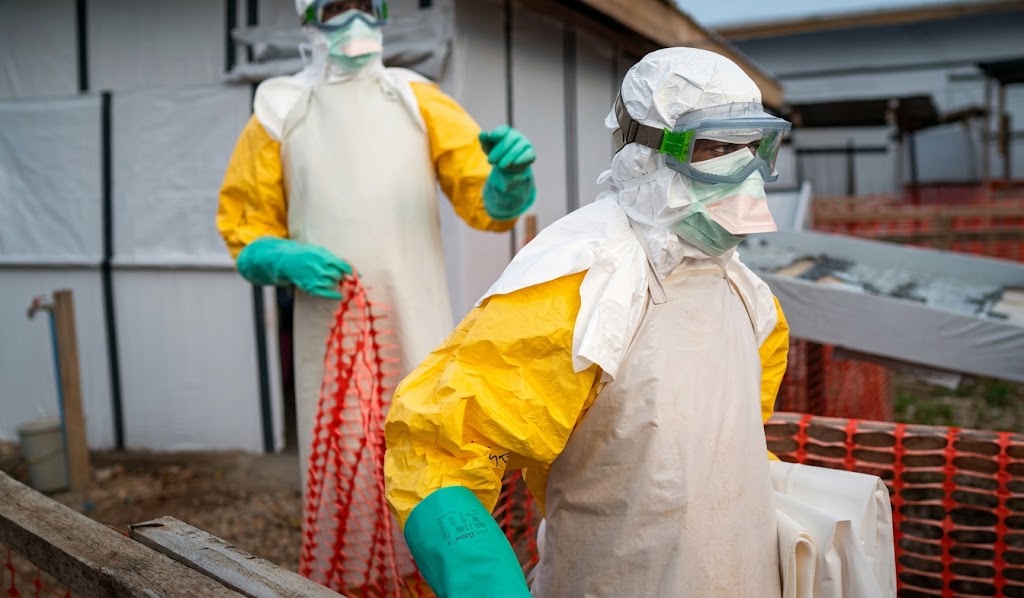
The Democratic Republic of the Congo is confronting a rapidly worsening Ebola outbreak after the highly contagious disease spread into a sixth province, heightening fears of transmission beyond the country’s borders.
The Africa Centers for Disease Control and Prevention confirmed on August 13, 2026, that the outbreak had reached Bas-Uele, a province previously unaffected by the crisis.
The new case involved a man who travelled from Isiro in Haut-Uele province before dying in Buta, the capital of Bas-Uele. The province shares a border with the Central African Republic, raising concern that the virus could spread internationally if surveillance and containment measures are not strengthened.
The outbreak is being driven by the relatively rare Bundibugyo ebolavirus. Unlike the more widely studied Zaire strain, there are currently no approved vaccines or specific treatments for Bundibugyo Ebola.
Clinical trials involving two possible vaccines and treatments have begun, but health authorities are still assessing their effectiveness. Researchers are also examining whether vaccines developed for the Zaire strain, including Ervebo, could provide some level of protection against Bundibugyo.
As of August 13, the outbreak had reportedly produced more than 4,500 cases and claimed over 2,100 lives. The scale and speed of transmission have prompted warnings that it could become one of the deadliest Ebola epidemics ever recorded.
The DRC officially declared the outbreak in May 2026. However, genetic sequencing has indicated that the virus may have been circulating undetected since February, giving it several months to spread before a coordinated response began.
The death toll has also risen almost three times faster than it did during the devastating 2014–2016 West African Ebola outbreak.
Health officials have acknowledged that containment teams are struggling to keep pace with transmission. Between 60% and 70% of new infections are reportedly being detected among individuals who were not listed as contacts of previously identified patients.
This means many transmission chains remain unknown, making it more difficult to isolate exposed individuals before they infect others.
Ituri province remains the epicenter of the outbreak, accounting for approximately 90% of reported cases. Response operations there have been disrupted by strikes and the temporary closure of important facilities, including the Nizi Treatment Center.
Some health workers have reportedly gone unpaid for months, weakening staffing levels at a time when treatment centers, laboratories and surveillance teams are under intense pressure.
Persistent armed conflict in eastern Congo has created another major obstacle. Rebel activity and insecurity have made it dangerous for medical teams and humanitarian organizations to reach some affected communities, trace contacts and deliver supplies.
Misinformation and public mistrust are further complicating the response. Some communities continue to question whether Ebola is real, discouraging patients from seeking treatment and making families less willing to cooperate with health authorities.
Public health agencies are now racing to expand testing, contact tracing, treatment capacity and community engagement before the outbreak spreads into additional provinces or neighboring countries.
With no approved Bundibugyo-specific vaccine currently available, the success of the response will depend heavily on early case detection, safe isolation, protective equipment, reliable payment of health workers and secure access to affected communities.
Source: Omanghana