Omanghana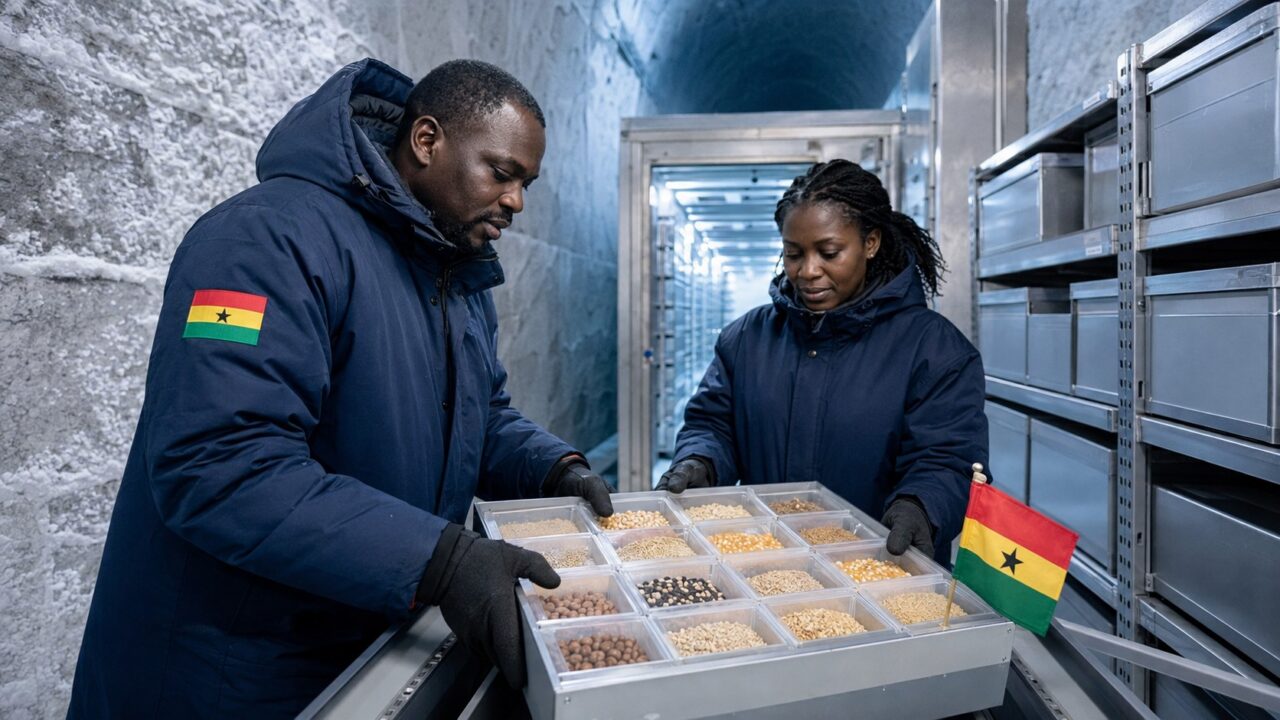
Ghana has secured 422 crop genetic samples in the Svalbard Global Seed Vault in Norway, creating an important international backup for the country’s agricultural resources.
The safety-duplication exercise was undertaken by the Council for Scientific and Industrial Research’s Plant Genetic Resources Research Institute, based at Bunso in the Eastern Region.
The deposited germplasm accessions preserve the genetic characteristics of important Ghanaian crops against threats such as climate change, plant diseases, destructive pests and ecological disasters.
CSIR-PGRRI reportedly invested approximately US$15,000 in cleaning, documenting, duplicating and packaging the materials for long-term storage.
Dr. Rashied Tetteh, Deputy Director of CSIR-PGRRI, said Ghana completed the exercise with support from the Germany-based Global Crop Diversity Trust under its Seeds for Resilience project.
Ghana was selected alongside Nigeria, Kenya, Ethiopia and Zimbabwe as one of five priority African countries participating in the initiative.
The deposit also made the Ghana Gene Bank the 100th institution to place crop samples in the Arctic facility.
The 422 accessions include varieties of maize, rice, indigenous eggplant, cowpea and black-eyed peas. These crops play important roles in Ghana’s food supply, nutrition, farming economy and culinary heritage.
Preserving multiple varieties is essential because each strain may contain genetic traits that improve resistance to drought, flooding, disease, pests or changing temperature conditions.
Researchers could use those characteristics to develop resilient crop varieties capable of surviving future environmental pressures.
The Svalbard facility functions as a secure backup location rather than taking ownership of the deposited materials. The seeds remain the exclusive property of Ghana and can only be withdrawn under the agreed terms.
If Ghana’s domestic collections are damaged or lost, the country can request the stored duplicates and use them to restore affected crop varieties.
This backup system reduces the risk that a severe disaster, prolonged conflict, equipment failure or disease outbreak could permanently eliminate valuable agricultural genetic resources.
Located deep inside a mountain in the Norwegian Arctic, the Svalbard Global Seed Vault provides long-term protection for duplicate seed samples collected from gene banks worldwide.
Ghana’s participation strengthens efforts to protect national food security and preserve crop diversity for future generations of farmers, scientists and consumers.
Source: Omanghana