Omanghana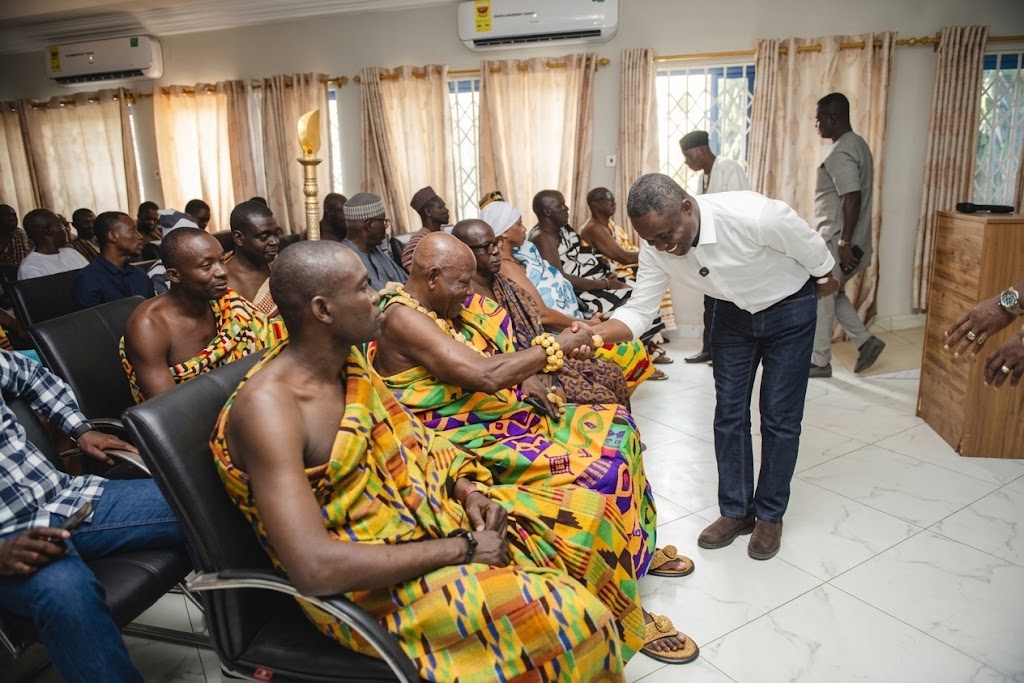
Ghana’s Minister for Health, Kwabena Mintah Akandoh, has pledged sustained government investment to address serious infrastructure gaps, equipment shortages and healthcare worker retention challenges affecting medical services across the Oti Region.
The commitment follows a high-level working tour of health facilities in the region, during which the minister interacted with regional authorities, Members of Parliament, health administrators and frontline medical workers to assess the challenges confronting healthcare delivery.
Among the facilities visited were the Dambai Polyclinic, Worawora District Hospital and Jasikan District Hospital, where concerns ranging from inadequate infrastructure and medical equipment to staffing shortages were brought to his attention.
Government Moves Forward With Oti Regional Hospital
A major component of the government’s intervention is the proposed construction of a dedicated Oti Regional Hospital.
During his tour, Akandoh inspected a 100-acre site secured for the project, which is expected to significantly expand access to specialized healthcare services for residents of the region.
The proposed facility is intended to provide secondary and tertiary-level services that are currently unavailable locally, reducing the need for patients to travel hundreds of kilometers to other parts of Ghana for treatment.
Funding for the hospital is linked to the government’s GH¢600 million multi-regional hospital development package, covering projects in the Oti, Savannah and Western North regions.
Before construction begins, however, the Health Minister wants all outstanding land documentation and ownership issues resolved.
Akandoh urged the Oti Regional Minister, traditional authorities and other stakeholders to complete the necessary land title processes to prevent future boundary disputes, litigation or other complications that could delay the project.
Only Two of 23 Posted Doctors Reported for Duty
The minister’s engagements also exposed the severity of the region’s doctor shortage.
According to information presented during the tour, only two of 23 medical doctors posted to the Oti Region reported for duty, leaving health facilities struggling to provide adequate clinical services.
The situation has intensified pressure on the limited number of doctors, nurses and other health professionals already working in the region.
Akandoh described the staffing challenge as one that requires cooperation between central government and local authorities.
He stressed that postings to rural or deprived communities should not be viewed as punishment and called for deliberate measures to make such areas attractive to healthcare professionals.
The minister urged Metropolitan, Municipal and District Chief Executives (MMDCEs) to support health facilities by providing decent accommodation and developing competitive local incentive packages for doctors, nurse practitioners and other essential personnel.
Improved housing, working conditions and community support, he indicated, could play a major role in convincing healthcare workers to accept and remain at postings outside Ghana’s major cities.
Ministry Orders Comprehensive Audit of Health Facilities
Beyond the planned regional hospital, the Ministry of Health is undertaking a broader assessment of existing healthcare infrastructure across Oti.
A technical working group led by ministerial technical advisor Dr. Korku Awoonor has been directed to conduct a comprehensive structural and clinical audit of health facilities throughout the region.
The exercise is examining the physical condition and structural integrity of buildings, availability and functionality of biomedical equipment, water and sanitation systems and the efficiency of clinical workflows.
Findings from the assessment are expected to help the Ministry identify facilities requiring urgent repairs, replacement equipment or wider rehabilitation.
The approach is intended to ensure that government interventions are based on the actual needs of individual facilities rather than relying on generalized infrastructure programs.
Hospitals to Receive Sanitation and Operational Improvements
Akandoh also identified sanitation and hygiene as critical areas requiring immediate improvement.
Among the measures being considered is the introduction of 24-hour custodial cleaning shifts to ensure public health facilities maintain acceptable hygiene standards throughout the day.
Basic water infrastructure at isolated district facilities is also expected to receive attention.
Reliable water supply is essential for infection prevention, sanitation, surgical procedures and general patient care, making improvements particularly important for hospitals operating in underserved communities.
The minister stressed that healthcare quality depends not only on doctors and medical equipment but also on creating safe and hygienic environments for patients and healthcare professionals.
Oti Residents Continue to Travel Long Distances for Specialist Care
The Oti Region, created in 2019 from the northern part of the Volta Region, continues to face substantial gaps in healthcare infrastructure and specialist services.
The absence of a fully equipped regional hospital means residents requiring advanced diagnostic imaging, intensive care, specialist consultations and complex surgical procedures frequently have to travel outside the region.
Some patients are referred to facilities in Ho, Tamale or Accra, creating additional transportation and accommodation costs for families while potentially delaying access to critical treatment.
The proposed Oti Regional Hospital is therefore expected to play a central role in reducing referrals and bringing advanced medical services closer to residents.
Akandoh Calls for Equitable Healthcare Investment
Akandoh said addressing the disparities affecting Oti and other underserved areas requires deliberate national policy rather than waiting for healthcare resources to distribute themselves evenly.
He emphasized the need for affirmative investment and resource prioritization for newly created and historically underserved regions.
The minister’s tour highlighted that infrastructure alone will not resolve the region’s healthcare challenges. New hospitals will have to be accompanied by functioning medical equipment, reliable utilities, adequate accommodation and sufficient numbers of trained professionals.
Government’s immediate task, therefore, will be to translate the commitments into improvements that patients can experience directly.
For residents of the Oti Region, the planned regional hospital, facility upgrades and measures to attract healthcare professionals could significantly reduce longstanding disparities in access to quality medical care.
Source: Omanghana