Omanghana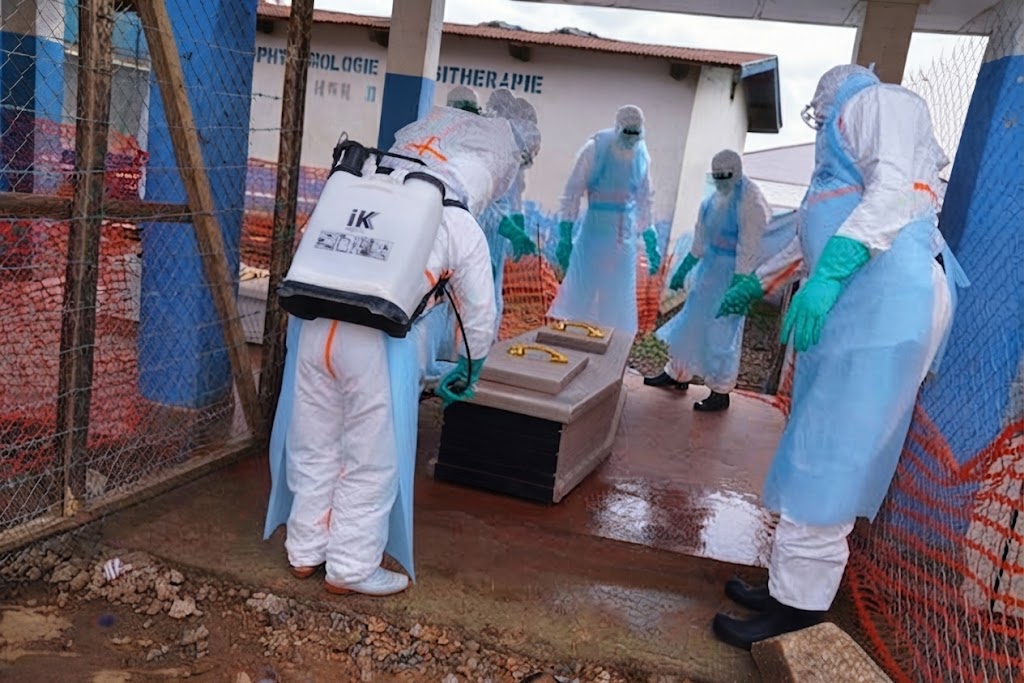
Medical teams in the Democratic Republic of the Congo are working under intense pressure as the country confronts its 17th recorded Ebola outbreak, which has spread across seven provinces and killed more than 3,500 people.
The epidemic, first detected in May 2026, is being driven by the relatively rare Bundibugyo virus species. More than 7,200 cases have been reported, making it the second-deadliest Ebola outbreak on record after the 2014–2016 West African epidemic.
The World Health Organization has reported signs of declining transmission in some of the most affected parts of Ituri province. However, cases are rising rapidly in North Kivu, where weekly infections nearly doubled from about 100 to more than 200 within two weeks.
WHO Director-General Dr Tedros Adhanom Ghebreyesus warned that the crisis could not be viewed as a single, contained epidemic because transmission was occurring in several locations. He said the outbreak continued to expand and claim lives despite progress in some health zones.
Africa Centers for Disease Control and Prevention has also cautioned against concluding that the epidemic has peaked. The agency said recent data revealed continuing weaknesses in infection prevention and control, while reductions in reported cases had not been sustained across all affected areas.
Response efforts have been complicated by armed conflict, population displacement, food insecurity and the movement of people between communities. These conditions make it difficult for surveillance teams to identify suspected infections, trace contacts and safely transport patients to treatment centers.
Hospitals and health zones are also facing shortages of trained personnel, protective equipment and isolation capacity. Health workers must follow strict infection-control procedures because Ebola spreads through direct contact with the blood or other bodily fluids of an infected person.
The Bundibugyo species presents an additional medical challenge because no vaccine or antiviral treatment has been approved specifically for it. Patients therefore depend heavily on supportive treatment, including fluids, oxygen, symptom management and care for complications.
More than 3,000 healthcare and frontline workers have received Merck’s Ervebo vaccine. The vaccine is licensed against Zaire ebolavirus, but its effectiveness against the Bundibugyo virus responsible for the current outbreak remains uncertain.
An observational study is being prepared to assess how well Ervebo protects frontline workers during the epidemic. Congolese researchers and international partners are also planning clinical trials involving Ervebo and candidate vaccines developed specifically for the Bundibugyo species, including products from Moderna and the University of Oxford.
Medical teams and humanitarian organizations have established treatment facilities, triage points and isolation wards while expanding laboratory testing, contact tracing and community education.
Protecting healthcare workers remains a major priority. Delayed identification of infected patients can expose doctors, nurses, ambulance crews and support staff before isolation procedures are introduced.
Public-health officials are also working with local leaders to build confidence in treatment centers and promote safe burials. Community cooperation is essential because fear, misinformation and resistance to response teams can delay treatment and increase transmission.
Despite early progress in parts of Ituri and the absence of recent infections in South Kivu, the WHO has warned that the outbreak remains far from over. High population mobility and the spread into multiple provinces mean sustained surveillance, funding and international assistance will be required for months. World Health Organization
Source: Omanghana