Omanghana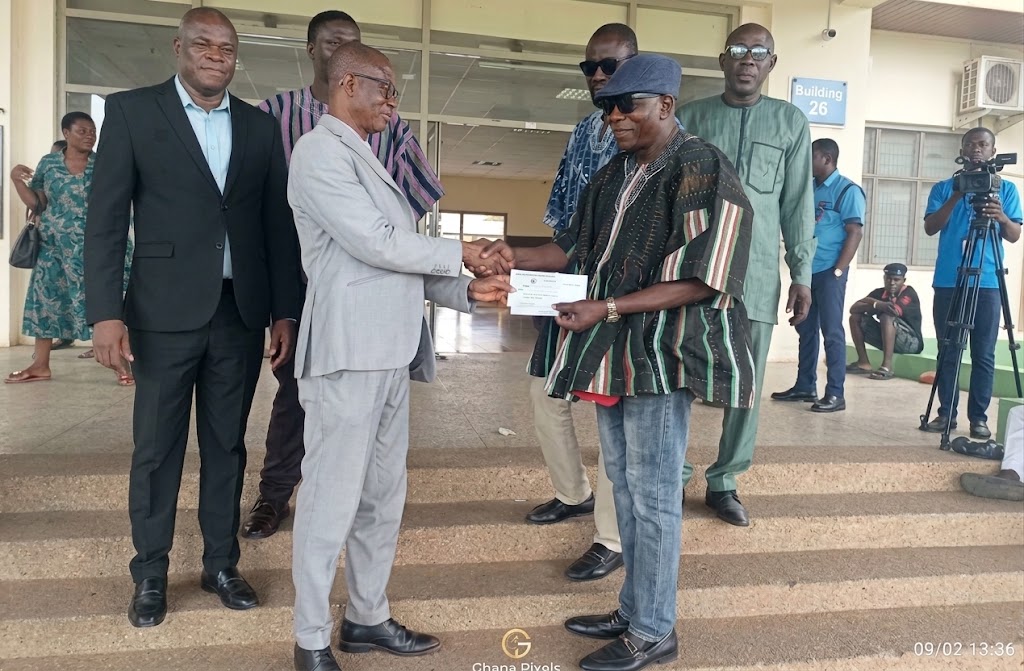
The Nadowli-Kaleo Constituency Chairman of the National Democratic Congress, Sombawiera Samba-Sankara, has donated GH¢20,000 to support the Dialysis Unit at the Upper West Regional Hospital in Wa.
The contribution is intended to help sustain renal-care services and reduce the financial pressure facing patients who depend on regular hemodialysis treatment.
It forms part of continuing efforts by political leaders, organizations and community members to support the region’s only operational dialysis center.
Donation to Support Patients and Unit Operations
The GH¢20,000 contribution will support the operations of the dialysis unit and assist patients living with chronic kidney disease.
People with advanced kidney disease may require several dialysis sessions each week to remove waste products and excess fluid from their blood. The repeated cost of treatment, medication, laboratory tests and transportation can place a severe financial burden on patients and their families.
Samba-Sankara said access to essential healthcare should remain a priority for public officials and community leaders.
He encouraged political figures, businesses, charitable organizations and individuals to support vulnerable patients whose survival depends on uninterrupted dialysis treatment.
The NDC constituency chairman emphasized that sustaining the unit requires collective action because the cost of consumables, equipment maintenance and electricity cannot be left entirely to patients and hospital management.
Only Dialysis Centre Serving Upper West Region
The Upper West Regional Hospital currently operates the only dialysis facility in the region.
It serves patients from all 11 municipal and district assemblies in Upper West, as well as some residents from neighboring regions.
Before the center was established, many kidney patients had to travel to Tamale, Kumasi or other distant cities for treatment. The journeys created significant financial and physical strain, particularly for people requiring dialysis several times a week.
Some patients were unable to maintain their prescribed treatment schedules because of transportation and accommodation costs.
The availability of dialysis in Wa has therefore improved access to life-saving renal care and reduced the need for repeated long-distance travel.
Unit Has Conducted More Than 4,900 Sessions
The Upper West Regional Hospital established its dialysis service in 2022 with one donated machine.
Hospital management acquired two additional machines in 2023 as demand increased, bringing the total to three.
Between the establishment of the unit and August 2026, the hospital conducted 4,916 dialysis sessions for 268 patients.
The figures illustrate the growing demand for kidney treatment in the region and the importance of maintaining a reliable supply of equipment and medical consumables.
Despite the progress, hospital officials said the initial three-machine capacity was insufficient to meet the needs of the rising number of patients.
Capacity Expanded From Three Machines to Nine
The hospital’s dialysis capacity was expanded significantly in August 2026 following the installation of six additional machines.
The intervention increased the total number of dialysis machines from three to nine and included recliner chairs, supporting equipment and staff training.
The project, valued at approximately GH¢4 million, was facilitated by Speaker of Parliament Alban Sumana Kingsford Bagbin in partnership with the Upper West Regional Parliamentary Caucus.
It was implemented through Sustainable Health Education and Interventions Limited, a Ghanaian-founded non-governmental organization commonly known as SHEILD.
Parliament reported that Speaker Bagbin donated the six machines and recliners to expand access to kidney treatment in the region.
The additional equipment is expected to increase the number of patients who can be treated, reduce waiting times and ease pressure on healthcare workers.
Expansion Brings Treatment Closer to Patients
The expansion represents a major improvement in specialized healthcare delivery across the Upper West Region.
Hospital officials have described dialysis as more than a medical procedure, noting that every successful treatment provides patients with another opportunity to return to their families, workplaces and communities.
The availability of more machines also creates an opportunity for the hospital to strengthen clinical training and collaboration with the University for Business and Integrated Development Studies.
However, equipment alone cannot guarantee uninterrupted services. The unit requires regular supplies of dialyzers, tubing, medicines and other consumables, as well as trained personnel and dependable electricity.
The GH¢20,000 donation from Samba-Sankara is expected to contribute toward meeting some of these continuing operational needs.
Kidney Disease Becoming a Major Health Concern
Health authorities have expressed concern about the growing number of kidney-disease cases in Ghana.
Uncontrolled high blood pressure, diabetes, obesity, infections and the prolonged misuse of certain medications are among the factors associated with kidney damage.
Late diagnosis remains a major challenge because chronic kidney disease may progress for years without producing obvious symptoms.
By the time some patients seek treatment, their kidneys may have deteriorated to the point where dialysis is urgently required.
Health professionals continue to encourage regular screening, particularly for people living with hypertension, diabetes or a family history of kidney disease.
Calls Grow for More Dialysis Centers
Regional health authorities have called for the decentralization of renal-care services across Upper West.
Proposals have been made to establish additional dialysis units at Nandom, Tumu and Wa Municipal hospitals.
Such facilities would reduce the distance patients must travel and prevent the Upper West Regional Hospital from becoming overwhelmed as demand continues to increase.
Upper West Regional Director of Health Services Dr Josephat Ana-Imwine Nyuzaghl has said the establishment of satellite centers would improve access to specialized kidney care throughout the region.
He has also appealed for a reliable electricity supply to protect sensitive medical equipment and prevent treatment interruptions.
Community Support Remains Essential
Although the expanded unit has strengthened the hospital’s treatment capacity, the cost of dialysis remains difficult for many families.
Regular financial support can help the facility purchase consumables, maintain its machines and provide relief to patients unable to meet the full cost of treatment.
Samba-Sunkara’s donation adds to the contributions made by public institutions, non-governmental organizations and private individuals seeking to keep the service operational.
The intervention also reinforces calls for sustained community involvement in healthcare development rather than relying only on one-time donations.
For kidney patients across the Upper West Region, continued support for the dialysis unit could determine whether life-saving treatment remains accessible and uninterrupted.
Source: Omanghana