Omanghana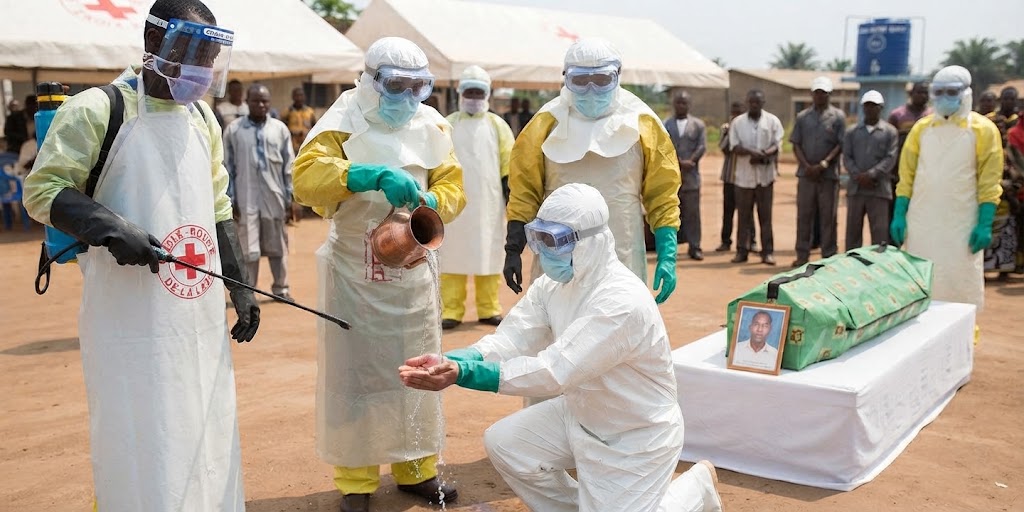
The United Nations Office for the Coordination of Humanitarian Affairs, the World Health Organization and other humanitarian partners are supporting the Democratic Republic of the Congo as the country battles a rapidly expanding Ebola virus outbreak.
The epidemic, attributed to the Bundibugyo strain of the virus, has reportedly spread across seven provinces, with more than 7,200 cases and nearly 3,500 deaths recorded.
It is the DRC’s 17th Ebola outbreak and has become the second-largest epidemic of the disease on record, placing enormous pressure on the country’s already fragile healthcare and humanitarian systems.
Health agencies and local authorities are working to expand treatment capacity, trace people who have come into contact with confirmed patients and strengthen surveillance in affected communities.
Additional beds and treatment centers are also being established as medical teams attempt to isolate cases, provide clinical care and interrupt transmission chains.
However, response operations are being hampered by persistent insecurity in parts of the country. Violence and instability have made it difficult for health workers and humanitarian teams to reach some affected communities safely.
The DRC’s vast territory, which extends across two time zones, has created further logistical difficulties. Poor road networks and limited transport infrastructure are slowing the movement of personnel, medical supplies and laboratory samples.
Funding shortages are also restricting the scale and speed of the response. Humanitarian agencies have warned that the broader assistance plan for the country remains significantly underfunded despite the growing needs created by the outbreak.
OCHA is coordinating with national health authorities, WHO and other partners to address the wider effects of the epidemic, which extend beyond the immediate medical emergency.
Humanitarian organizations are combining clinical interventions with food assistance and water, sanitation and hygiene services. These measures are considered essential for reducing transmission and supporting families affected by quarantine, illness and movement restrictions.
The outbreak has also disrupted access to routine healthcare, while affected households face an increased risk of hunger and loss of income. Fear of infection and pressure on health facilities can make it more difficult for people to receive treatment for other illnesses.
UN officials have appealed for sustained international funding, specialized personnel and logistical support to reinforce local response teams.
They have warned that controlling an outbreak of this scale will require long-term coordination among the Congolese government, humanitarian agencies, health workers, affected communities and international partners.
Source: Omanghana